Battle Train
Deck-building meets grid-based rail combat in one of 2025's more original indie hybrids, but a sharp early difficulty spike and thin build variety mean the honeymoon ends faster than you'd hope.
Veredicto de GamerScout
Best for patient strategy players who can tolerate a brutal early difficulty wall and limited build variety in exchange for a genuinely original tactical loop.
Comparar precios(4 tiendas)
Todas las tiendas de esta tabla nos dan el precio en euros, así que la cifra en EUR es el precio que fijó el vendedor, no un cálculo nuestro, y por eso EUR es también la moneda en la que calculamos el ranking. Solo incluimos aquí una oferta cuando la tienda nos da su precio en euros, de modo que ninguna cifra de esta tabla es inventada por nosotros.
Elige USD, PLN, GBP, CAD o AUD en la cabecera y convertimos desde EUR con el tipo de cambio de referencia del Banco Central Europeo — los importes convertidos llevan el prefijo ~. Tu banco o la tienda pueden aplicar un tipo distinto al pagar. Nunca ocultamos ofertas según dónde estés: todo el mundo ve esta tabla completa.
We may earn a commission when you buy games through links on this page — at no extra cost to you. It never affects our rankings or verdicts.
Historial de precios
Capturas y multimedia
Acerca de Battle Train
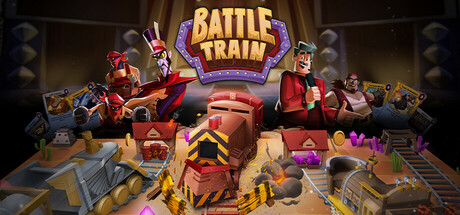
I spent my first few runs in Battle Train genuinely unsure whether I was playing a deck-builder, a board game, or a pipe-puzzle game, and that confusion, it turns out, is the whole point. Each match drops you onto a grid where you and a rival conductor take turns laying track segments from hand cards, racing to connect your starting station to the enemy's outpost. Once the path is complete, an explosive-laden locomotive launches down the line and detonates on impact. That core loop, building a route through a shared board while contesting mineral deposits that fund your card plays and blocking your opponent's progress, lands somewhere between Ticket to Ride and Battleship in feel, with Slay the Spire's run structure stapled underneath. As a strategy player who lives for this kind of decision layering, the geometry of each turn is genuinely satisfying: do you extend your own route, deny a mineral node to the opponent, or hold back card plays to sandbag resources for a big late-turn push? The card pool itself covers track pieces in various shapes, action cards that deal direct damage, utilities that pull objects across the map, and wilder toys like space lasers, all paid for in Minerals you collect by routing your track through resource tiles on the board. Between battles, the roguelite scaffolding kicks in: choose one of three new cards, visit vendors who buff existing cards, then spend earned currency on modular train upgrades that add passive abilities and stack across runs. Multiple playable contestants each come with distinct starter decks and personalities, and unlocking new train modules over time gives the meta-progression layer that keeps long-term players digging. A story mode set inside a Cartoon Network-flavored game show frames the whole thing, complete with voiced characters, animated cutscenes, and a suitably absurd antagonist called the Duke of Demolition who demands you address him by his full title. Here is where the strategy analysis gets honest, though. The difficulty curve is not a curve, it is a cliff edge. The AI does not ease you in and early encounters can end runs before the deck has had time to breathe. Worse, story progression is gated behind hitting specific map nodes, so a run where you fight well but miss a narrative checkpoint can simply disqualify you from advancing regardless of your record. Community feedback echoes this: players report losing strong runs to score thresholds that were never clearly communicated, and the RNG inside the deck compounds the issue since drawing five bomb cards and zero rail cards on turn one is a real and run-ending outcome. On top of that, the build variety critics flagged at launch is a genuine concern. The card pool is fun to experiment with across the first several hours, but reviewers across outlets noted that distinct deck archetypes are limited, and without meaningful theme divergence between runs, repetition sets in earlier than the roguelite loop should allow. For the right player, none of this is disqualifying. If you approached Monster Train or Slay the Spire as optimization puzzles and find a collapsed run instructive rather than demoralizing, Battle Train rewards that patience with some genuinely clever positional decisions and a presentation layer, Venture Bros.-adjacent animation, committed voice work, explosive sound design, that makes the game show conceit feel earned rather than cosmetic. The DLC, Revenge of the Puffin, has also added new content and icy track challenges post-launch, signaling that the developer intends to keep building out the card pool. New players should absolutely play the tutorial rather than skipping it, a lesson the early reviewers learned the expensive way. Battle Train sits in mixed-review territory for a reason. The concept is inventive and the turn-to-turn geometry is fun to solve, but the balance issues, gated progression, and shallow build variety at launch make it a trickier sell against a genre stacked with more polished competitors. If the card pool expands and the difficulty gates get tuned, this has the bones to become something genuinely great. Right now it is a promising experiment with sharp edges that dedicated strategy players will work around and casual roguelite tourists will bounce off hard.

Strategy & simulation
Etiquetas
Requisitos del sistema
Mínimos
- OS
- Windows 10
- Memory
- 4 GB RAM
- DirectX
- Version 11
- Storage
- 2 GB available space
- Graphics
- Nvidia GeForce GTX 460 [2 GB] \ AMD Radeon HD 7770 [2 GB] \ Intel Arc A310 [4 GB]
- Processor
- Intel Core i7-920 \ AMD Phenom II X4 965
- Sound Card
- Windows compatible audio device
Sigue explorando
Community Discussion
Be the first to comment on Battle Train.
Reseñas y valoraciones
No hay valoraciones disponibles
Información del juego
- Desarrolladora
- Terrible Posture Games
- Distribuidora
- Terrible Posture Games
- Fecha de lanzamiento
- 17 jun 2025