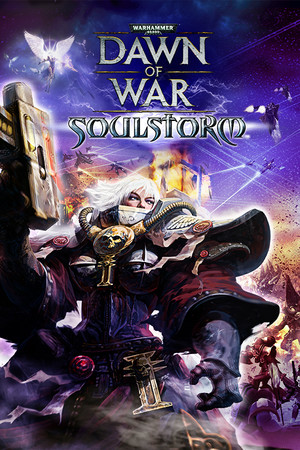
Warhammer® 40,000: Dawn of War® - Soulstorm
Nine factions, one aging engine, and a mod community that quietly fixed what the developers left broken. Worth it for the sheer roster breadth, if you temper expectations on the campaign.
GamerScout Verdict
7/10Best for Dark Crusade veterans and modders willing to install Unification; newcomers should start with an earlier entry first.
Compare Prices(2 stores)
Every store in this table quotes us in euros, so the EUR figure is the price the seller actually set, not our arithmetic — which is why EUR is also the currency we rank in. We only list an offer here when the store gives us its price in euros, so nothing in this table is a number we invented.
Pick USD, PLN, GBP, CAD or AUD in the header and we convert from EUR at the European Central Bank reference rate — converted amounts are prefixed with ~. Your bank or the store may apply a different rate at checkout. We never hide offers based on where you are: everyone sees this whole table.
We may earn a commission when you buy games through links on this page — at no extra cost to you. It never affects our rankings or verdicts.
Price History
Screenshots & Media
About Warhammer® 40,000: Dawn of War® - Soulstorm
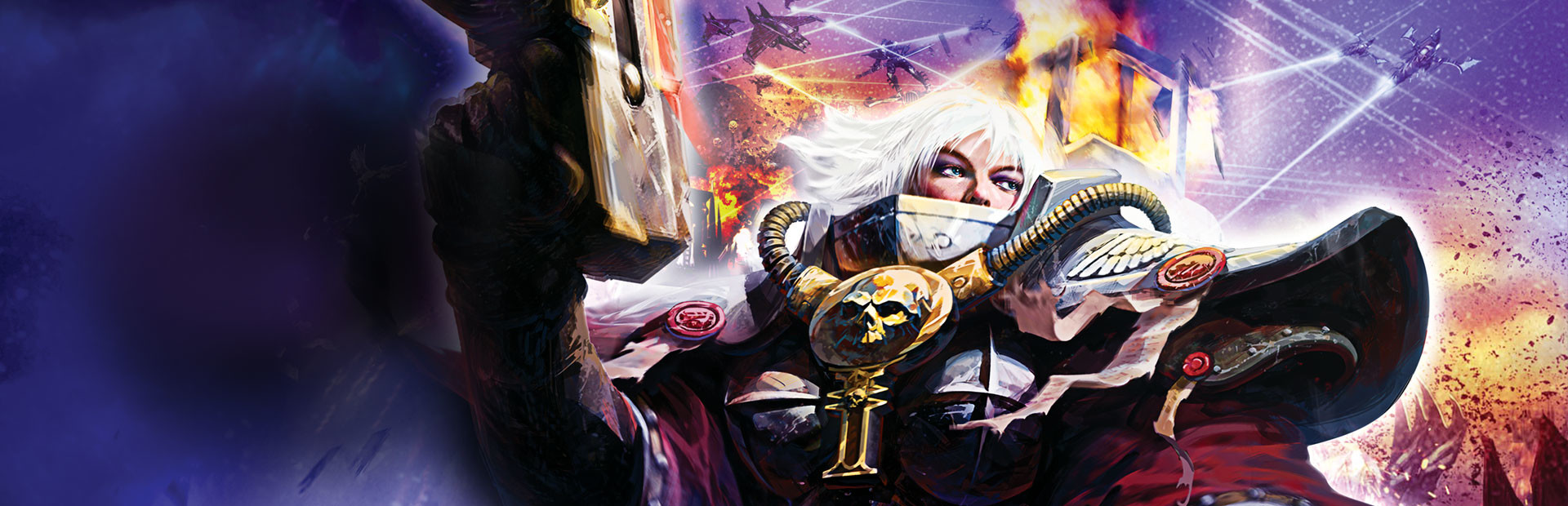
I've spent enough time color-coding faction matchup charts to know exactly where Soulstorm sits in the Dawn of War lineage: it is the widest entry and, by most critical measures, the weakest. That tension is actually what makes it interesting to write about in 2024. The core loop is the take-and-hold RTS that Relic's original game effectively codified. You raise a base, plant plasma generators, push requisition income by capping strategic points, and then scale through a tech tree toward the faction's heaviest units. Every one of the nine playable races follows this same skeleton, but the skeleton wears very different flesh depending on who you pick. The two factions added in Soulstorm are the Sisters of Battle and the Dark Eldar. Sisters play like a hybrid of hard-hitting Space Marines and the mass-infantry Imperial Guard, and they bring a unique Faith resource built by fielding holy units like the Canoness and Seraphim squads. Spend that Faith and you unlock Act of Faith abilities plus access to the Sisters' top-tier units, including the Penitent Engine, a heretic strapped to a flamethrower crucifix bot that is exactly as unhinged as it sounds. Dark Eldar lean on soul-essence as a secondary resource powering combat abilities, with fragile but fast units and the Raider transport letting garrisoned squads fire on the move. Both factions have personality in spades. Neither dramatically shifts how a veteran Dawn of War player will approach the meta. The aerial units added across all nine rosters follow the same pattern: a few standouts like the Chaos Hell Talon and the Space Marine Land Speeder Tempest, and several others that rarely justify the resource cost. The campaign is the weakest selling point. It borrows the Risk-style meta-game from Dark Crusade and scales it up to an interplanetary conflict across 32 territories spread over four planets and three moons in the Kaurava System. The problem is that unlike Dark Crusade, bases do not persist between battles on the same territory, which strips out a layer of strategic continuity and makes fortifying your holdings feel disposable. The AI difficulty curve is uneven: easy is forgiving to the point of being dull, while normal represents a significant jump. The story framing around a warp storm is thin enough that you will have gleaned most of it from a single wiki paragraph. If you are here for campaign narrative, this is not the right game, or frankly the right series. Where Soulstorm earns its place is in the full nine-faction skirmish and multiplayer space, and even more so in its mod ecosystem. The community has been maintaining unofficial patches since official support ended, and the Unification Mod is one of the most ambitious fan projects in the RTS genre, combining community-created races, AI improvements, visual revamps, and balance overhauls into a single package. Playing vanilla Soulstorm in 2024 means accepting a 2004-vintage engine and some genuine bugs. Installing Unification means playing something substantially broader and better-balanced than what shipped. Multiplayer balance in vanilla is asymmetrical in interesting ways: Eldar rarely have a bad matchup, Dark Eldar demand precise timing or fall apart in late tiers, Necrons are map-dependent specialists, and Sisters of Battle sit at the bottom of most 1v1 tier lists but have genuine utility in team play through the Exorcist artillery and inferno pistol spam. That asymmetry is the kind of depth I find worth studying. The honest summary is this: if you already own Dark Crusade and want the full nine-race roster plus an active mod community with years of post-launch support, Soulstorm is the obvious purchase. If you have never touched the series, start with the original Dawn of War or Dark Crusade first. The engine is old, the campaign is thin, and the two new factions, while flavorful, are not the series' most compelling designs. But the bones are solid, the modding infrastructure is remarkable for a game this age, and nine distinct playstyles in one package is not nothing.

Strategy & simulation
Tags
System Requirements
Minimum
- Processor
- 2.0 Ghz Intel Pentium 4, AMD Athlon XP or equivalent processor
- Memory
- 512 MB RAM
- Graphics
- 64 MB DirectX 9.0c compatible AGP video card with Hardware Tra…
Recommended
- Processor
- 2.4 GHz Intel Pentium 4 or equivalent
- Memory
- 512 MB RAM (required for 8-player multiplayer games)
- Graphics
- nVidia GeForce 3 or equivalent with 64 MB…
Keep exploring
Community Discussion
Be the first to comment on Warhammer® 40,000: Dawn of War® - Soulstorm.
Reviews & Ratings
Game Info
- Developer
- Relic Entertainment
- Publisher
- SEGA
- Release Date
- Mar 5, 2008