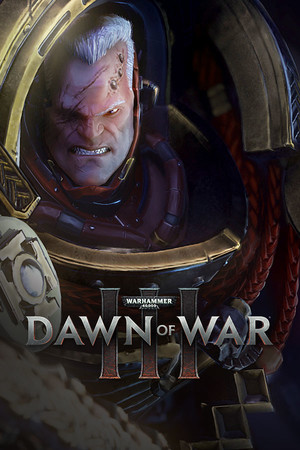
Warhammer 40,000: Dawn of War - Dark Crusade
Seven factions, one planet, zero mercy. Dark Crusade grafts a Risk-style strategic layer onto Dawn of War's squad-based RTS combat - and it's still the high-water mark of the original series.
GamerScout Verdict
Best for RTS players who want faction variety and a replayable campaign they can approach seven different ways.
Compare Prices(4 stores)
Every store in this table quotes us in euros, so the EUR figure is the price the seller actually set, not our arithmetic — which is why EUR is also the currency we rank in. We only list an offer here when the store gives us its price in euros, so nothing in this table is a number we invented.
Pick USD, PLN, GBP, CAD or AUD in the header and we convert from EUR at the European Central Bank reference rate — converted amounts are prefixed with ~. Your bank or the store may apply a different rate at checkout. We never hide offers based on where you are: everyone sees this whole table.
We may earn a commission when you buy games through links on this page — at no extra cost to you. It never affects our rankings or verdicts.
Price History
Screenshots & Media
About Warhammer 40,000: Dawn of War - Dark Crusade
Dark Crusade is a standalone expansion to Relic Entertainment's Warhammer 40,000: Dawn of War, released in 2006, and it earns the word 'standalone' in the most important sense: you do not need the base game or the Winter Assault expansion to run it. You get access to all seven factions in single-player right out of the box. If you own the earlier titles, those factions unlock for multiplayer too, but for solo play the door is wide open from the first boot. The structural hook that separates Dark Crusade from its predecessors is the metamap campaign. Think of it as a turn-based strategic layer wrapped around the real-time tactical battles you already know. The planet Kronus is divided into 25 territories; you start controlling only your faction's stronghold while the six AI factions already hold three to four provinces each. Each turn you move your army to an adjacent territory and either attack or defend. Win an attack, and your base structures persist into the next battle, which is a clever detail that rewards building wide and planning supply lines rather than just rushing every fight. Territories captured feed you planetary requisition to purchase Honor Guard units and garrison defenders, so there is always a reason to expand efficiently rather than recklessly. Stronghold assaults are the campaign's set-piece moments: each enemy faction is dug into a purpose-built, heavily scripted defensive map that plays nothing like a standard skirmish. Those missions are the best single-player content in the whole Dawn of War series. The two new factions added here are the Tau Empire and the Necrons, bringing the roster to seven. The Tau reward a ranged-focused, kite-and-shoot discipline: Fire Warriors and Stealth Suits work best when you deny the enemy close-combat range, and their vehicle and squad caps are tied to building construction in a way that punishes sloppy expansion. The Necrons are the polar opposite in feel - their entire economy flows through the single Monolith structure, which doubles as a mobile, teleporting fortress once fully restored, and most of their infantry can self-resurrect or be raised by support units. Both factions play genuinely differently from the five returning armies (Space Marines, Chaos Space Marines, Eldar, Orks, Imperial Guard), and the balance between them was widely praised at launch. Critics at the time noted that the reworked elite unit system, which hard-caps the most powerful units per army, pushed multiplayer toward genuine combined-arms decision-making instead of build-order races. The commander wargear system, where your faction leader earns equipment upgrades for hitting milestones like kills, defences, and territories held, gives the campaign a light RPG spine that keeps progression feeling tangible. Where the game shows its age is in the strategic AI on the metamap. The enemy factions will sometimes ignore obvious strategic openings and attack low-value border provinces, and the auto-resolve feature used when the AI fights among itself has a random element that can swing the late-game map state in awkward ways. On Normal difficulty the AI is soft enough that an experienced RTS player will snowball quickly; Hard is closer to the intended challenge, though the difficulty descriptors in the settings menu are reportedly misleading about the actual stat differentials. Players who want a linear story with cutscenes and scripted narrative beats will also find the campaign thin on those fronts - outside of the stronghold missions, most of the 25 territories resolve as generic skirmishes. That said, the depth of decision-making on the metamap, the faction asymmetry, and the replay value of running all seven campaigns across multiple playthroughs more than compensate for the AI gaps. For newcomers to the Dawn of War series or even to real-time strategy as a genre, Dark Crusade is arguably the most accessible entry point. The skirmish mode tutorial covers the basics competently, the interface is clean, and the emphasis on frontline combat over elaborate base-building means you spend less time tabbing through menus and more time watching Ork Boyz crash into Necron Warriors. The replayability is the real case for buying: seven distinct factions, seven different campaign endings, and a mod community that has kept the game patched and extended for almost two decades. If you are the type who colour-codes faction guides before a first playthrough, you will be here for a long time.

Strategy & simulation
Tags
System Requirements
Minimum
- Memory
- 512 MB RAM
- Storage
- 3.5 GB hard drive space
- Graphics
- 64 MB DirectX 9.0b AGP Hardware Transmation lighting
- Processor
- 2.0 Ghz Intel Pentium 4, AMD Athlon XP
- System requirements
- Windows 2000/XP
Recommended
- Memory
- 512 MB system RAM (required 8-player multiplayer games)
- Graphics
- nVidia GeForce 3 64 MB Video RAM
- Processor
- 2.4 GHz Intel Pentium 4
Keep exploring
Community Discussion
Be the first to comment on Warhammer 40,000: Dawn of War - Dark Crusade.
Reviews & Ratings
Game Info
- Developer
- Relic Entertainment
- Publisher
- SEGA
- Release Date
- Oct 9, 2006