Trenches VR
Your microphone is the mechanic that will either make or break this one: stay silent in a WWI horror maze, or your own breathing gets you killed. A clever hook stretched thin over a short, corridor-bound loop.
GamerScout Verdict
Worth one session for the microphone mechanic alone, but too short and shallow to recommend to anyone outside the VR horror faithful.
Compare Prices(4 stores)
Every store in this table quotes us in euros, so the EUR figure is the price the seller actually set, not our arithmetic — which is why EUR is also the currency we rank in. We only list an offer here when the store gives us its price in euros, so nothing in this table is a number we invented.
Pick USD, PLN, GBP, CAD or AUD in the header and we convert from EUR at the European Central Bank reference rate — converted amounts are prefixed with ~. Your bank or the store may apply a different rate at checkout. We never hide offers based on where you are: everyone sees this whole table.
We may earn a commission when you buy games through links on this page — at no extra cost to you. It never affects our rankings or verdicts.
Price History
Screenshots & Media
About Trenches VR
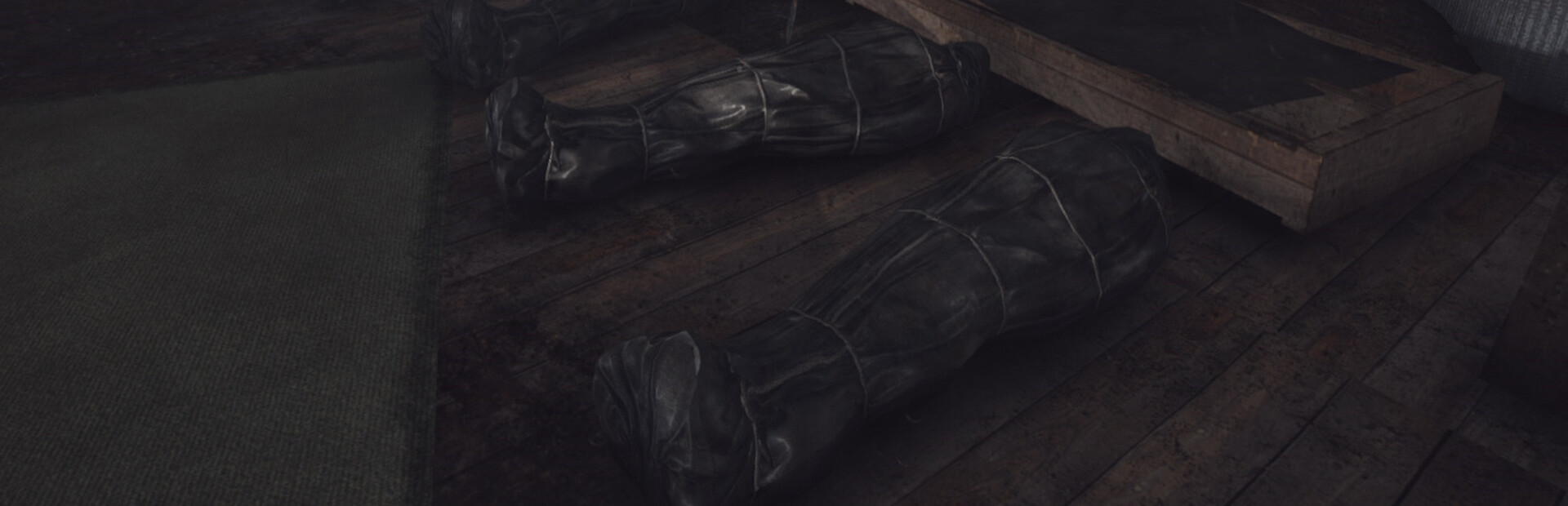
I went in expecting Trenches VR to weaponize the VR headset in some genuinely new way, and for roughly the first twenty minutes, it delivers exactly that. The real-time microphone system, where enemies detect your actual breathing, whispered panicked words, or a stifled yelp at a jump scare, is one of the most underused tricks in VR horror and it produces moments of genuine, physical tension that no flatscreen game can replicate. A subtle hand-proximity visual cue fires when you make noise, so you always know when you are about to blow your cover. That feedback loop, quiet movement versus the pressure to use your trench whistle to navigate the labyrinthine layout, is legitimately smart design. The broader setup places you in 1917, a soldier trapped behind enemy lines with a singular objective: collect nine hidden baby dolls by tracking the sound of crying, piece together notes and photographs for backstory, and get out alive. The whistle doubles as a navigation aid, pinging direction through audio cues, but using it risks alerting whatever is stalking the corridors. Chalk found in the environment lets you mark walls to avoid backtracking, which matters because the layout has procedural elements baked in: fog density, jump scare placement, and objective locations shuffle between runs, giving the roughly one-to-two-hour playtime some reason to return. Here is where the strategy brain in me wants to give credit but cannot fully do so. The decision tree in Trenches VR is shallow. The core loop is: creep forward, listen, check whistle, hide, repeat. There is no build progression, no escalating resource tension, no meaningful enemy behavior to read and counter beyond staying quiet. The enemies themselves have received AI and pathfinding improvements post-launch, and the full arm tracking and revamped inventory system show the developer responding to feedback, but the underlying structure is a corridor horror experience with a clever microphone gimmick on top. Reviewers have compared it unfavorably to much older VR horror titles, and that sting is fair. Guns found in the environment do not fire effectively, item interactions occasionally glitch, and the read-a-note mechanic requires holding documents in an exact headset-relative position or the text closes on you. The audio design genuinely earns its keep: creaking floorboards, distant artillery rumble, and spatial echoes inside the narrow wooden walkways all do heavy lifting for atmosphere. Visually the environment is functional but repetitive, muddy corridor after muddy corridor with limited enemy variety. The WWI setting, which could have grounded the horror in something historically resonant and psychologically weighty, is largely wasted. The monstrous threat feels generic rather than tied to the Great War backdrop, and character depth is thin. For a horror game, that missed narrative opportunity stings more than any jump scare. Who should pick this up? VR horror fans who want a short, intense session and have never experienced a microphone-reactive enemy system will find a solid novelty here. Players who need systemic depth, branching decisions, or a campaign worth dissecting will bounce off the loop within an hour. It is a one-person studio's concept, now backed by a publisher, and the post-launch patch activity suggests ongoing support. Go in expecting a focused scare experience with one outstanding mechanic and several rough edges, and you will leave satisfied. Expect a landmark in VR horror and you will not.

Strategy & simulation
Tags
System Requirements
Minimum
- OS
- Windows 7 64-Bit or later
- Memory
- 4 GB RAM
- Storage
- 2 GB available space
- Graphics
- NVIDIA GeForce GTX 660 2 GB or AMD equivalent
- Processor
- Intel Core i5 2500K or AMD equivalent
- VR Support
- OpenXR - Oculus Meta Quest 2, Valve index, Microsoft Motion Controller
Recommended
- OS
- Windows 10 64-Bit
- Memory
- 8 GB RAM
- Storage
- 2 GB available space
- Graphics
- NVIDIA GeForce GTX 970 or AMD equivalent
- Processor
- Intel Core i7 4790K or AMD equivalent
- VR Support
- OpenXR - Oculus Meta Quest 2, Valve index, Microsoft Motion Controller
Keep exploring
Community Discussion
Be the first to comment on Trenches VR.
Reviews & Ratings
No ratings available
Game Info
- Developer
- Steelkrill Studio
- Publisher
- Perp Games
- Release Date
- Oct 22, 2025