
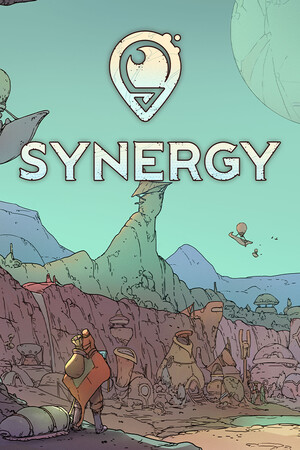
Synergy
Forget combat, forget war. Synergy hands you an alien planet and asks whether you can read an ecosystem well enough to keep a fragile colony alive through punishing dry seasons and a 60-branch research tree.
GamerScout Verdict
Best for colony-sim fans who want eco-strategy depth and can tolerate a slow first hour before the systems click into place.
Compare Prices(10 stores)
Every store in this table quotes us in euros, so the EUR figure is the price the seller actually set, not our arithmetic — which is why EUR is also the currency we rank in. We only list an offer here when the store gives us its price in euros, so nothing in this table is a number we invented.
Pick USD, PLN, GBP, CAD or AUD in the header and we convert from EUR at the European Central Bank reference rate — converted amounts are prefixed with ~. Your bank or the store may apply a different rate at checkout. We never hide offers based on where you are: everyone sees this whole table.
We may earn a commission when you buy games through links on this page — at no extra cost to you. It never affects our rankings or verdicts.
Price History
Screenshots & Media
About Synergy
My instinct when a city-builder markets itself as 'cozy' is to assume the depth has been sanded off. Synergy earns some skepticism on that front but ultimately offers more strategic texture than its Moebius-painted exterior suggests. Released from nearly a year of Early Access in April 2025, Leikir Studio's eco-builder lands in a genre slot somewhere between Against the Storm and Frostpunk, but strips out the combat and hostility and replaces that pressure with a quieter, slower kind of problem-solving. The core loop is familiar: drop a Founding Square, erect workshops and storerooms, assign workers to tents and farms. What breaks from convention is the Analysis system. Before you can meaningfully exploit any plant, you need to send scientists out with a Field Laboratory to scan it, unlocking its entry in the Knowledge Book. That mushroom? Could be lunch. Could also be poison. You genuinely do not know until someone studies it, and that investigative layer threads itself through every production decision you will make. The biome and season systems give the strategy some real teeth. Dry spells bake lakes into cracked mud, flooding drowns crops, and cold snaps drain stamina, so preparing stockpiles before seasons flip is less optional advice and more survival arithmetic. The harvest decision matters too: workers can prune plants sustainably for future yields, or rip them out entirely for an immediate windfall that depletes your local flora. Seed farms and composters can restore what you trash, but you will feel the consequences of sloppy resource management several cycles later. District placement adds another layer: buildings radiate bonuses to neighbors inside their radius, so a science quarter benefits from careful clustering, and nobody wants a forge next to a residential block. The research tree spans over 60 branches, covering irrigation methods, cultural practices, and new building types, and it genuinely rewards players who read the tooltips rather than clicking through blindly. For newer city-builder players, the tutorial is decent, walking through core mechanics without front-loading too much at once. Harmony Mode softens nearly every pressure point, slowing needs drain, reducing disease chance, and starting you with extra food and lumber. Balanced Mode is where the interesting decisions live, and experienced players will find that mode provides the right amount of friction. The campaign offers two storylines split into three chapters each, with 40-cycle deadlines creating a low-key but real sense of urgency. Sandbox drops the clock entirely for players who prefer to build at their own pace. Neither mode is short on content. The rough edges are real enough to mention honestly. Early game pacing is sluggish because population grows slowly and you simply cannot staff everything at once; expect to hammer the fast-forward button through the first cycle or two. Worker transport logic can get messy as the settlement scales, and the late-game well-being system asks you to place a parade of benches, gardens, and theaters that start to blur together visually. The camera is locked to one perspective because the art is hand-drawn, which means no rotation, a genuine limitation during dense late-game planning. The art itself is the headline achievement and also the source of readability problems: workers, buildings, and plants share a pastel palette so unified that mid-game it becomes genuinely hard to track who is doing what. Steam reviews sit at 79 percent positive across over 650 user reviews, which reads accurately: most players enjoy it, a meaningful minority bounce off the early friction. For strategy and sim players who want something that rewards patience over aggression, Synergy is a solid bet. It does not have the mechanical ceiling of a grand-strategy title and veterans of deep colony sims may find it wraps up before they hit their stride. But the Analysis mechanic is a genuinely fresh idea in a genre that often recycles the same tech-tree formula, and the late game, when your settlement is humming and every district is pulling its weight, delivers the satisfaction the slow opening promises.

Strategy & simulation
Tags
System Requirements
Minimum
- OS
- Windows 10
- Memory
- 8 GB RAM
- DirectX
- Version 11
- Storage
- 4 GB available space
- Graphics
- 6Go VRAM Graphics Card
- Processor
- Core i3 or equivalent
- Sound Card
- Any
Recommended
- OS
- Windows 10
- Memory
- 16 GB RAM
- DirectX
- Version 11
- Storage
- 6 GB available space
- Graphics
- 6Go VRAM Graphics Card
- Processor
- Core i5 or equivalent
- Sound Card
- Any
Keep exploring
Community Discussion
Be the first to comment on Synergy.
Reviews & Ratings
No ratings available
Game Info
- Developer
- Leikir Studio
- Publisher
- Goblinz Publishing
- Release Date
- Apr 16, 2025