Metal Slug Tactics
If the words 'grid-based tactics' and 'Metal Slug' in the same sentence sound like a fever dream to you, give it three missions. The Dodge-Adrenaline movement loop makes a strong case for itself fast.
GamerScout Verdict
Solid pick for tactics fans who can stomach slow unlocks; roguelite skeptics and Metal Slug purists should try before buying.
Compare Prices(7 stores)
Every store in this table quotes us in euros, so the EUR figure is the price the seller actually set, not our arithmetic — which is why EUR is also the currency we rank in. We only list an offer here when the store gives us its price in euros, so nothing in this table is a number we invented.
Pick USD, PLN, GBP, CAD or AUD in the header and we convert from EUR at the European Central Bank reference rate — converted amounts are prefixed with ~. Your bank or the store may apply a different rate at checkout. We never hide offers based on where you are: everyone sees this whole table.
We may earn a commission when you buy games through links on this page — at no extra cost to you. It never affects our rankings or verdicts.
Price History
Screenshots & Media
About Metal Slug Tactics
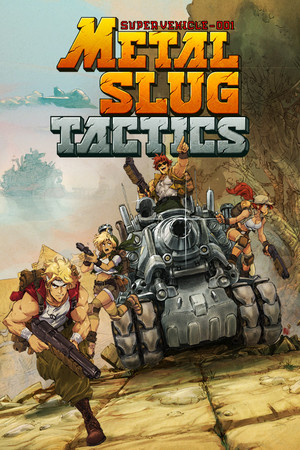
I went into Metal Slug Tactics fully expecting a nostalgia cash-in dressed up in tactical clothes. What I found instead was a genuinely considered isometric grid game that borrows more from Into the Breach than from Final Fantasy Tactics, and largely benefits from that lineage. The core conceit is clever: rather than rewarding you for turtling behind cover and inching forward like an XCOM veteran, the game punishes passivity. Move your squad aggressively and they accumulate Dodge points, which directly cancel incoming damage, and Adrenaline, which fuels your heavy special abilities like airstrikes and weapon overloads. Hang back and you starve both meters. That single design decision does a lot of heavy lifting, and once it clicks the whole game starts to feel like a tactics translation of the original series' run-and-gun energy in a way that is genuinely surprising. The mechanical layer on top of that foundation is deep enough to satisfy anyone who enjoys optimizing a squad build across a run. You pick three fighters from the Peregrine Falcon roster - Marco, Eri, Fio, Tarma, and others unlocked through play - each carrying an infinite primary weapon and a finite-ammo special weapon. Eri, for example, opens with grenades versus a grenade launcher, which immediately forces a resource-management call on turn one. The SYNC system adds further texture: position two or more soldiers in a straight line of sight to an enemy and they pile onto each other's attacks without spending extra actions. Chaining SYNC hits around a boss's weak side is satisfying in the same way a good combo in a fighting game is. Across four regions - a desert, ancient tombs, a jungle, and Sirocco City as the final zone - the meta-progression unlocks new characters, 36 weapons, and a reported 176 weapon mods. The raw number of build permutations is genuinely large for a game at this price point. Here is where the honest caveat comes in, and it matters for purchase timing. The tutorial is shallow. Crucial mechanics hide behind small tooltip pop-ups that appear mid-mission, and the UI during pre-run loadout screens is genuinely cluttered. The first three or four runs serve mainly as a slow resource accumulation phase before you can afford meaningful upgrades, which creates a rough onboarding stretch that will shed roguelite-averse players before they reach the game's actual depth. Escort missions in particular have a punishing failure condition that can terminate a well-built run through bad positioning. Launch reviews also flagged sprite bugs and some performance dips during boss transitions; check the current patch notes before buying if that history concerns you. Community sentiment on the roguelite structure is polarized: players who wanted a linear campaign are genuinely disappointed, while those comfortable with run-based progression tend to find it compulsive once the unlock gates open. For strategy players specifically, this is an accessible entry point framed as something approachable rather than a 200-hour commitment. Individual missions run only a few minutes. The turn-undo system, which lets you reverse any unit's movement and even roll back an entire previous turn, reduces the frustration of learning new mechanics without removing consequence at the run level. A lower Cadet difficulty exists for those who want to experiment with ability combinations without the full pressure. The pixel art is pristine, the isometric perspective makes threat lines readable at a glance, and the soundtrack by Tee Lopes brings the same arcade-hall energy the series has always traded on. Fans of SNK's aesthetic heritage will get their money's worth from the presentation alone.

Strategy & simulation
Tags
System Requirements
Minimum
- OS
- Windows 10
- Memory
- 8 GB RAM
- DirectX
- Version 11
- Storage
- 4 GB available space
- Graphics
- NVIDIA GeForce GT 730, 2GB or AMD Radeon HD 7570, 1GB
- Processor
- Intel Core i5-2550k or AMD FX-6300
Recommended
- OS
- Windows 10
- Memory
- 12 GB RAM
- DirectX
- Version 11
- Storage
- 4 GB available space
- Graphics
- NVIDIA GeForce GTX 650 Ti, 2 GB or AMD Radeon HD 7770, 1GB
- Processor
- Intel Core i5-4570 or Ryzen 5 1400
Keep exploring
Community Discussion
Be the first to comment on Metal Slug Tactics.
Reviews & Ratings
No ratings available
Game Info
- Developer
- Leikir Studio
- Publisher
- Dotemu
- Release Date
- Nov 5, 2024