GamerScout Verdict
Built for players who find Dangerous Waters too casual - the benchmark naval sim that still demands respect and a compatibility wrapper.
Compare Prices(0 stores)
Loading prices...
We may earn a commission when you buy games through links on this page — at no extra cost to you. It never affects our rankings or verdicts.
Price History
Screenshots & Media
About Sub Command
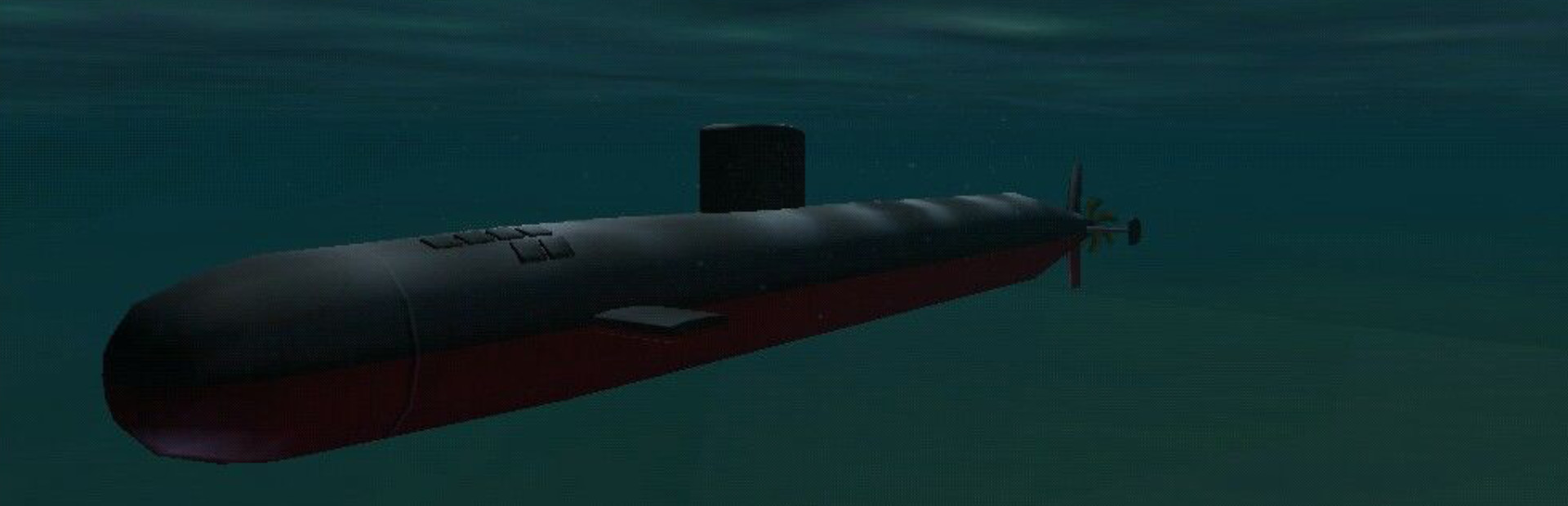
I pulled up the sonar suite on the Seawolf for the first time and sat there for twenty minutes doing nothing but listening. That is not a complaint. That is the entire point of Sub Command, and once that clicked for me, I understood why this thing still has a devoted following decades after its original release. Sonalysts built the game the same way they build military training tools, and that lineage is visible in every screen. The three playable submarines - the SSN-21 Seawolf, the Los Angeles-class 688(I), and the Russian Akula - are not reskins of each other. Each has a distinct acoustic signature, a different tube count and loadout philosophy, and a genuinely different feel at the control stations. The Akula's mechanical, braided-cable aesthetic sits in sharp contrast to the Seawolf's touch-panel interface. Playing all three is effectively learning three separate systems. The campaign itself is a 14-mission arc that can be run from either the American or Russian perspective, and the 23 standalone single missions cover an unusually wide range of objectives: battle group escort, tailing enemy ballistic missile submarines, Special Forces insertion and extraction, and pure search-and-destroy runs. A solid portion of those missions forbid firing at all, which forces you to practice the patience that defines the genre. The core loop is Target Motion Analysis. You pick up a sonar contact, you maneuver to refine the bearing solution from multiple angles, you classify it using broadband and narrowband returns, and only then do you think about weapons. Get the classification wrong and your Mark 48 ADCAP - or the Akula's external one-shot tubes - goes somewhere you did not intend. The AI cooperates in a way that feels genuinely dangerous: enemy units coordinate with each other, and a rattled Kilo submarine can call in shore-based air support. The realism slider is generous, though. AI crew assistants, quick reloads, and the Show Truth overlay let complete newcomers reduce the cognitive load incrementally. I would actually recommend newcomers start with AI assistance on and strip it away mission by mission rather than diving cold into full manual mode. The weaknesses are real and worth naming. There is no damage control system - your submarine's survivability is tracked with a health bar, which sits awkwardly against everything else the game does. The 208-page manual covers station operation in meticulous detail but offers almost no tactical guidance, so figuring out evasion maneuvers and optimal weapon employment is entirely trial and error. The three short tutorials run out of content before you have any meaningful footing. Windows compatibility on modern hardware requires a compatibility wrapper - the SUBSIM community has documented solutions, but expect a setup session before you see the main menu. The mission editor is a genuine strength, letting you build scenarios anywhere in the world using a library of over 250 platform objects, and the community around SUBSIM has produced custom campaigns over the years. For a certain type of player this is a complete package. For anyone expecting modern onboarding, it will frustrate fast. Know which you are before committing.

Strategy & simulation
Tags
System Requirements
Recommended
Windows 2000/XP, Pentium III, 256MB RAM, 1.5G Hard drive space, 32MB video card (Nvidia Geforce or ATI Radeon) DirectX 8.1 compatible sound card
Keep exploring
Community Discussion
Be the first to comment on Sub Command.
Reviews & Ratings
Game Info
- Developer
- Sonalysts
- Publisher
- Strategy First
- Release Date
- Oct 26, 2006
