Dangerous Waters
Read the 580-page PDF manual before you touch the throttle, and you'll find one of the deepest modern naval sims ever shipped on PC. Skip the manual and you're dead in the water inside ten minutes.
GamerScout Verdict
Essential for hardcore naval sim fans willing to read the manual; impenetrable and dated for everyone else.
Compare Prices(0 stores)
Loading prices...
We may earn a commission when you buy games through links on this page — at no extra cost to you. It never affects our rankings or verdicts.
Price History
Screenshots & Media
About Dangerous Waters
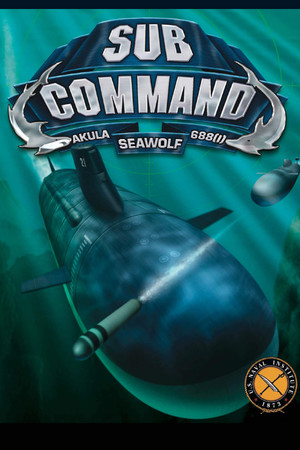
I've logged time with a lot of strategy and simulation titles, but Dangerous Waters sits in a category so narrow it practically defines itself by exclusion. This is not a game about commanding fleets from a bird's-eye map. It is a station-by-station recreation of what it actually feels like to operate a late Cold War-era naval platform, and Sonalysts built it with the credibility to back that up: the studio has professional ties to U.S. Navy acoustic and sonar research, and that expertise bleeds into every waterfall display and towed-array readout you'll spend hours staring at. Seven playable platforms are the structural backbone of the whole experience. On the subsurface side you get the 688(I), the Seawolf, the Akula, and the Kilo-class diesel-electric, which is arguably the most tactically interesting of the four. Where the nuclear boats can loiter almost indefinitely, the Kilo trades endurance for near-silence on battery power, letting you detect opponents at ranges they can't reciprocate. Above the waterline, the Oliver Hazard Perry frigate (FFG-7) flips the script entirely: you're now coordinating sonobuoy drops from an MH-60R helicopter, reading telemetry across multiple data screens, managing the ship's own towed array and hull sonar simultaneously, and only then thinking about a firing solution. The P-3C Orion maritime patrol aircraft rounds out the roster and is a sim unto itself. Campaign mode lets you command forces representing the U.S. Navy, the Russian Federation Navy, or China's PLA Navy. The campaign structure is relatively linear, but randomized starting conditions and platform selection add enough variance to keep repeat runs honest. A quick-mission generator covers shorter sessions. Multiplayer is where the concept gets genuinely unusual. The multi-station mode lets multiple players each occupy individual crew stations on the same vessel, which means one person runs the sonar, another handles weapons control, and someone coordinates navigation. Done right with voice comms and a committed crew, that's a cooperative experience with almost no equivalent in PC gaming. Battles can support more than 24 human players across platforms and teams, which on paper sounds chaotic but in practice rewards pre-planned doctrine more than anything. The honest weaknesses are real and worth naming. The 3D visuals were dated at launch and have not improved since. The interface is not welcoming: dials, acronyms, and low-resolution 2D station screens greet you at every turn, and the sparse in-game help text assumes familiarity with real-world naval procedures. The campaign itself is more a linear mission string than a dynamic strategic layer. There is also a compatibility caveat for modern Windows users that requires a DirectX 8 wrapper DLL to get the game running at all, which means a forum visit is essentially mandatory before you play. None of that changes the depth on offer. The mission editor supports a scripting language and can import scenarios from earlier Sonalysts titles including Sub Command and Fleet Command. The community-made Reinforce Alert mod, released in 2009, adds a substantial roster of new playable units and is widely considered essential by the playerbase. The modding ecosystem remains active despite the game's age, which is the clearest signal that the core simulation holds up. For anyone willing to approach this correctly, here is the practical on-ramp: download the full PDF manual before you launch for the first time, run every tutorial mission in sequence, and treat the first campaign as a learning exercise rather than a performance benchmark. The scalability is real. AI crew members can man non-command stations while you focus on one role, so you are not required to juggle every station simultaneously from day one. The simulation rewards incremental expertise, and players who invest that time routinely log hundreds of hours. If your benchmark for a good purchase is immediate accessibility, look elsewhere. If you want a simulation where reading sonar returns, plotting a target motion analysis solution, and choosing the right torpedo for a shallow-water engagement actually requires the same reasoning a real operator would use, there is almost nothing else on PC that competes at this level.

Strategy & simulation
Tags
System Requirements
Minimum
Windows XP, 550Mhz CPU, 128 MB RAM, D3D Video Card with 32MB RAM (DirectX 9.0b drivers), DX9 Sound Card, 590MB hard drive space, Internet or LAN connection for multiplayer
Recommended
1GHz+ CPU, 256 MB RA…
Keep exploring
Community Discussion
Be the first to comment on Dangerous Waters.
Reviews & Ratings
Game Info
- Developer
- Sonalysts
- Publisher
- Strategy First
- Release Date
- Feb 7, 2006