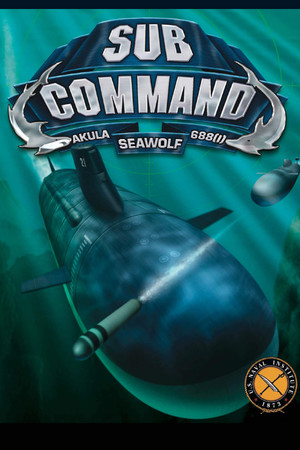
Fleet Command
Cold-War-era naval wargame that hands you a full fleet and expects you to think like an admiral. Spreadsheet-deep, unforgiving, and genuinely rewarding.
GamerScout Verdict
Best for hardcore wargame fans willing to read a manual and lose a few task forces learning how real naval tactics work.
Compare Prices(7 stores)
Every store in this table quotes us in euros, so the EUR figure is the price the seller actually set, not our arithmetic — which is why EUR is also the currency we rank in. We only list an offer here when the store gives us its price in euros, so nothing in this table is a number we invented.
Pick USD, PLN, GBP, CAD or AUD in the header and we convert from EUR at the European Central Bank reference rate — converted amounts are prefixed with ~. Your bank or the store may apply a different rate at checkout. We never hide offers based on where you are: everyone sees this whole table.
We may earn a commission when you buy games through links on this page — at no extra cost to you. It never affects our rankings or verdicts.
Price History
Screenshots & Media
About Fleet Command
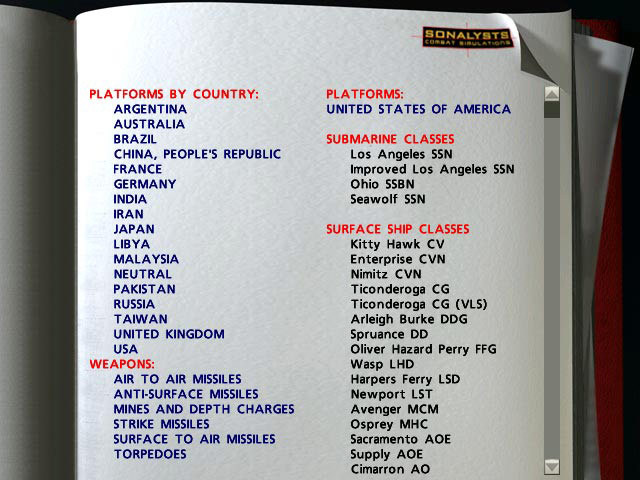
Fleet Command is a late-1990s-era naval simulation from Sonalysts that puts you in operational command of real-world surface combatants, aircraft, and submarines drawn from the world's major maritime powers. The core loop is slower and more deliberate than anything marketed as an action game: you are managing sensor contacts, plotting intercept courses, assigning weapons loadouts, and trying to keep your task force alive against an opponent who will happily fire a salvo of anti-ship missiles the moment you make a routing mistake. Think less Top Gun, more Cold War tactical manual. The unit roster covers the full spectrum of naval warfare. Frigates handle picket duty, carrier air wings project power beyond the horizon, and nuclear submarines are the terrifying wildcards that can swing an engagement before the surface ships even know a threat exists. Each platform has realistic (for its era) sensor suites, weapon ranges, and reload times. That fidelity is both the game's greatest strength and its steepest learning curve. There is no hand-holding waypoint that tells you a submarine is 40 miles off your port bow. You triangulate, you guess, you sometimes lose a cruiser because you guessed wrong. The feedback loop is brutal and educational in equal measure. Now, the honest word on accessibility: Fleet Command pre-dates modern tutorial design by a generation. The in-game documentation is dense, and the interface has aged visibly. New players should budget their first two or three sessions just for familiarisation. Start with the smaller scenarios, read the manual (yes, actually read it), and resist the urge to fight a carrier battle group before you understand how sonar prosecution works. Approached that way, the game opens up into something genuinely satisfying. Scenario depth, faction variety, and the simulation-grade physics reward the time investment in ways that more casual naval games simply do not. Where Fleet Command shows its age most clearly is AI consistency. The enemy can be brilliantly passive and realistically evasive in one scenario, then make inexplicable routing choices in another. It does not break immersion fatally, but players accustomed to modern wargame AI should calibrate expectations. The mod and scenario community around the game extended its life considerably for a period, though community activity has quieted significantly since release. What scenarios exist are worth seeking out, because user-made content often filled in the historical conflicts the base campaign left on the table. If you want a modern, polished naval sim with a tutorial that holds your hand, look elsewhere. If you want a game that treats international maritime conflict with simulation-grade seriousness, gives you destroyers, attack submarines, and carrier strike groups to orchestrate, and rewards methodical planning over twitch reflexes, Fleet Command still delivers that experience in a way few titles have replicated. The 88 percent positive Steam rating from a small but dedicated playerbase says more than any review score could: the people who click with this game really click with it.

Strategy & simulation
Tags
System Requirements
Recommended
Windows 2000/XP, Pentium III, 256MB RAM, 1.5G Hard drive space, 32MB video card (Nvidia Geforce or ATI Radeon) DirectX 8.1 compatible sound card
Keep exploring
Community Discussion
Be the first to comment on Fleet Command.
Reviews & Ratings
Game Info
- Developer
- Sonalysts
- Publisher
- Strategy First
- Release Date
- Oct 26, 2006