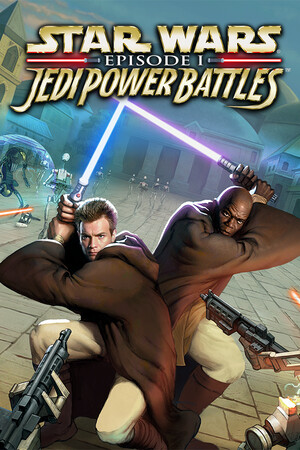
STAR WARS™: Episode I: Jedi Power Battles™
Nostalgia does a lot of heavy lifting here. A 25-year-old arcade brawler with freshened visuals and couch co-op that's fun in short bursts but hasn't fixed the janky bones underneath.
GamerScout Verdict
Worth it only for Phantom Menace nostalgists playing couch co-op; everyone else has far better Star Wars action options available.
Compare Prices(6 stores)
Every store in this table quotes us in euros, so the EUR figure is the price the seller actually set, not our arithmetic — which is why EUR is also the currency we rank in. We only list an offer here when the store gives us its price in euros, so nothing in this table is a number we invented.
Pick USD, PLN, GBP, CAD or AUD in the header and we convert from EUR at the European Central Bank reference rate — converted amounts are prefixed with ~. Your bank or the store may apply a different rate at checkout. We never hide offers based on where you are: everyone sees this whole table.
We may earn a commission when you buy games through links on this page — at no extra cost to you. It never affects our rankings or verdicts.
Price History
Screenshots & Media
About STAR WARS™: Episode I: Jedi Power Battles™
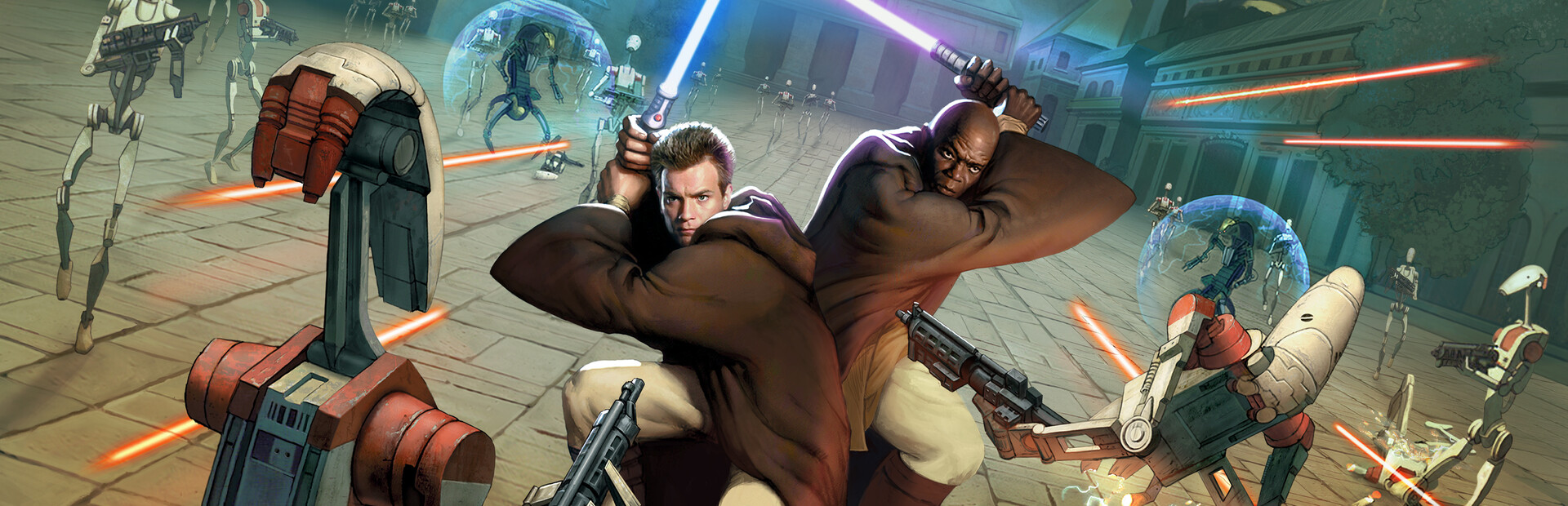
I've spent enough time with twitchy shooters and movement-heavy action games to know when a control scheme is fighting me, and Jedi Power Battles fights back constantly. This is a remaster of a year-2000 arcade-style beat-em-up, the kind of thing that lived in the same genre space as Golden Axe and Streets of Rage, transplanted into The Phantom Menace setting. Ten linear levels, side-scrolling perspective, waves of B-1 battle droids and droidekas to carve through, and a final confrontation with Darth Maul that reviewers across the board agree is genuinely painful. That pitch is either going to hook you immediately or leave you completely cold. The character roster is where this remaster does its best work. Aspyr has unlocked everyone from the jump, meaning Qui-Gon Jinn, Obi-Wan Kenobi, Mace Windu, Plo Koon, Adi Gallia, and previously platform-exclusive Ki-Adi-Mundi are all available without grinding. Each Jedi plays slightly differently: Obi-Wan's Force Saber Dash cuts through groups fast for aggressive AOE clearing, Ki-Adi-Mundi's mind control stuns enemies and rewards patience, and Adi Gallia is widely considered the most combat-viable character for anyone trying to actually push through on harder difficulty settings. New Game Plus opens up enemy characters including Droidekas and even Jar Jar Binks, which is exactly the kind of absurd bonus content that extends a short game's shelf life. The scoring system awards points per enemy killed, which stack at stage end into combat bonuses, new combos, and health and Force upgrades. Shallow, but it creates a loop. Here is where I have to be blunt about the mechanical state of things. The blaster deflect timing is the one mechanic that genuinely holds up. You watch for enemy cues, press block at the right moment, and the bolt returns. Miss the window and it just blocks passively. It rewards attention and gives a Jedi fantasy that feels earned on a small scale. Everything else is rougher. Combos are clunky and rarely worth the input compared to button-mashing. Platforming is legitimately bad: jump arcs are floaty, momentum inconsistently cuts out mid-chain, collision detection is unreliable, and the game has a fall damage system with almost no visual feedback for where safe ground actually is. Reviewers also flagged persistent bugs including random crashes, invisible walls, and the single-save-slot system that can overwrite a Jedi-mode run if you accidentally hit New Game. Aspyr patched in modern controls alongside the classic layout, but the underlying movement never got the rework it needed. The visuals got cleaned up from the Dreamcast source code, characters stay low-poly but textures are sharper and the frame rate is stable. John Williams' soundtrack, including Duel of the Fates, is untouched, which is the right call. Bonus minigames include a Kaadu race, a Droideka survival challenge, and a mode where you poke Jar Jar Binks around a field with an electropole, which is either peak Star Wars parody or confirmation that the developers knew exactly what they had. Local co-op is the strongest argument for buying this. Playing through the stages with someone on the couch softens the difficulty spikes and turns the jank into shared chaos rather than solo frustration. If you were ten years old in 2000 and this was one of your first Star Wars games, there is something real here. If you came in fresh expecting the lightsaber feel of Jedi Survivor or Jedi Fallen Order, you will be confused and annoyed within the first level. The remaster did the preservation work correctly and added genuine content on top, but it declined to fix the problems that made critics mixed on the original game 25 years ago. That is the honest trade-off you are accepting.

Shooters
Tags
System Requirements
Minimum
- OS
- Windows 10
- Memory
- 4 GB RAM
- Storage
- 10 GB available space
- Graphics
- Nvidia GeForce GTX 650 / AMD Radeon R7 260X / Intel Arc A310
- Processor
- AMD Phenom II X4 945 / Intel Core i5-750
Recommended
- OS
- Windows 10
- Memory
- 8 GB RAM
- Graphics
- Intel HD 630 / AMD Radeon R7 - A12-9800
- Processor
- AMD Phenom II X4 945 / Intel Core i5-750
Keep exploring
Community Discussion
Be the first to comment on STAR WARS™: Episode I: Jedi Power Battles™.
Reviews & Ratings
No ratings available
Game Info
- Developer
- Aspyr
- Publisher
- Aspyr
- Release Date
- Jan 23, 2025