Rock of Ages 3: Make & Break
Boulder-rolling tower defense with a Monty Python sense of humor and a surprisingly deep level editor. Chaotic fun that wears thin solo but shines in short bursts.
GamerScout Verdict
Best picked up for couch multiplayer sessions - the strategy layer is real but too shallow to carry long solo runs.
Compare Prices(6 stores)
Every store in this table quotes us in euros, so the EUR figure is the price the seller actually set, not our arithmetic — which is why EUR is also the currency we rank in. We only list an offer here when the store gives us its price in euros, so nothing in this table is a number we invented.
Pick USD, PLN, GBP, CAD or AUD in the header and we convert from EUR at the European Central Bank reference rate — converted amounts are prefixed with ~. Your bank or the store may apply a different rate at checkout. We never hide offers based on where you are: everyone sees this whole table.
We may earn a commission when you buy games through links on this page — at no extra cost to you. It never affects our rankings or verdicts.
Price History
Screenshots & Media
About Rock of Ages 3: Make & Break
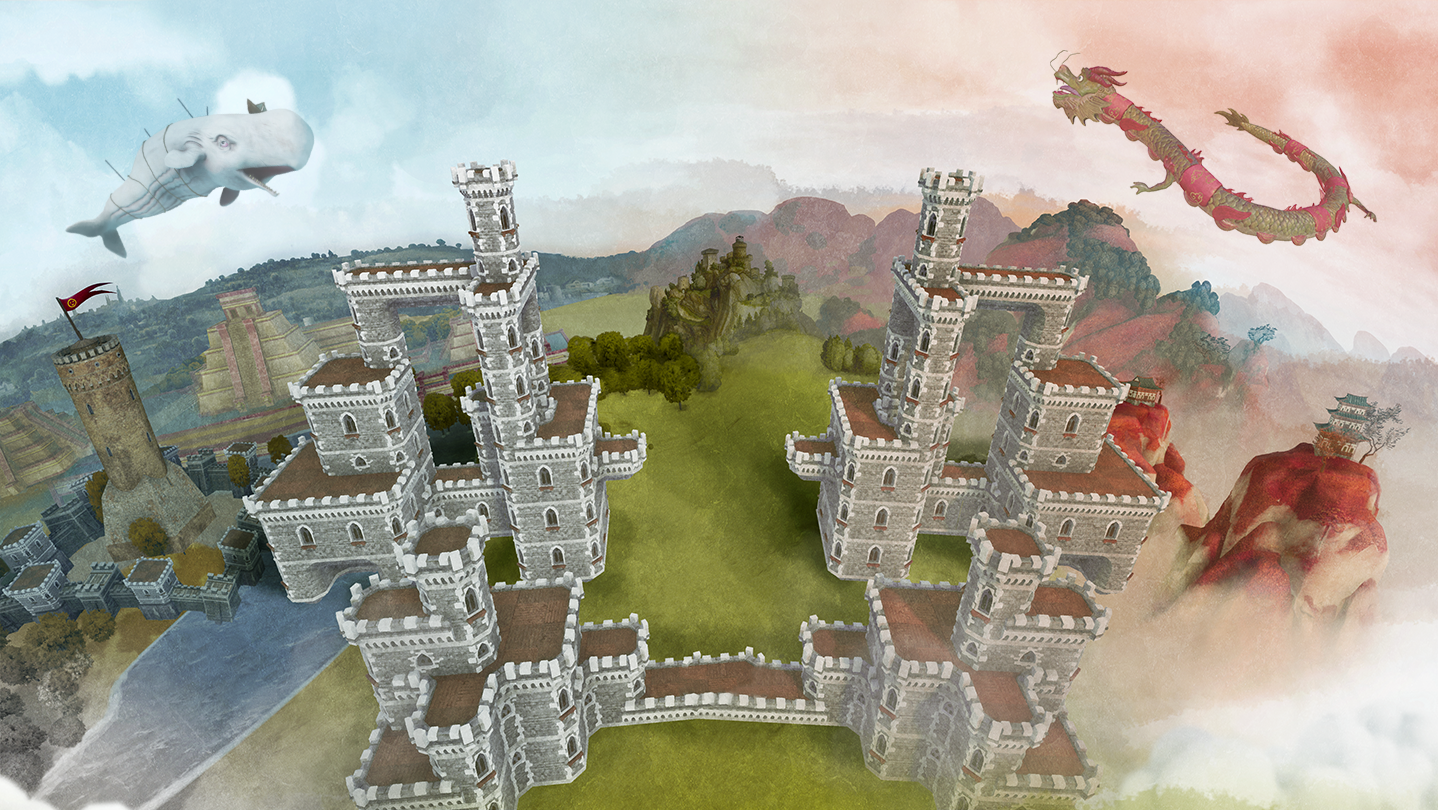
Rock of Ages 3: Make & Break is a genuinely strange hybrid - part tower defense, part arcade racer, entirely committed to its own absurdist bit. ACE Team's formula is simple on paper: you place defensive units along a path to stop your opponent's boulder, then you personally roll your own giant boulder down a separate lane, smashing through their defenses to destroy their gate. Both things happen simultaneously, so every match is a split-screen scramble between careful build decisions and white-knuckle boulder control. It sounds chaotic because it is, and for the right player in the right session length, that chaos is exactly the point. From a strategy angle, the tower defense layer is the most interesting part. Units range from catapults and cannons to elephants and giant fans that redirect your opponent's path. Placement timing matters - you have a narrow window between boulder launches to drop and rearrange defenses, which compresses the decision loop into something resembling a real-time puzzle. Harder difficulty and competitive play force you to prioritize momentum control: do you stack DPS towers to chip the boulder's health bar, or do you invest in redirectors that buy extra seconds? That tension is real, and when a well-placed wall sends someone's boulder sailing into a gorge, the payoff lands. The catch is that the AI in single-player is not especially threatening, and the campaign mode leans harder on novelty level gimmicks and historical art pastiche humor than on escalating strategic challenge. The level editor is the headline feature ACE Team added in this third entry, and it deserves credit for being genuinely functional rather than a cosmetic checkbox. You can build custom boulder paths, place hazards, set win conditions, and publish to the community. The tool set is approachable enough that non-creators can experiment, and the Steam Workshop library has a respectable number of community stages to extend the game's life beyond the base content. That said, the editor's ceiling is not especially high - you are not building a new engine, you are remixing what is already there. For a content creation tool attached to a mid-budget arcade game, it is solid. For players expecting Halo Forge, temper expectations accordingly. Where the game stumbles is in sustained solo play. The campaign chapters are bite-sized and carried heavily by ACE Team's art direction - hand-painted historical vignettes running from ancient Greece through the Renaissance with absurdist setpieces bolted on - but the underlying level design variability is limited. After a few hours the loop risks feeling repetitive without a human opponent to adapt against. Multiplayer, local or online, fixes this almost entirely. The game's entire personality sharpens when both players are actively reacting to each other's builds in real time. Online matchmaking population is thin, though, which is a practical concern worth noting if you are planning a primarily online experience. The Metacritic score of 72 and mixed Steam reception (75% positive across over 1,700 reviews) are fair reads. This is not a game with hidden depth that reviewers missed - it is a game where the fun-per-hour curve peaks early and plateaus, but the ceiling of that peak is genuinely enjoyable. Think of it as a party game with a strategy coat on: best played in hour-long sessions with friends who do not take losing well.

Strategy & simulation
Tags
System Requirements
Minimum
- Processor
- Intel Core i5-760 2.8 GHz / AMD Athlon X4 740 3.2 GHz
- Memory
- 8 GB RAM
- DirectX
- Version 11
- Storage
- 5 GB available space
Recommended
- Processor
- Intel Core i7-4771 3.5 GHz / AMD FX-9370 4.4 GHz
- Memory
- 8 GB RAM
- Graphics
- NVIDIA GeForce GTX 970 (4…
Keep exploring
Community Discussion
Be the first to comment on Rock of Ages 3: Make & Break.
Reviews & Ratings
Game Info
- Developer
- ACE Team
- Publisher
- Modus Games
- Release Date
- Jul 21, 2020