Rock of Ages
Tower defense meets bowling meets Monty Python, and somehow it works - for about four hours solo, then genuinely better with a friend watching you panic-place catapults.
GamerScout Verdict
Best for couch PvP sessions with someone who appreciates absurdist humor; solo campaign runs dry fast.
Compare Prices(5 stores)
Every store in this table quotes us in euros, so the EUR figure is the price the seller actually set, not our arithmetic — which is why EUR is also the currency we rank in. We only list an offer here when the store gives us its price in euros, so nothing in this table is a number we invented.
Pick USD, PLN, GBP, CAD or AUD in the header and we convert from EUR at the European Central Bank reference rate — converted amounts are prefixed with ~. Your bank or the store may apply a different rate at checkout. We never hide offers based on where you are: everyone sees this whole table.
We may earn a commission when you buy games through links on this page — at no extra cost to you. It never affects our rankings or verdicts.
Price History
Screenshots & Media
About Rock of Ages
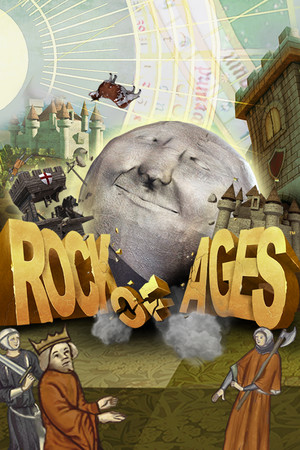
I'll be straight with you: I came into Rock of Ages skeptical. Hybrid genres with gimmick hooks usually fall apart in the hands-on, and rolling a boulder through historical dioramas sounds like a Steam sale impulse buy you forget in a week. What ACE Team actually built here is something weirder and more coherent than the pitch suggests - a simultaneous attack-and-defend game where both players are rolling giant rocks at each other's castle gates while frantically placing defensive units on their own side in real time. It clicks fast, and when it clicks, it genuinely makes you laugh. The loop is this: you get a short build phase to drop obstacles - cows, windmills, catapults, dynamite, archers - anywhere on the green-zone terrain between your gate and your opponent's boulder spawn. Then you take manual control of your boulder and steer it downhill through whatever mess your opponent laid out, trying to hit the enemy gate with maximum force. Damage stacks across multiple runs. First player to smash the gate open and flatten the opponent wins. The War mode is where this format shines, especially against a human. The Time Trial and SkeeBoulder modes are decent palette cleansers - SkeeBoulder in particular is essentially life-sized Skee-Ball with a boulder, which is exactly as chaotic as it sounds. The campaign runs you through five historical art periods - Ancient Greek, Medieval, Renaissance, Rococo, and Romanticism - each with its own visual identity and a roster of famous faces to crush: King Leonidas, Napoleon, and others treated with full Pythonesque absurdity. The cutscene humor lands more often than it should. The art direction is genuinely distinctive, mixing flat paper-doll caricatures with 3D terrain in a way that still looks charming even at this age. What doesn't hold up as well is the single-player difficulty. The AI is not a real opponent. Most campaign levels can be brute-forced without placing a single defensive unit, which means the strategy layer the game is pitching you never really gets stress-tested solo. Reviewers at launch flagged this, and nothing has changed since. The real weakness is depth over time. Matches trend toward a footrace more than a tactical contest - whoever rolls fastest and takes least damage usually wins, and the defense layer can feel like speed-bump placement rather than genuine strategy. Repeat sessions in solo make this obvious by the second sitting. Local split-screen is the correct way to play: having someone next to you reacting to what you built adds the unpredictability the AI never delivers. Online PvP exists and functions, but the player pool in 2025 is thin enough that finding a match is not guaranteed. If you want more of this formula with actual depth, Rock of Ages 2 expanded the boulder variety and pushed multiplayer to four players - worth considering as the upgrade path.

Shooters
Tags
System Requirements
Minimum
- OS
- Windows XP/Vista/7
- Sound
- Windows supported Sound Card
- Memory
- 1.5 GB or higher
- Graphics
- 256mb video ram or better (GeForce 7 series or higher/Radeon HD3000 series or higher)
- Internet
- Online play requires Broadband Internet Connection
- DirectX®
- 9.0c
- Processor
- Dual Core 1.6 GHz or better
- Hard Drive
- 1.2 GB
Keep exploring
Community Discussion
Be the first to comment on Rock of Ages.
Reviews & Ratings
Game Info
- Developer
- ACE Team
- Publisher
- SEGA
- Release Date
- Sep 7, 2011