Robot Rescue Revolution
One clever mechanic, one hundred levels, and zero hand-holding: the linked-control puzzle concept is genuinely interesting, but the execution tests patience more than ingenuity.
GamerScout Verdict
Worth a look for Sokoban or Chip's Challenge fans at a low price; everyone else will hit the repetition wall too fast.
Compare Prices(5 stores)
Every store in this table quotes us in euros, so the EUR figure is the price the seller actually set, not our arithmetic — which is why EUR is also the currency we rank in. We only list an offer here when the store gives us its price in euros, so nothing in this table is a number we invented.
Pick USD, PLN, GBP, CAD or AUD in the header and we convert from EUR at the European Central Bank reference rate — converted amounts are prefixed with ~. Your bank or the store may apply a different rate at checkout. We never hide offers based on where you are: everyone sees this whole table.
We may earn a commission when you buy games through links on this page — at no extra cost to you. It never affects our rankings or verdicts.
Price History
Screenshots & Media
About Robot Rescue Revolution
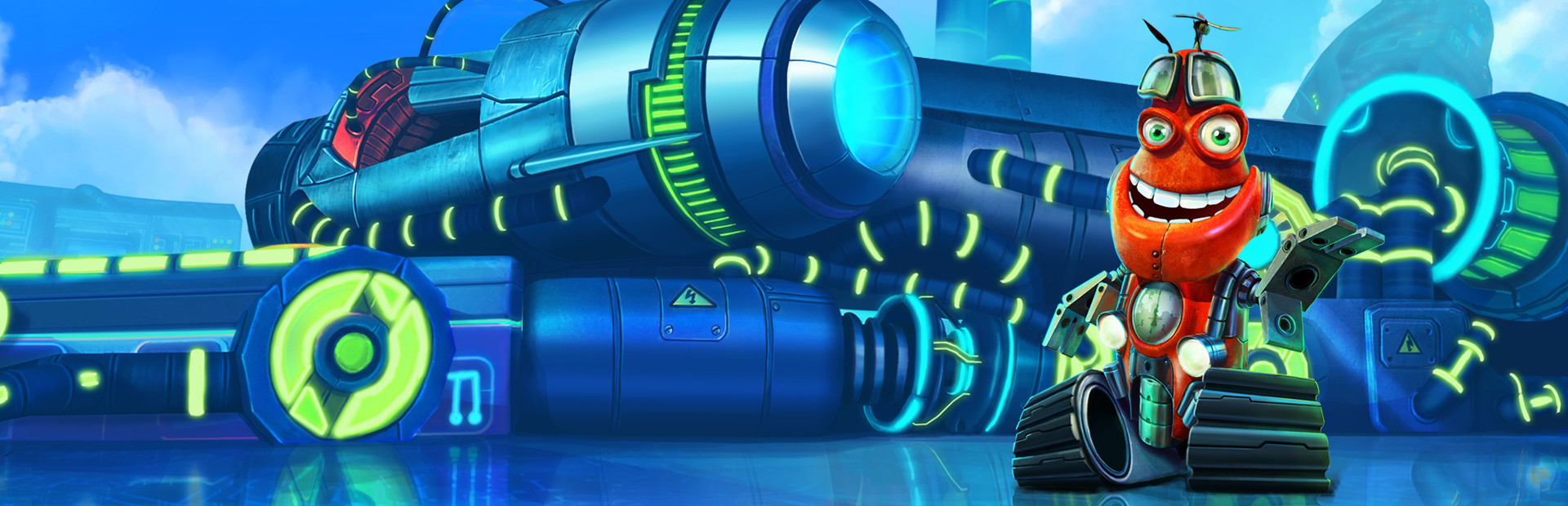
My first few minutes with Robot Rescue Revolution felt like a quiet little eureka. You press left, and every robot on the screen moves left simultaneously. They are all in different positions inside a single-screen maze, facing different hazards, and the only input available is a direction. That single constraint, all robots mirroring your command regardless of where they stand, is a genuinely elegant puzzle foundation. Sokoban used a similar spirit of indirect logic, and there is a distant family resemblance here worth acknowledging. The problem is that the game never fully trusts the idea. The three worlds, Jungle, Winter Wonderland, and Hi-Tech, each introduce new trap types: flame throwers, Tesla machines, color-coded doors triggered by switches elsewhere on the map, conveyor belts, cloning machines that multiply your robots, teleporters, glue patches that freeze a robot for one turn, and even Sokoban-style pushable objects. On paper that is a rich toolkit. In practice, reviewers who covered the console release consistently noted that the difficulty curve spikes awkwardly early and then settles into repetition rather than escalating cleverness. The roughly ninety-five single-player maps, plus fifteen tutorial stages, give you a lot of screen time, but the feeling of genuine aha-moment design becomes sparse past the first world. The art style is where I have the most personal reservation. The top-down presentation is clean enough to read at a glance, but the overall aesthetic lacks the kind of considered handcraft that makes a small puzzle game feel like it cares about you. The visuals were described by multiple outlet reviewers as messy or overly fussy, and that tracks when you actually watch footage: there is a lot happening on screen without a strong visual hierarchy guiding the eye. For a game where reading the board in one second is the entire skill, clarity should have been the absolute priority. There is genuine value in the local multiplayer suite. Co-op mode lets a second player share the burden of guiding their own set of robots, and the competitive Compete Mode puts two players on identical-but-mirrored maps to race for the exit first. The two-player pool has forty-five dedicated levels, which is a solid amount of couch content. The level editor, which lets you build and upload custom maps, adds a ceiling on longevity that the solo campaign alone would not justify. Whether an active community still exists around custom level sharing in 2024 is a fair question with no clean answer. For a very specific audience, mainly players who loved Chip's Challenge, classic Sokoban variants, or the older handheld Robot Rescue titles that preceded this, there is enough mechanical DNA here to warrant exploration at a low price point. The core concept is not broken. The score system, which grades each cleared level on move count and time, offers a secondary challenge loop for completionists chasing leaderboard positions. But if you are coming in hoping for the same crafted-puzzle warmth of a Stephen's Sausage Roll or even a mid-tier Picross session, the lack of authorial care in level design will feel like a missed handshake.

Indie & narrative
Tags
System Requirements
Minimum
- OS
- Windows XP or newer
- Memory
- 1500 MB RAM
- DirectX
- Version 9.0c
- Storage
- 600 MB available space
- Graphics
- Direct3D 10 capable video card (NVIDIA® Geforce 8800 GT or AMD® Radeon™ HD 3870 or above) with at least 512 MB video memory. Some low-end integrated cards may not work.
- Processor
- Intel® Pentium® 4 CPU 3.00GHz or similar AMD Athlon 64
- Sound Card
- DirectX 9 Compatible Audio
Recommended
- OS
- Windows Vista or newer
- Memory
- 2 GB RAM
- DirectX
- Version 10
- Storage
- 600 MB available space
- Graphics
- Direct3D 11 capable video card (NVIDIA® Geforce GTS 450 or AMD® Radeon™ HD 5670 or above) with at least 512 MB video memory. Low-end integrated and laptop cards are not recommended.
- Processor
- Core 2 Duo or similar AMD Athlon X2
- Sound Card
- DirectX 9 Compatible Audio
Keep exploring
Community Discussion
Be the first to comment on Robot Rescue Revolution.
Reviews & Ratings
No ratings available
Game Info
- Developer
- Teyon
- Publisher
- Teyon
- Release Date
- Jul 11, 2014