Compare pyramida prices across trusted key stores and find the best deal. Developed by Sokpop Collective. Published by Sokpop Collective. Released on 8/14/2020. Available on PC, Mac. Genres: Indie, Strategy.

Tiny scope, real bite: Pyramida earns its 84% Steam rating by distilling the colony-sim loop down to a single ruthless question, can you keep three villagers alive long enough to complete an alien pyramid?

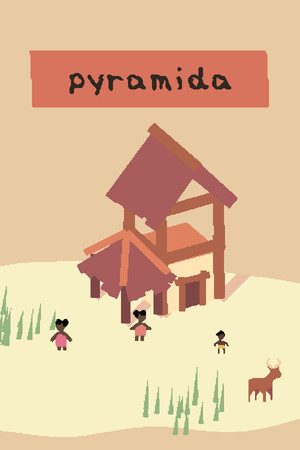
I have a weakness for colony sims that strip away the UI chrome and force you to actually think about your supply chain instead of reading tooltips for twenty minutes, and Pyramida is the leanest version of that experiment I have played. Sokpop Collective built this in a matter of weeks as part of their rapid-release output, and it shows in the scope: one fixed map, one objective, one ticking clock. What it lacks in breadth it makes up for in pressure. The moment you realize your food meter is bleeding out because your three starting villagers are hauling logs instead of gathering berries, you are already playing the game correctly. The build order is the core skill here. You start with a town center, a food cap of 100, and a fog-of-war map hiding antelopes, oases, and the ruins of an ancient pyramid. The early priority is almost always the archer hut, then a sawmill, then a mine camp and masonry to source stone. Pantries expand your food capacity by 50 per structure, workshops accelerate all labor by 50%, and schools halve the time it takes children to grow into full workers. That is the whole tech tree, and it fits in your head after one failed run. The alien you find near the pyramid grants an immediate bonus villager, which is significant when your population is three people and skeleton attacks start at nightfall. Combat is manual: select villagers, right-click the skeleton, try to group up because one-on-one your people lose. Drag-select is imprecise under pressure, and that friction is the game's most honest design flaw. The no-pause policy is a deliberate choice from the developer, and it divides players sharply. Quitting to the menu and reloading is the only way to stop time, which works as a mechanical workaround but kills any sense of flow when you are also managing a bakery, a windmill, and three skeletons at the fence line simultaneously. Balancing farming versus hunting is another live calculation: farming is slower and less efficient early on, so leaning heavily on hunters while the berry bushes last is the smarter opening, but hunters classified as idle can get auto-assigned to demolition tasks by accident, which has caused more than a few players to accidentally tear down their own town center. These are rough edges that were partially addressed in patches, though the game has not received major updates in years and the community broadly treats it as a finished release. For players who want to 100% the twelve achievements, there is a real breadth of challenge tucked inside the short runtime. Speedrunning the pyramid completion in under 20 days requires tight micromanagement and skipping non-essential buildings entirely. Vegan and Pacifist runs ban the archer hut outright, forcing you to absorb skeleton damage with raw population numbers. Metropolis requires 30 villagers, which means finishing the main objective first, then shifting into a post-game expansion mode limited only by map resources. None of these are padding; they change how you weight every early-game decision. Where does that leave someone deciding whether to buy it right now? The Steam rating of 84% across nearly 700 reviews is accurate: this is a focused, charming, imperfect little thing that respects your time better than most games twice its price. The no-tutorial design will irritate players who expect onboarding, and the lack of a pause button is a genuine accessibility gap. But if you have ever wanted to understand how a colony sim actually ticks before committing 200 hours to one, Pyramida is an honest, low-cost lesson. Diego, Scout Team

pyramida

pyramida

Aug 14, 2020Sokpop Collective
GamerScout Says

Tiny scope, real bite: Pyramida earns its 84% Steam rating by distilling the colony-sim loop down to a single ruthless question, can you keep three villagers alive long enough to complete an alien pyramid?

PCMac
ProtonDB Platinum
Best Price Available
€0.00
at N/A
Historical low: €0.74

GamerScout Verdict

Best for colony-sim curious players who want a tight, low-commitment test of build-order thinking with genuine bite.

Compare Prices(0 stores)

Loading prices...

We may earn a commission when you buy games through links on this page — at no extra cost to you. It never affects our rankings or verdicts.

Price History

Historical low
€0.7410 Jun 2026
Keyshops
€0.68€0.72€0.76€0.8010 Jun21 Jun3 Jul14 Jul25 Jul
10 Jun — 25 Jul
Create alert

Screenshots & Media

About pyramida

I have a weakness for colony sims that strip away the UI chrome and force you to actually think about your supply chain instead of reading tooltips for twenty minutes, and Pyramida is the leanest version of that experiment I have played. Sokpop Collective built this in a matter of weeks as part of their rapid-release output, and it shows in the scope: one fixed map, one objective, one ticking clock. What it lacks in breadth it makes up for in pressure. The moment you realize your food meter is bleeding out because your three starting villagers are hauling logs instead of gathering berries, you are already playing the game correctly. The build order is the core skill here. You start with a town center, a food cap of 100, and a fog-of-war map hiding antelopes, oases, and the ruins of an ancient pyramid. The early priority is almost always the archer hut, then a sawmill, then a mine camp and masonry to source stone. Pantries expand your food capacity by 50 per structure, workshops accelerate all labor by 50%, and schools halve the time it takes children to grow into full workers. That is the whole tech tree, and it fits in your head after one failed run. The alien you find near the pyramid grants an immediate bonus villager, which is significant when your population is three people and skeleton attacks start at nightfall. Combat is manual: select villagers, right-click the skeleton, try to group up because one-on-one your people lose. Drag-select is imprecise under pressure, and that friction is the game's most honest design flaw. The no-pause policy is a deliberate choice from the developer, and it divides players sharply. Quitting to the menu and reloading is the only way to stop time, which works as a mechanical workaround but kills any sense of flow when you are also managing a bakery, a windmill, and three skeletons at the fence line simultaneously. Balancing farming versus hunting is another live calculation: farming is slower and less efficient early on, so leaning heavily on hunters while the berry bushes last is the smarter opening, but hunters classified as idle can get auto-assigned to demolition tasks by accident, which has caused more than a few players to accidentally tear down their own town center. These are rough edges that were partially addressed in patches, though the game has not received major updates in years and the community broadly treats it as a finished release. For players who want to 100% the twelve achievements, there is a real breadth of challenge tucked inside the short runtime. Speedrunning the pyramid completion in under 20 days requires tight micromanagement and skipping non-essential buildings entirely. Vegan and Pacifist runs ban the archer hut outright, forcing you to absorb skeleton damage with raw population numbers. Metropolis requires 30 villagers, which means finishing the main objective first, then shifting into a post-game expansion mode limited only by map resources. None of these are padding; they change how you weight every early-game decision. Where does that leave someone deciding whether to buy it right now? The Steam rating of 84% across nearly 700 reviews is accurate: this is a focused, charming, imperfect little thing that respects your time better than most games twice its price. The no-tutorial design will irritate players who expect onboarding, and the lack of a pause button is a genuine accessibility gap. But if you have ever wanted to understand how a colony sim actually ticks before committing 200 hours to one, Pyramida is an honest, low-cost lesson.

Diego
Diego · Scout Team

Strategy & simulation

Tags

singleplayerachievementstier:sub-5Colony SimBuild OrderDay-Night CycleMicro-ManagementFixed MapAchievement HuntingNo PauseDesert SettingShort-Run Replayable

System Requirements

Minimum

OS
Windows 7
Memory
4 GB RAM
DirectX
Version 9.0
Storage
100 MB available space
Graphics
DirectX 9 compatible with at least 500MB of memory
Processor
Dual Core 2 GHz
Sound Card
DirectX 9 compatible sound card or integrated sound chip

Keep exploring

Community Discussion

Be the first to comment on pyramida.

Reviews & Ratings

No ratings available

Game Info

Developer
Sokpop Collective
Publisher
Sokpop Collective
Release Date
Aug 14, 2020

Price Alert

Get notified when the price drops below your target!

Create Alert

No card? Pay another way

Top up your Steam Wallet or buy crypto with any card — instant delivery, no bank account needed.

More from Sokpop Collective

Buy smarter: helpful guides

Looking for more? See games like pyramida →

Frequently asked questions about pyramida

How much does pyramida cost?

pyramida pricing changes often and varies by store, edition and region. The live price table on this page compares the cheapest in-stock offers from trusted key stores like Eneba and Kinguin, so you always see the current lowest price before you buy.

Where can I buy pyramida cheapest?

Compare pyramida prices across every verified store in the price table on this page. We list the cheapest in-stock key and store offers, updated regularly, so you always see the best current deal before you buy.

What platforms is pyramida available on?

pyramida is available on PC, Mac.

When was pyramida released?

pyramida was released on 14 August 2020.

Who developed pyramida?

pyramida was developed by Sokpop Collective.