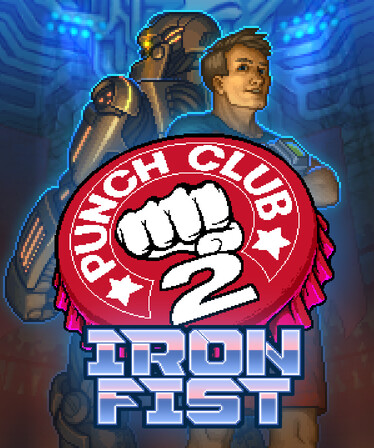

Punch Club 2: Fast Forward
Closer to a cyberpunk life-sim with fists than a fighting game. If passive combat management and spreadsheet-style stat juggling sound appealing, this one delivers around 20 hours of that loop competently.
GamerScout Verdict
Best for fans of stat-juggling management sims who can tolerate passive combat and a mid-game pacing slump.
Compare Prices(10 stores)
Every store in this table quotes us in euros, so the EUR figure is the price the seller actually set, not our arithmetic — which is why EUR is also the currency we rank in. We only list an offer here when the store gives us its price in euros, so nothing in this table is a number we invented.
Pick USD, PLN, GBP, CAD or AUD in the header and we convert from EUR at the European Central Bank reference rate — converted amounts are prefixed with ~. Your bank or the store may apply a different rate at checkout. We never hide offers based on where you are: everyone sees this whole table.
We may earn a commission when you buy games through links on this page — at no extra cost to you. It never affects our rankings or verdicts.
Price History
Screenshots & Media
About Punch Club 2: Fast Forward
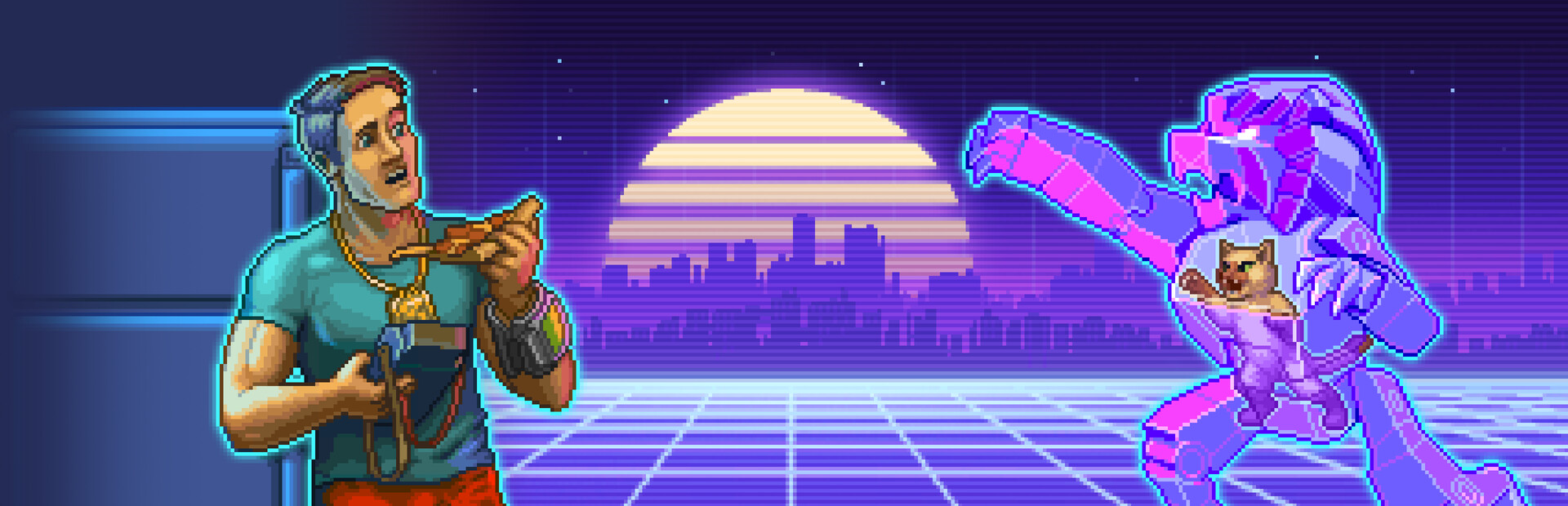
I went into Punch Club 2: Fast Forward expecting a breezy arcade experience and had to recalibrate fast. This is, at its core, a fighter management sim dressed up in pixel-art neon. You are not pressing buttons to throw punches. You are planning training schedules, rationing stamina between strength, agility, and endurance stats, picking fight moves between rounds based on reading your opponent's setup, and carefully balancing a GPP (Good Person Points) currency that gates story progression. That layering of systems is exactly what makes it interesting to me, and exactly what will bounce newcomers who expected a sports game. The three primary stats, strength, stamina, and agility, feed directly into which combat styles and move trees open up for you. Fights themselves are passive, playing out in bars while you intervene between rounds to swap moves and counter the opponent's read on you. The tonus mechanic adds another wrinkle: skills that you use too heavily lose effectiveness and need recovery time, meaning you cannot just bolt on the flashiest moves and call it a build. Neurotraining offers an alternative path to boosting stats, and a post-launch patch made it 25% cheaper, which meaningfully opened up how players approach fighter development without leaning entirely on the grind-the-treadmill routine. The Fast Forward speed multiplier, which gives the game its title, lets you burn through idle time cycles at the cost of motivation drain, adding a genuine risk-reward calculation to what would otherwise just be waiting. Where the game earns its goodwill is in the writing and world-building. The cyberpunk setting layers over an 80s and 90s nostalgia foundation, and the background art is packed with references dense enough to pull you out of the resource loop just to look around. Working for the police, the mob, or the mafia to earn cash and unlock new fighting schools gives the job system some narrative texture, even if the actual job mechanics reduce to watching progress bars fill. That bar-watching is the genuine weakness here. Side missions frequently fail to reward the time invested, and the mid-game pacing drags through sections that feel like filler more than design. The final act drew criticism from players who put in the hours to complete both games in the series, noting it felt rushed relative to what came before. For newcomers to the first Punch Club, the story does enough contextual recap to stand on its own, and post-launch patches added a difficulty rework and clearer onboarding screens. This is not a 200-hour Paradox campaign, but the same mindset applies: accept the slow start, learn the resource priority order (keep hunger and energy stable before worrying about stat gains), and the middle portion of the campaign opens up considerably. Steam reception landed at 80% positive across over a thousand reviews, which is an honest number for a game with a narrow but satisfied audience. The lack of meaningful replayability, since all achievements can be collected in a single run and build variety does not dramatically change outcomes, keeps it from being a long-term fixture. But as a contained 20-hour management sim with personality, a synthwave soundtrack, and genuine strategic depth in the combat planning layer, it holds up.

Strategy & simulation
Tags
System Requirements
Minimum
- OS
- Windows 7/8/10/11 (64-bit OS required)
- Memory
- 4 GB RAM
- DirectX
- Version 11
- Storage
- 2 GB available space
- Graphics
- GeForce GT 1030, AMD Radeon R7 240 or equivalent
- Processor
- Intel Core i3-7100, AMD Ryzen 5 1600
Recommended
- OS
- Windows 7/8/10/11 (64-bit OS required)
- Memory
- 8 GB RAM
- DirectX
- Version 11
- Storage
- 2 GB available space
- Graphics
- GeForce GTX 1650 GP, AMD Radeon RX 6500 or equivalent
- Processor
- Intel Core i5-8400 и AMD Ryzen 5 2600
Keep exploring
Community Discussion
Be the first to comment on Punch Club 2: Fast Forward.
Reviews & Ratings
No ratings available
Game Info
- Developer
- Lazy Bear Games
- Publisher
- tinyBuild
- Release Date
- Jul 20, 2023