Punch Club
A retro stat-management RPG where you train a boxer, chase your dad's killer, and juggle sleep, hunger, and ego, all rendered in chunky pixel art.
GamerScout Verdict
Best for players who enjoy tight resource loops and retro charm more than deep narrative choices or hands-on combat.
Compare Prices(10 stores)
Every store in this table quotes us in euros, so the EUR figure is the price the seller actually set, not our arithmetic — which is why EUR is also the currency we rank in. We only list an offer here when the store gives us its price in euros, so nothing in this table is a number we invented.
Pick USD, PLN, GBP, CAD or AUD in the header and we convert from EUR at the European Central Bank reference rate — converted amounts are prefixed with ~. Your bank or the store may apply a different rate at checkout. We never hide offers based on where you are: everyone sees this whole table.
We may earn a commission when you buy games through links on this page — at no extra cost to you. It never affects our rankings or verdicts.
Price History
Screenshots & Media
About Punch Club
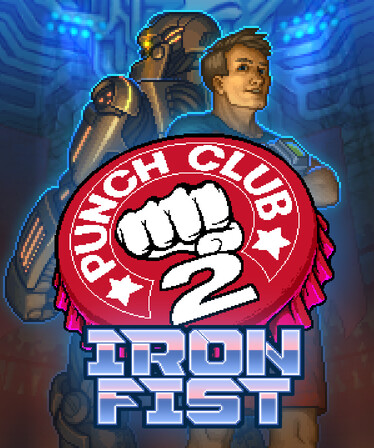
Punch Club sits at a genuinely odd intersection: part boxing management sim, part revenge thriller, part 80s pop-culture nostalgia trip. You play as a young fighter whose father was murdered in front of him, and the entire mechanical loop is built around proving yourself in the ring while slowly unraveling who pulled the trigger. It sounds grim, but the tone is persistently tongue-in-cheek, leaning hard into Rocky, Karate Kid, and Bloodsport references to the point where the game practically winks at you every other cutscene. The core loop is a juggling act. Your character has stats for strength, agility, and stamina, plus basic survival meters covering food and sleep. Every action, training at the gym, working a job to pay rent, socializing with friends, costs time and shifts those bars in different directions. Train too hard and you collapse. Ignore the gym for a week and your stats decay. It is genuinely stressful in a satisfying way, like a Tamagotchi that can throw a cross. The fight system itself is passive: you build a skill tree that defines your fighting style (brawler, agility-based striker, stamina tank), slot in abilities, then watch the simulation play out. Wins depend almost entirely on whether your build counters the opponent's. That hands-off combat is either zen or frustrating depending on your patience for preparation-over-execution gameplay. Build variety is real and meaningful, at least through the first two dozen hours. Choosing a strength path opens different late-game abilities than an agility build, and the branching skill tree rewards experimentation across playthroughs. Narrative choices are lighter, this is not a game where dialogue trees reshape the world, but some story forks do affect which ending you reach, which gives completionists a reason to return. The writing is serviceable rather than sharp. It lands jokes reliably, but don't come here expecting prose that rewards a second read. The mystery plot has momentum in the second half, though the pacing wobbles in the middle section where the game stretches its content a little thin and the daily grind starts to feel repetitive before the story picks back up. Where Punch Club earns its positive reputation is in its compulsive moment-to-moment loop. The constant resource balancing creates genuine tension, and reaching a new fight tier or unlocking a skill you have been grinding toward feels proportionally rewarding. The pixel art is clean and characterful, the soundtrack is synth-heavy and fits the era it is riffing on, and the runtime sits around 10-15 hours for a single run, which is the right length for this kind of sim. It respects your time more than most management games do. That said, if you showed up hoping for narrative depth or choices that genuinely sting, you will hit a ceiling fairly fast. This is a mechanical game wearing an RPG's jacket.

RPGs
Tags
System Requirements
Minimum
- Processor
- 1 GHz and up
- Memory
- 1 GB RAM
- Graphics
- Toaster
- Storage
- 1 GB available space
Keep exploring
Community Discussion
Be the first to comment on Punch Club.
Reviews & Ratings
Game Info
- Developer
- Lazy Bear Games
- Publisher
- tinyBuild Games
- Release Date
- Jan 8, 2016