Psychonauts 2
Sixteen years in the making and it actually sticks the landing: Raz's long-awaited return is one of the most inventive 3D platformers in years, built for newcomers and cult-classic fans alike.
GamerScout Verdict
Best for platformer fans who want inventive level design and genuine storytelling, not just jumping puzzles.
Compare Prices(6 stores)
Every store in this table quotes us in euros, so the EUR figure is the price the seller actually set, not our arithmetic — which is why EUR is also the currency we rank in. We only list an offer here when the store gives us its price in euros, so nothing in this table is a number we invented.
Pick USD, PLN, GBP, CAD or AUD in the header and we convert from EUR at the European Central Bank reference rate — converted amounts are prefixed with ~. Your bank or the store may apply a different rate at checkout. We never hide offers based on where you are: everyone sees this whole table.
We may earn a commission when you buy games through links on this page — at no extra cost to you. It never affects our rankings or verdicts.
Price History
Screenshots & Media
About Psychonauts 2
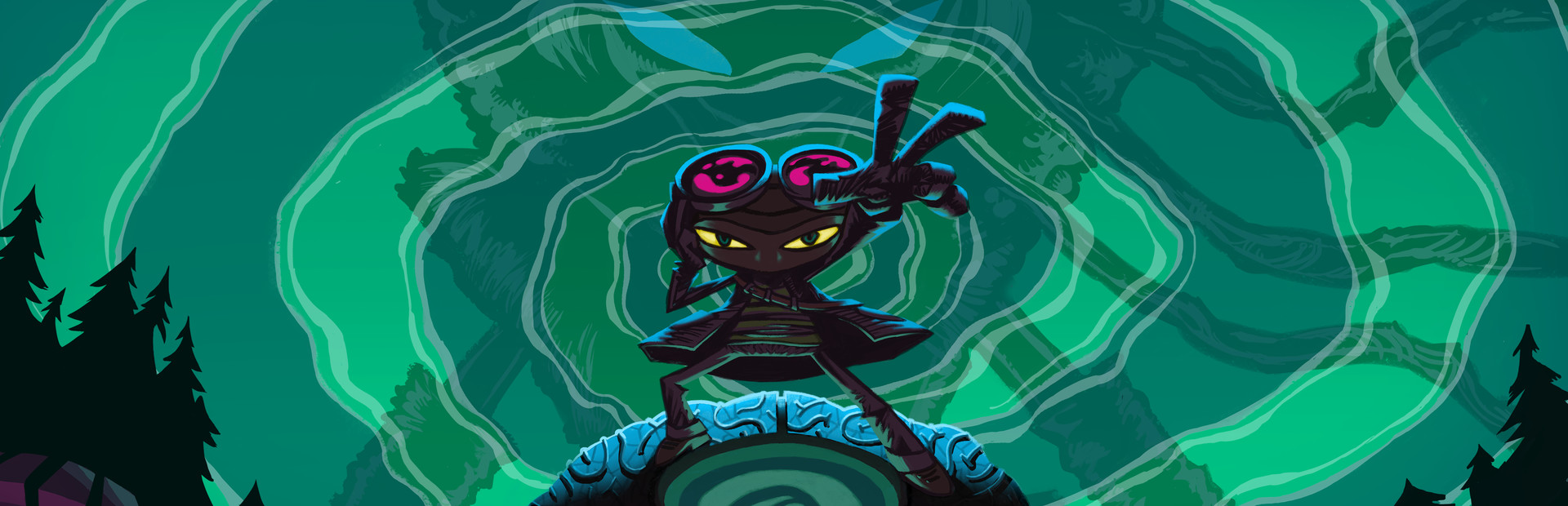
I went in half-skeptical. Cult sequels that take sixteen years to arrive tend to buckle under the weight of expectation, and Double Fine had a very high bar to clear. Twenty minutes into the first mind-level, that skepticism evaporated. Psychonauts 2 puts you back inside the skull of Razputin Aquato, a young acrobat-turned-psychic spy, and the central hook is as sharp as ever: each level is literally someone else's brain, twisted into a physical space that reflects their fears, traumas, and obsessions. No two levels share a visual language or a mechanical focus, which keeps the game feeling fresh from the Motherlobe hub world all the way to the finale. On the movement side, Raz brings back Levitation, Telekinesis, Pyrokinesis, and Clairvoyance from the original, while new additions like Mental Connection (zip between floating thought-nodes to reach out-of-reach platforms) and the Projection ability (spawn a paper-doll copy of yourself to heal, distract, or slip through tight spaces) add genuine traversal variety. Crucially, the same powers you use to platform are the ones you use in combat. Enemy design reflects this directly: the anxiety-demon requires Time Bubble to slow it down before you can land hits, and a gavel-wielding Judgement type can have his own weapon ripped back at him with Telekinesis. It makes fights feel like small puzzles rather than button-mashing filler. An upgrade tree lets you deepen whichever abilities suit your style, though critics noted the overall combat and boss fights are the weakest part of the package, occasionally feeling undercooked compared to the level design surrounding them. The mental-health themes deserve a mention because Double Fine handles them with more care than most games bother with. Levels built around addiction, PTSD, and anxiety treat those subjects as genuine dramatic material, not shock value, and the humor lands without undermining the weight. The writing is consistently sharp, the voice performances are strong, and the score from Peter McConnell gives every mindscape its own sonic identity. Pacing does dip in the mid-game, where a stretch of fetch-style side missions slows momentum noticeably, and some players have flagged that the lack of a proper map makes collectible hunting more frustrating than it should be. If 100-percent completion is your goal, be ready to do some manual searching. For a standard playthrough, expect roughly 13 hours, which is lean but well-paced outside that mid-game lull. Who should play it: anyone who likes 3D platformers with actual level design ambition, anyone who bounced off the rough edges of the 2005 original but wanted to love it, and anyone who values story and character writing in genres that usually ignore both. Prior knowledge of the first game adds context, but the sequel is self-sufficient enough for newcomers. At 96 percent positive across over 14,000 Steam reviews and an 89 on Metacritic, the consensus is about as clear as it gets. The rough patches are real but minor. What Double Fine does exceptionally well here is make every single level feel like a completely different game, and that alone carries it.

Catch-all
Tags
System Requirements
Minimum
- OS
- Windows 7 (64 bit)
- Memory
- 8 GB RAM
- DirectX
- Version 11
- Storage
- 30 GB available space
- Graphics
- Nvidia GeForce GTX 1050, AMD Radeon RX 560
- Processor
- Intel Core i3-3225, AMD Phenom II X6 1100T
Recommended
- OS
- Windows 10 (64 bit)
- Memory
- 8 GB RAM
- DirectX
- Version 12
- Storage
- 30 GB available space
- Graphics
- Nvidia GeForce GTX 1060, AMD Radeon RX 580
- Processor
- Intel Core i7-7700K, Ryzen 5 1600
Keep exploring
Community Discussion
Be the first to comment on Psychonauts 2.
Reviews & Ratings
Game Info
- Developer
- Double Fine Productions
- Publisher
- Double Fine Productions
- Release Date
- Aug 24, 2021