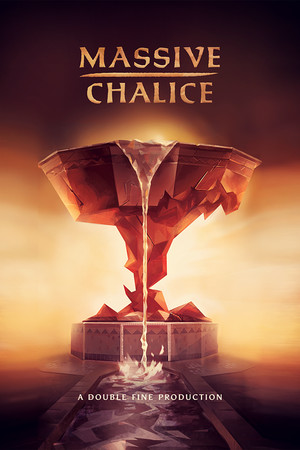
MASSIVE CHALICE
Crusader Kings lite meets XCOM: the bloodline management hooks hard, but shallow tactics and a thin strategy layer will test your patience before the 300 years are up.
GamerScout Verdict
Worth it for dynasty-management fans who can forgive thin AI and repetitive maps, ideally at a discount.
Compare Prices(6 stores)
Every store in this table quotes us in euros, so the EUR figure is the price the seller actually set, not our arithmetic — which is why EUR is also the currency we rank in. We only list an offer here when the store gives us its price in euros, so nothing in this table is a number we invented.
Pick USD, PLN, GBP, CAD or AUD in the header and we convert from EUR at the European Central Bank reference rate — converted amounts are prefixed with ~. Your bank or the store may apply a different rate at checkout. We never hide offers based on where you are: everyone sees this whole table.
We may earn a commission when you buy games through links on this page — at no extra cost to you. It never affects our rankings or verdicts.
Price History
Screenshots & Media
About MASSIVE CHALICE
I have a soft spot for games that make me feel like a cold-blooded cattle baron while simultaneously convincing me I care about my characters, and MASSIVE CHALICE does exactly that for the first half of its runtime. The core pitch is a two-layer structure: a long-view Strategy mode where you arrange marriages, assign regents to keeps, and queue up research, then a Tactical mode where you drop a squad of five into turn-based combat against the Cadence, a creeping demonic blight that hits your kingdom from multiple directions at once. The hook that separates it from a dozen other XCOM-adjacent games is the bloodline genetics system. Every hero carries a randomized genetic code, and when you retire two fighters into a keep and marry them off, their children inherit a mix of class-specific stats, traits like "nervous" (which tanks accuracy) or physical size, and personality imprints from a mentor figure stationed in a Crucible building. After a few generations you can end up with a dynasty of fast, sharp-eyed Hunters or, if you got complacent, a castle full of anxious, infertile near-misses who show up to the front lines at age 16 with the wrong class and terrible aim. The three classes, Caberjacks with melee battering-ram cabers, crossbow-wielding Hunters, and Alchemists who throw area-denial flasks, are simple enough that newcomers to turn-based tactics will not be overwhelmed. The tutorial does a reasonable job of explaining permadeath and the aging clock. What it does not prepare you for is the compounding weight of every marriage decision. A trait can skip a generation and resurface at exactly the wrong moment: that review from GameSpot about suddenly fielding an army of "nervous" archers because you over-bred a single anxious line is not an edge case, it is Tuesday. Bloodline Relics add a nice wrinkle, a weapon with enough kill history has a chance of becoming a named ancestral item, passable to any member of the same house, which softens the sting of losing a high-level fighter to old age. That relic loop is the closest the game comes to the emotional resonance it is clearly reaching for. Here is where I have to be straight with you, because the review consensus at a 73 Metacritic is telling the truth. The AI is weak. Enemies mostly advance and swing, and the lack of a cover system means tactical combat collapses into positioning exercises rather than the tense cat-and-mouse XCOM players expect. Mission variety is almost non-existent: attack maps and the occasional keep-defense scenario play nearly identically, and the handful of reused level layouts become very familiar by year 150. The strategy layer, the part I genuinely love, suffers from passivity. Outside of battles and marriage arrangements, your primary interaction with three centuries of history is pressing a fast-forward button and waiting for a random event prompt to appear. There is no way to go on the offensive, no proactive quest system, no way to directly intervene in the kingdom outside of responding to binary choice cards. For a game that brands itself on long-view thinking, the long view is surprisingly shallow. That said, if you are the kind of player who genuinely enjoys dynasty simulation, the eugenics accidents alone will generate more memorable stories than many fully-written RPGs. Watching a keep churn out a generation of short, drunkard Caberjacks because two "festive" heroes kept pairing with each other is the kind of emergent comedy that no designer scripted. Run about 15-20 hours per campaign, replay value exists mainly in seeing how differently a randomized genetic pool unfolds. No mod ecosystem worth noting, no live content updates to speak of. PC performance is light; nearly anything runs it. Mac users should be aware of documented Catalina compatibility issues before purchasing.

Strategy & simulation
Tags
System Requirements
Minimum
- OS
- Windows Vista
- Memory
- 4 GB RAM
- DirectX
- Version 11
- Storage
- 2 GB available space
- Graphics
- 256 MB GeForce 8800, Radeon 3850, or Intel HD 3000 Graphics
- Processor
- 1.8 GHz dual core CPU
- Sound Card
- DirectX Compatible Sound Card
Recommended
- OS
- Windows 7
- Memory
- 4 GB RAM
- DirectX
- Version 11
- Storage
- 2 GB available space
- Graphics
- 512 MB GeForce 220, Radeon 4550, Intel HD 4000 Graphics
- Processor
- Intel Core 2 Duo at 2.2 GHz, or AMD Athlon 64 at 2.2 GHz
- Sound Card
- DirectX Compatible Sound Card
Keep exploring
Community Discussion
Be the first to comment on MASSIVE CHALICE.
Reviews & Ratings
Game Info
- Developer
- Double Fine Productions
- Publisher
- Double Fine Productions
- Release Date
- Jun 1, 2015