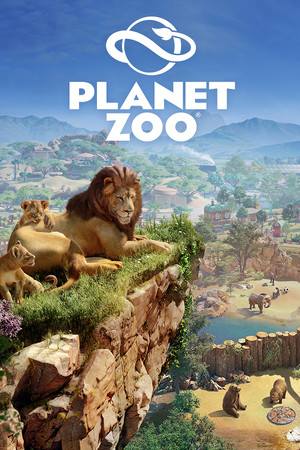
Planet Zoo
Forget casual zoo-keeping fantasies. Planet Zoo is a systems-heavy management sim that will punish lazy planners and reward the kind of person who reads habitat welfare tooltips for fun.
GamerScout Verdict
Best for management-sim players who want genuine systems depth and can tolerate a steep UI learning curve before the loop clicks.
Compare Prices(10 stores)
Every store in this table quotes us in euros, so the EUR figure is the price the seller actually set, not our arithmetic — which is why EUR is also the currency we rank in. We only list an offer here when the store gives us its price in euros, so nothing in this table is a number we invented.
Pick USD, PLN, GBP, CAD or AUD in the header and we convert from EUR at the European Central Bank reference rate — converted amounts are prefixed with ~. Your bank or the store may apply a different rate at checkout. We never hide offers based on where you are: everyone sees this whole table.
We may earn a commission when you buy games through links on this page — at no extra cost to you. It never affects our rankings or verdicts.
Price History
Screenshots & Media
About Planet Zoo
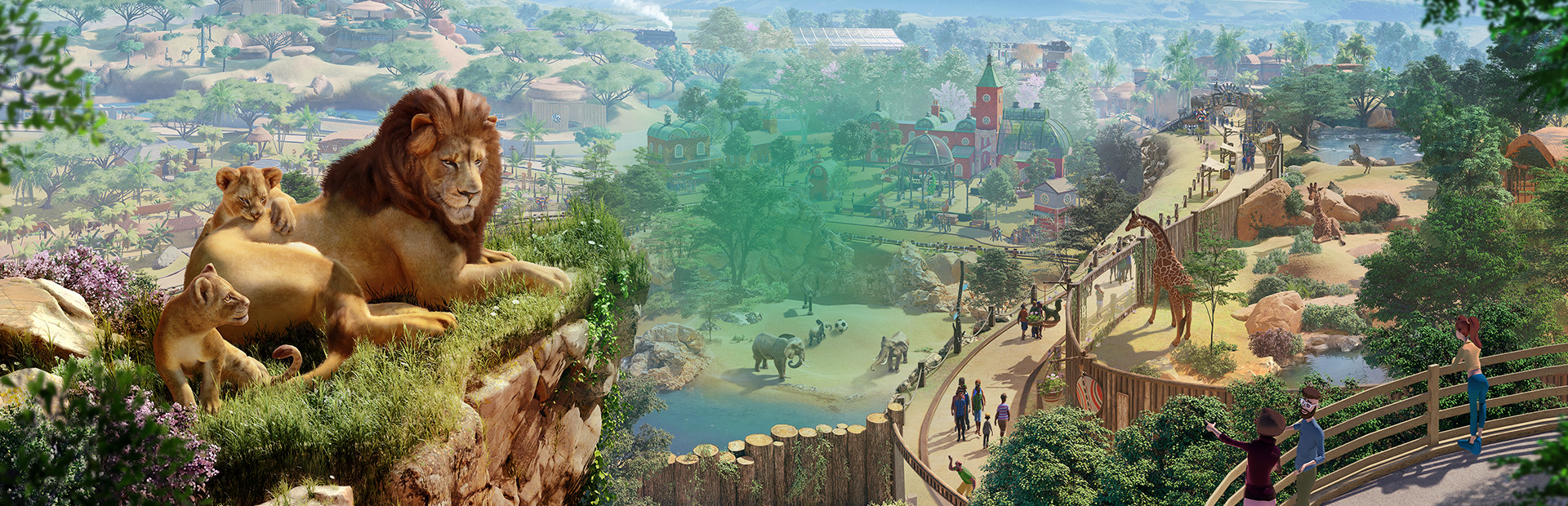
I've spent enough hours in Planet Zoo to know that its opening hour is a masterclass in false impressions. The adorable animal animations, the lush terrain-painting tools, the satisfying click of a freshly wired fence - all of it suggests a gentle creative sandbox. Then the notifications arrive. Keeper hut placement is upsetting guests. The Himalayan brown bear's humidity is wrong. Your chimpanzee has found a gap in the fence and six visitors are now sprinting for the exit. Suddenly you are less zookeeper and more crisis manager, and the spreadsheet in your head is the only thing standing between you and total chaos. This is a very good thing. At its core, Planet Zoo is a construction and management sim with four distinct modes: Career, Challenge, Sandbox, and Franchise. Career mode drops you into scripted scenarios across the globe, tasking you with expanding exhibits, hitting conservation targets, and breeding endangered species for eventual release into the wild. Franchise mode layers an online animal marketplace on top, letting you buy and trade animals with other players using both standard currency and conservation credits earned through cooperative community challenges. Sandbox strips the financial pressure almost entirely - infinite funds, toggleable animal mortality - and is the correct entry point for anyone who wants to learn the building tools without a gorilla escape burning their zoo to the ground. The sheer depth of enclosure construction is where the game justifies its reputation: you paint terrain biomes, adjust humidity and temperature per habitat, specify fence height, fence strength, anti-climb measures, and one-way glass for species that develop anxiety around visible guests. Every variable feeds into a welfare score, and that score feeds into your conservation rating, which feeds into guest satisfaction and revenue. The loop is dense and genuinely satisfying once the connective tissue clicks. The animal AI is the showpiece. Each species carries individual happiness metrics driven by social needs, enrichment objects, and habitat quality. Watching a group of western lowland gorillas interact with a climbing structure you built, or a pygmy hippo drift along the bottom of a pool you hand-sculpted, earns the game its reputation for visual authenticity. The in-game Zoopedia functions as a proper reference tool, detailing habitat preferences and endangerment status for every species, and the conservation angle - displaying endangered animals, running educator talks, releasing breeding surplus - gives the management loop a moral dimension most tycoons lack. Free anniversary updates over the years have added mechanics like heritable colour variation and first-person camera mode, which means the game you buy today is meaningfully larger than the 2019 launch build. The criticisms are real and worth stating clearly. Performance degrades noticeably at larger guest counts, with stuttering reported even on high-end hardware as zoo attendance climbs past the low thousands. The base game animal roster skews heavily toward African and Asian mammals, leaving large gaps that are filled by a substantial DLC catalogue - over a dozen packs, each priced individually. Community frustration around this model is consistent and fair; some animals that feel like baseline inclusions ended up locked behind paid packs. The building UI has a learning cliff rather than a learning curve: controls feel unintuitive until muscle memory settles in, and the notification system will spam you relentlessly until every welfare metric is green. The time-pause mechanic (think Baldur's Gate-style freeze-frame decision making) is not optional, it is survival equipment. Staff placement has its own set of invisible radius rules that will confuse newcomers until they understand the design philosophy behind clustering keeper huts around enclosure groups. None of these problems are unfixable, and the Steam Workshop mod ecosystem - covering everything from new species to habitat remasters - addresses many of the content gaps the base game leaves open. For strategy and sim players, Planet Zoo sits in a specific niche: deeper than a casual builder, lighter than a pure tycoon, entirely serious about its animal welfare systems. If you are the kind of person who enjoys optimising pathfinding routes for staff, reading welfare breakdowns per animal, and treating terrain sculpting as a puzzle with correct answers, this is built for you. Newcomers should go directly to Career mode for the structured onboarding, then migrate to Franchise once the controls feel natural. Sandbox exists as a pressure-free creative space, but it will not teach you the systems - and the systems are the whole point.

Strategy & simulation
Tags
System Requirements
Minimum
- Processor
- Intel i5-2500 / AMD FX-6350
- Memory
- 8 GB RAM
- Graphics
- NVIDIA GeForce GTX 770 (2GB) / AMD Radeon R9 270X (2GB)
- Storage
- 16 GB available space
Recommended
- OS
- Windows 10 64bit
- Processor
- Intel i7-4770k / AMD Ryzen 5 1600
- Memory
- 16 GB RAM
- Graphics
- NVIDIA GeForce GTX 1070 (8GB) or AMD Radeon RX 580 (8GB) S…
DLC & Add-ons for Planet Zoo22
Expansions, DLC packs and add-on content for this game. Click any item to see store offers.
Keep exploring
Community Discussion
Be the first to comment on Planet Zoo.
Reviews & Ratings
Game Info
- Developer
- Frontier Developments
- Publisher
- Frontier Developments
- Release Date
- Nov 5, 2019
![[US 18+] Rain Forest Zoo: Ocelot Part 1](https://static-cdn.jtvnw.net/previews-ttv/live_user_clockwork4sims-440x248.jpg)

