Outpath
A first-person clicker that quietly transforms into a layout-optimization puzzle, if you can survive the hand-cramping early hours, the automation payoff is genuinely satisfying.
GamerScout Verdict
Best for idle-to-automation fans who enjoy optimizing base layouts and can tolerate a thin tutorial in exchange for a genuinely relaxing progression arc.
Compare Prices(8 stores)
Every store in this table quotes us in euros, so the EUR figure is the price the seller actually set, not our arithmetic — which is why EUR is also the currency we rank in. We only list an offer here when the store gives us its price in euros, so nothing in this table is a number we invented.
Pick USD, PLN, GBP, CAD or AUD in the header and we convert from EUR at the European Central Bank reference rate — converted amounts are prefixed with ~. Your bank or the store may apply a different rate at checkout. We never hide offers based on where you are: everyone sees this whole table.
We may earn a commission when you buy games through links on this page — at no extra cost to you. It never affects our rankings or verdicts.
Price History
Screenshots & Media
About Outpath
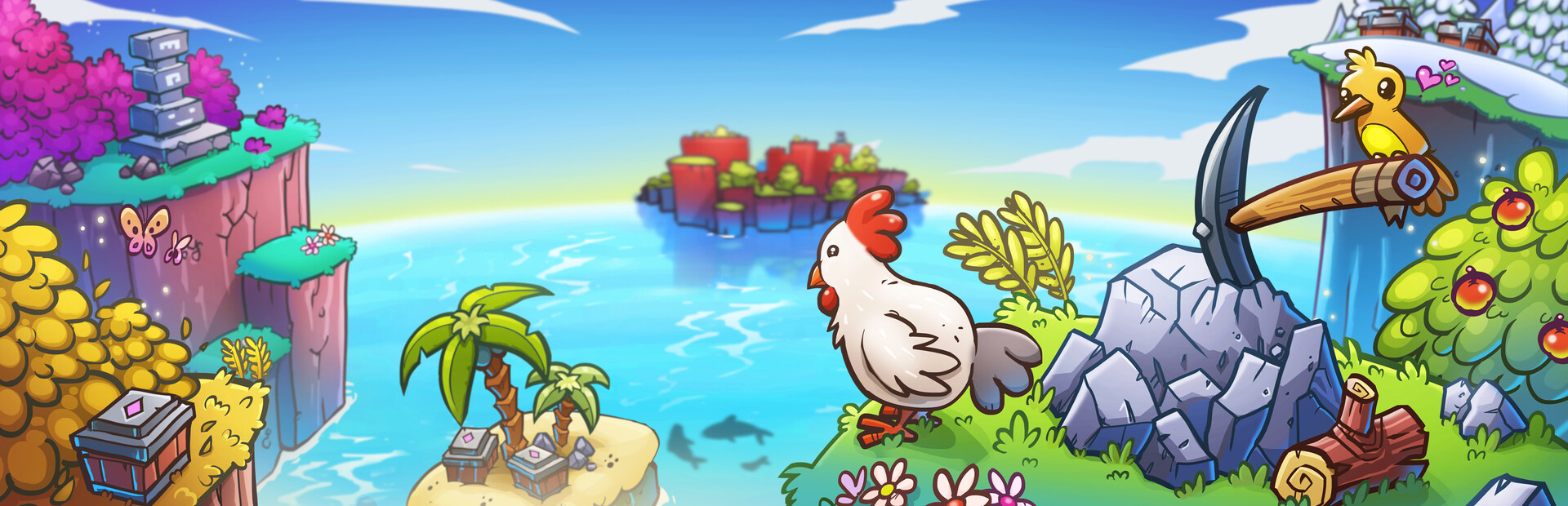
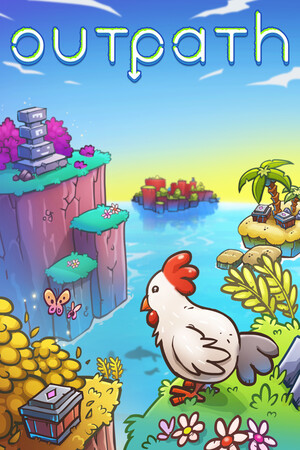
I came to Outpath expecting a glorified idle game and left with a spreadsheet mapping my Synergy bench placements. That pivot is the whole story. The opening stretch is deceptively simple: you punch trees, mine ore veins, and slowly construct workbenches on a tiny floating island. Flint tools give way to copper, copper gives way to more complex alloys, and before long you are staring at a research table trying to figure out which blueprint unlocks next. It is repetitive in the way a production chain is repetitive, and if that framing sounds appealing rather than exhausting, you are exactly the target audience. The mechanical turning point is automation. Early buildings break nearby resources but still require you to collect the yield and manually recharge them. Push further through the skill tree, however, and Suppliers, Vacuums, Reception Towers, and Clicker structures start doing the heavy lifting for you. The game quietly shifts from "how fast can I click?" to "how efficiently can I design my island layout?" That transition is where Outpath earns its strategy tag. The Synergy mechanic deepens this further: certain crafting stations only unlock new recipes when placed adjacent to complementary benches, so an Inscription Table next to an Imbuing Table opens schematics unavailable anywhere else. Suddenly your base layout is a spatial puzzle, and replanning an entire wing to squeeze out extra throughput feels earned rather than arbitrary. Island expansion is the reward loop holding everything together. You spend earned credits to purchase new islands, each introducing a distinct biome: autumn forests, tropical beaches, rocky outcrops. Each biome brings fresh resource types, skill books that extend your credit-and-automation capabilities, and discovery tomes that gate additional blueprints. There is no combat, no narrative climax to chase, and no ticking threat meter. The lack of pressure is a genuine design choice, and for players who find survival-mode stress counterproductive to enjoyment, it works. Reviewers consistently clock a main-path run at somewhere between 20 and 40 hours, with open-ended continuation well beyond that. The weaknesses are real and worth naming. The tutorial is thin enough that several foundational mechanics, including the fishing mini-game, hotbar management, and the "infinite" crafting toggle that requires a nearby Supplier to actually function, go unexplained until you consult the Steam guides. The crafting UI scatters recipes across multiple benches with no unified search, and new unlocks can appear silently on a workbench placed hours earlier. These are quality-of-life gaps that feel patchable but remain friction in the current build. The hunger and sleep bars are toggleable, which is honest design, but their default presence suggests a survival layer the game never meaningfully delivers. Visually, the first-person pixel-art-in-3D aesthetic is crisp and readable without being technically ambitious. For a solo-developer indie, the reception has been strong: Steam sits at 93% positive across nearly sixteen hundred reviews, and the game has since expanded to console platforms. The developer has been active with post-launch updates. This is not a complex grand strategy title and it does not pretend to be. But for anyone who enjoys the idle-to-automation arc and wants that loop wrapped in first-person movement and a calm soundtrack rather than a top-down spreadsheet, Outpath delivers a well-paced, low-stress session game that genuinely rewards thoughtful base design.

Strategy & simulation
Tags
System Requirements
Minimum
- OS
- Windows 7, 8, 10 and 11
- Memory
- 2 GB RAM
- Storage
- 2 GB available space
- Graphics
- NVIDIA GeForce GT 240 / AMD Radeon HD 4670 / Intel HD Graphics 4000
- Processor
- Intel Core i3 2.00 GHz or AMD equivalent
Recommended
- OS
- Windows 10 (64-bit)
- Memory
- 4 GB RAM
- Storage
- 2 GB available space
- Graphics
- NVIDIA GeForce GTX 470 / AMD Radeon HD 6870
- Processor
- Intel Core i3 2.00 GHz or AMD equivalent
Keep exploring
Community Discussion
Be the first to comment on Outpath.
Reviews & Ratings
No ratings available
Game Info
- Developer
- David Moralejo Sánchez
- Publisher
- GrabTheGames
- Release Date
- Oct 16, 2023
