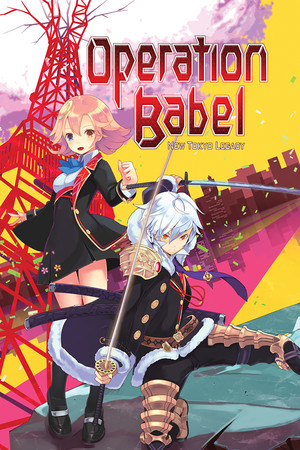
Operation Babel: New Tokyo Legacy
Solid old-school dungeon crawler for Wizardry veterans, but its labyrinthine menus and genre jargon will actively punish anyone new to the sub-genre.
GamerScout Verdict
Worth it for dungeon crawler veterans who can tolerate obtuse menus; a rough entry point for anyone new to the sub-genre.
Compare Prices(7 stores)
Every store in this table quotes us in euros, so the EUR figure is the price the seller actually set, not our arithmetic — which is why EUR is also the currency we rank in. We only list an offer here when the store gives us its price in euros, so nothing in this table is a number we invented.
Pick USD, PLN, GBP, CAD or AUD in the header and we convert from EUR at the European Central Bank reference rate — converted amounts are prefixed with ~. Your bank or the store may apply a different rate at checkout. We never hide offers based on where you are: everyone sees this whole table.
We may earn a commission when you buy games through links on this page — at no extra cost to you. It never affects our rankings or verdicts.
Price History
Screenshots & Media
About Operation Babel: New Tokyo Legacy
I have a soft spot for first-person dungeon crawlers, so let me be honest with you upfront: Operation Babel is a game that rewards patience and punishes curiosity without preparation. It is a direct sequel to Operation Abyss: New Tokyo Legacy, picking up the story of the Xth Squad, an elite unit of teenage Code Risers fighting under the Code Physics Agency against monstrous Variants spawned by a colossal alien structure called the Embryo. The narrative has some genuinely interesting sci-fi paranormal texture to it, but it leans hard on the assumption you remember the previous game. If you have not played Operation Abyss, you will spend the first several hours piecing together who everyone is and why you should care. The combat and character-building are where the game earns its keep. Blood Codes function as the class system, and the signature addition here is the Cross Blood system, which lets you assign each squad member a main and a sub Blood Code simultaneously, effectively creating hybrid job classes. A Knight with an Academic sub-class starts to generate interesting defensive and utility combinations; pair a Physician with an Archer sub and you edge them toward back-row offensive utility, though the base class still governs what weapons they can equip, which is a frustrating ceiling on the system. Item-Attached Skills layer further onto this, letting equipped gear grant characters abilities they would not normally have access to. The Unity gauge builds as the party fights together and unlocks cooperative squad-wide abilities, giving the combat a rhythm that rewards staying in dungeons rather than retreating constantly. The Rise and Drop system adds a genuine risk-reward dimension: the longer you push in without backing down, the stronger the enemy encounters get, but the loot quality climbs with it. For a numbers-focused player, the depth here is real. The weaknesses are equally real. The dungeon environments, called Abysses, are visually monotonous. Grid-based corridors that repeat the same tile sets get tired fast, and at least one dungeon reportedly reuses the exact same room layout several times in sequence. The character portraits and enemy designs are well-illustrated, but the actual labyrinths look underfunded by comparison. Tutorial clarity is also a persistent problem: the game wraps almost everything in its own jargon (currency is Growth Points, purchasing is issuing, inventory is a sub-disk), which means new players have to decode the interface on top of learning the mechanics. Leveling up requires physically returning to the medical lab at base rather than happening in the field, which interrupts dungeon momentum in a way that feels like a holdover from an older era. The story missions are structured around CPA-issued assignments in each Abyss, which at least breaks up the grind into digestible chunks, but the writing is rarely memorable enough to carry a player through the repetition. For the PC port specifically, Steam user sentiment sits at around 75 percent positive across a small sample, which roughly tracks with critical consensus: decent, not distinguished. If you have already cleared Stranger of Sword City or Demon Gaze and want more of the same DNA with a sci-fi anime skin and a genuinely interesting dual-class system, this delivers a solid 30-plus hours of content. If you are new to the sub-genre, start with something better-tutorialized. The filler content here is real, and I will not pretend otherwise.

RPGs
Tags
System Requirements
Minimum
- OS
- Windows 10/8.1/7
- Memory
- 2 GB RAM
- DirectX
- Version 9.0c
- Storage
- 6 GB available space
- Graphics
- GeForce 8600 GT
- Processor
- Core i3-2100 3.10 GHz
- Sound Card
- Onboard
Recommended
- OS
- Windows 10/8.1/7
- Memory
- 4 GB RAM
- DirectX
- Version 9.0c
- Storage
- 6 GB available space
- Graphics
- GeForce GTX 650 Ti
- Processor
- Core i3-6100 3.70 GHz
- Sound Card
- Onboard
DLC & Add-ons for Operation Babel: New Tokyo Legacy1
Expansions, DLC packs and add-on content for this game. Click any item to see store offers.
Keep exploring
Community Discussion
Be the first to comment on Operation Babel: New Tokyo Legacy.
Reviews & Ratings
Game Info
- Developer
- MAGES. Inc.
- Publisher
- NIS America, Inc.
- Release Date
- May 16, 2017