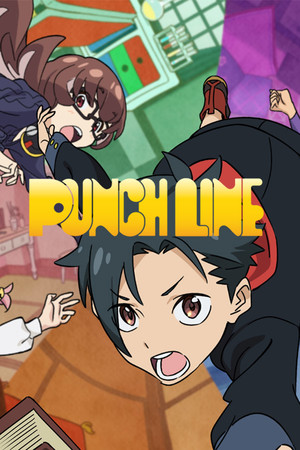
Punch Line
Kotaro Uchikoshi wrote a ghost story about panties destroying the world, and somehow it has one of the most satisfying endings in his entire catalog. Uchikoshi die-hards will finish it; everyone else should read the fine print first.
GamerScout Verdict
Uchikoshi fans who prioritize story closure over gameplay depth will find a rewarding hidden payoff; everyone else should wait for a deep discount.
Compare Prices(5 stores)
Every store in this table quotes us in euros, so the EUR figure is the price the seller actually set, not our arithmetic — which is why EUR is also the currency we rank in. We only list an offer here when the store gives us its price in euros, so nothing in this table is a number we invented.
Pick USD, PLN, GBP, CAD or AUD in the header and we convert from EUR at the European Central Bank reference rate — converted amounts are prefixed with ~. Your bank or the store may apply a different rate at checkout. We never hide offers based on where you are: everyone sees this whole table.
We may earn a commission when you buy games through links on this page — at no extra cost to you. It never affects our rankings or verdicts.
Price History
Screenshots & Media
About Punch Line
I went into Punch Line the same way I go into any Uchikoshi project: braced for metafiction, time loops, and a twist that reframes everything you thought you understood. What I did not expect was for the delivery mechanism to be a ghost-boy haunting a boarding house full of women while desperately trying not to see their underwear, lest an asteroid obliterate humanity. That premise is as ridiculous as it sounds, and the game absolutely commits to it, which is both its greatest charm and the thing most likely to make you close the Steam page before you hit the buy button. Mechanically, Punch Line splits its roughly twelve hours across three formats cycling chapter by chapter: anime cutscenes pulled (and sometimes newly created) from the source show, visual novel dialogue segments presented in a somewhat unusual full-3D engine with fixed camera angles, and the interactive "trick" sections that pass for gameplay. In the trick sections, you play as Yuta's disembodied spirit, phasing through the rooms of Korai House and manipulating objects to scare the residents, collecting soul fragments to raise your spirit level. Once levelled up enough, the game switches to "trick chain" sequences where you must orchestrate a Rube Goldberg-style string of pranks - knock over this, spook that person into moving there - to get a housemate to a specific location or find a specific item. On paper it echoes the object-chain logic of Ghost Trick. In practice, the puzzle design is shallow: the rooms offer very few interactive objects, wrong choices reset the chapter with no meaningful consequence, and the game quietly eliminates bad options if you keep failing. It feels like scaffolding rather than challenge. The interactive sections also disappear almost entirely in the second half of the game when the story kicks into high gear, which is both a narrative necessity and a tacit admission that the mechanics were never the point. The point is Uchikoshi's writing, and on that front Punch Line has a genuinely rewarding story hiding inside its goofy wrapper. The four residents of Korai House - idol-turned-superhero Mikatan, inventor robot Meika, medium Rabura, and the perpetually furious gamer Ito - start out as anime archetypes and gradually reveal genuinely affecting backstories. The first half is slow, leaning into slice-of-life comedy while quietly seeding mysteries about the Qmay Group cult, an incoming asteroid called VR-1, and Yuta's true identity. By the second half, those threads converge into the kind of escalating revelations Uchikoshi fans live for: time travel mechanics, identity swaps, metafictional layers. Critically, unlike several of his other games, Punch Line sticks the landing with a conclusion that actually resolves its mysteries, which alone puts it above some of his higher-profile work. The voice cast reprising their roles from the anime, including Rie Kugimiya and Haruka Tomatsu, gives the dialogue genuine warmth. There is no English dub, so tolerance for subtitles is a hard requirement. The PC port, though, deserves a warning label. The game ships with a launcher that can break Steam overlay and Steam Input entirely, requiring a manual file rename workaround just to get a controller working. Visuals are a Vita-era port running in a resolution that looked dated even on PS4 in 2018, with repetitive character animations and low-detail environments. The game plays an unskippable identical opening and closing anime sequence for each of its roughly twenty chapters - learn to hold the skip button early or lose your mind. Instant-death moments in the second half can send you to the start of a long chapter if you have not been saving manually, which the game neglects to remind you is even possible. Who should actually play this? Uchikoshi completionists, visual novel readers comfortable with passive storytelling, and anyone who bounced off his usual ambiguous endings and wants something with genuine closure. If you are here for the puzzle-game angle or came expecting Zero Escape-level interactivity, the trick sections will feel thin within the first hour. The fan service framing is sillier than it is salacious - there is no nudity and the premise is played more for absurdist comedy than titillation - but it is inescapable, and it will determine your tolerance for the whole package faster than the writing quality will.

RPGs
Tags
System Requirements
Minimum
- OS
- Windows 7, 8.1, 10
- Memory
- 4 GB RAM
- DirectX
- Version 11
- Storage
- 11 GB available space
- Graphics
- NVIDIA GeForce GTX 970 / AMD Radeon RX 570
- Processor
- Intel Core i5-4670 / AMD FX 8350
Recommended
- OS
- Windows 7, 8.1, 10 (64 bit only)
- Memory
- 8 GB RAM
- Storage
- 11 GB available space
- Graphics
- NVIDIA GeForce GTX 1080 / AMD Radeon RX 480
- Processor
- Intel Core i5-4670 / AMD FX 8350
Keep exploring
Community Discussion
Be the first to comment on Punch Line.
Reviews & Ratings
No ratings available
Game Info
- Developer
- MAGES. Inc.
- Publisher
- PQube
- Release Date
- May 23, 2019