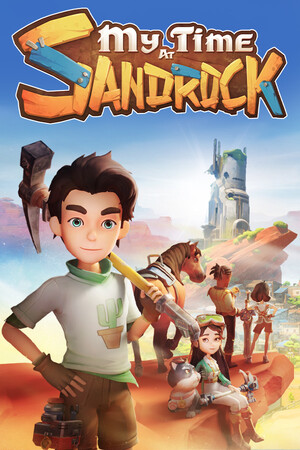
My Time at Sandrock
Somewhere between a factory-builder and a desert soap opera, Sandrock delivers 80-plus hours of interlocking production systems wrapped in one of the coziest post-apocalyptic settings in the genre.
GamerScout Verdict
Best for life-sim fans ready to swap pastoral farming for water-fueled machine chains and a desert town worth saving.
Compare Prices(0 stores)
Loading prices...
We may earn a commission when you buy games through links on this page — at no extra cost to you. It never affects our rankings or verdicts.
Price History
Screenshots & Media
About My Time at Sandrock
My spreadsheet instincts kicked in about three in-game days after arriving in Sandrock, when I realized that water is not just a resource to drink but the fuel that runs every machine in your workshop. That single constraint reframes the entire production loop: you are not growing turnips in a meadow, you are managing a water-powered industrial chain in a desert that does not want you to succeed. It is a fresher premise than it sounds, and it gives the crafting-and-building cycle a texture you do not get from the greener life-sims that flood the genre. The core gameplay is a commission loop. Townspeople post jobs at the Commerce Guild, you accept them, work out which machines can process the required materials, queue up the production, and deliver the finished goods. That sentence sounds dry, but the satisfaction comes from watching your workshop evolve from a single worktable into a water-fueled machine empire that can turn raw scrap into advanced components in a few in-game hours. The build variety is real: a cutting machine, a grinder, a recycler, an industrial furnace, and more all chain together, and optimizing that chain is genuinely engaging for anyone who has ever min-maxed a production line. The quarry and the surrounding Eufora Desert add a dungeon-crawling layer, with a Break meter mechanic on enemies that rewards weapon-switching between melee and third-person shooting rather than just mashing one button. Combat is not the headline feature, but it is serviceable and occasionally tense against boss-tier creatures. Resource scarcity means even early gathering runs require some planning around stamina, which the game helpfully restores through food, relationships, and home decoration bonuses. The social simulation deserves more credit than the genre usually gets. Over 40 NPCs each follow their own daily schedules, Cooper and Hugo perform at the saloon on Wednesday nights, Owen tells fables on Saturdays, and the friendship and romance systems tie directly into your Builder stats via gifting and shared activities. That last part is worth stressing: bonding with characters is not optional fluff, it produces measurable stat gains and unlocks commissions. The story backing all of this has a surprising amount of ambition for a life-sim, weaving the post-Day-of-Calamity lore through main quests that actually matter to the town you are rebuilding. The character writing is uneven across the full cast, and some players have noted that the late-game population swells with thin NPCs who lack voice acting or side-quests, which dilutes the intimacy of the earlier chapters. For newcomers, the blueprint system does a decent job of telling you exactly which machine produces what and where to source every material. The learning curve is front-loaded but not punishing. Expect the first season to feel tutorial-adjacent and the second to be where the production chains click into place. The multiplayer mode is a separate campaign for up to four players, structured differently from the solo game with a barren starting plot, shared knowledge of discovered plants and monsters, shared recipes, and a server-based structure that lets friends join even when the host is offline. It is a thoughtful implementation, though individual chest ownership in co-op can create minor friction when coordinating materials. On PC the experience is solid, with the SSD install recommendation worth taking seriously given some asset pop-in in late-game areas. Sandrock is not reinventing the formula, and harder-core sim players may find the RPG layer too shallow for build theorycrafting. But for anyone who burned out on green meadow farms and wants production systems with actual teeth, a cast worth knowing, and a desert that slowly, satisfyingly blooms under your workshop output, this is one of the more complete entries the genre has produced.

Strategy & simulation
Tags
System Requirements
Minimum
- OS
- Win 10
- Memory
- 8 GB RAM
- DirectX
- Version 11
- Storage
- 50 GB available space
- Graphics
- Nvidia GeForce GTX760 | AMD Radeon 7950
- Processor
- Intel Core i3-2100 | AMD FX-6300
Recommended
- OS
- Win 10
- Memory
- 16 GB RAM
- DirectX
- Version 11
- Storage
- 50 GB available space
- Graphics
- Nvidia GeForce GTX1060 | AMD Radeon RX 580
- Processor
- Intel Core i7-9700K | AMD Ryzen 7 2700X
Keep exploring
Community Discussion
Be the first to comment on My Time at Sandrock.
Reviews & Ratings
Game Info
- Developer
- Pathea Games
- Publisher
- Pathea Games
- Release Date
- Nov 2, 2023