My Time at Portia
If your idea of a good evening is queuing up production chains and planning the next day's commissions before bed, Portia is going to eat your calendar whole. Stardew Valley fans who want a 3D world with crafting depth will find a lot here, provided they can tolerate some rough edges.
GamerScout Verdict
Best for patient builders who enjoy optimizing daily schedules, but too slow and rough for anyone expecting tight combat or a compelling story.
Compare Prices(7 stores)
Every store in this table quotes us in euros, so the EUR figure is the price the seller actually set, not our arithmetic — which is why EUR is also the currency we rank in. We only list an offer here when the store gives us its price in euros, so nothing in this table is a number we invented.
Pick USD, PLN, GBP, CAD or AUD in the header and we convert from EUR at the European Central Bank reference rate — converted amounts are prefixed with ~. Your bank or the store may apply a different rate at checkout. We never hide offers based on where you are: everyone sees this whole table.
We may earn a commission when you buy games through links on this page — at no extra cost to you. It never affects our rankings or verdicts.
Price History
Screenshots & Media
About My Time at Portia
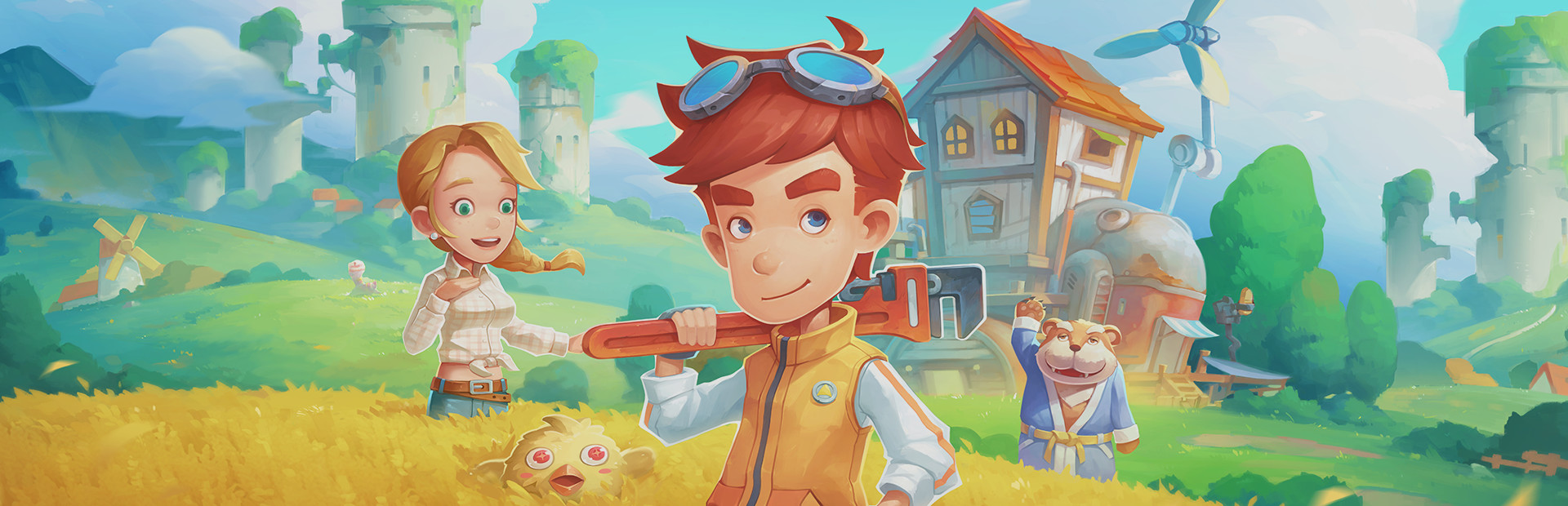
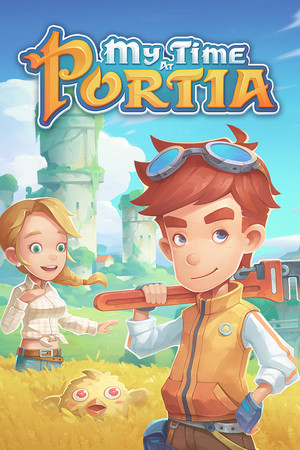
I've put time into enough factory-loop sims to know when a progression system is doing real work and when it's just padding. My Time at Portia sits somewhere honest in between. The core loop is built around three interlocking pillars: workshop production, open-world gathering, and NPC relationship management. You take commissions from the Commerce Guild, reverse-engineer relics pulled from ruins, smelt ores, run wood through a recycler, queue up an Assembly Station build, and then go talk to townsfolk while the machines tick away. That idle-wait rhythm is the game's defining trait, and it will either feel like satisfying asynchronous planning or maddening busywork depending on how you're wired. The production chains are genuinely multi-step, requiring you to track which crafting station produces which intermediate component before you can assemble the final piece. It's not Factorio complexity, but it asks more of you than Stardew's simple furnace-and-anvil setup. The content volume is legitimately impressive. Beyond the workshop, there are ruins to clear with timed dungeon runs, a mining shaft for daily ore runs, fishing and farming side systems, seasonal festivals including a martial arts tournament, and a roster of over 28 romanceable NPCs each running on individual daily schedules. The largest commission jobs directly reshape the town's skyline, and watching Portia physically grow because of structures you built over dozens of hours creates a genuine feedback loop. Later in the game, quality-of-life unlocks kick in: a nearby shop will auto-deliver basic resources to your door for a daily fee, and you can commission the Civil Corps to gather mid-tier ruin materials on your behalf, which meaningfully reduces the late-game grind and frees you to focus on complex builds. That kind of smart escalation shows Pathea thought about pacing even if the execution is uneven. The problems are real and worth naming clearly. The story main questline is thin and paces itself poorly, with long stretches of resource gathering gating very short narrative payoffs. Combat is minimal by design, essentially a single attack button with a dodge roll, and the dungeon encounters feel like obligatory checkboxes rather than designed challenges. Voice acting drops out mid-scene with no consistency, and the factory station has a logic gap that regularly frustrates: it will not automatically queue the sub-components needed for a larger assembly, so you have to manually track your material deficit before every build. The tutorial does a reasonable job explaining the basics, but the game dumps a large world map and a sprawling NPC list on you simultaneously, which can produce genuine paralysis in the first few hours. The recommendation for newcomers is simple: treat the first week of in-game time as orientation, resist picking up every quest at once, and let the commission board rather than the main story drive your pace. For strategy and sim players specifically, the appeal is that there is always a prioritization problem to solve. Each in-game day is a fixed resource you are allocating across gathering, socializing, crafting queue management, and reputation building. Thinking one or two days ahead pays off. The rival builder Higgins competing for the same commissions adds a light deadline pressure that forces you to optimize. It is not deep enough to satisfy a Paradox veteran looking for systemic complexity, but it is considerably more structured than the average farming game and rewards the player who reads the tool tips and plans ahead. The sequel, My Time at Sandrock, has since refined many of these systems and added multiplayer, so Portia's rougher edges are now clearly visible in hindsight, but the original still offers a substantial amount of content for the genre.

Strategy & simulation
Tags
System Requirements
Minimum
- OS
- Windows 7+ / 8.1 / 10 64 bit
- Memory
- 6 GB RAM
- DirectX
- Version 10
- Storage
- 6 GB available space
- Graphics
- ATI 7770, Nvidia GeForce GTX 660 2GB
- Processor
- Intel i3 Processor
Recommended
- OS
- Windows 10 64 bit
- Memory
- 16 GB RAM
- DirectX
- Version 11
- Storage
- 10 GB available space
- Graphics
- Nvidia GeForce GTX960+
- Processor
- Intel i7 Processor
Keep exploring
Community Discussion
Be the first to comment on My Time at Portia.
Reviews & Ratings
Game Info
- Developer
- Pathea Games
- Publisher
- Focus Entertainment
- Release Date
- Jan 15, 2019