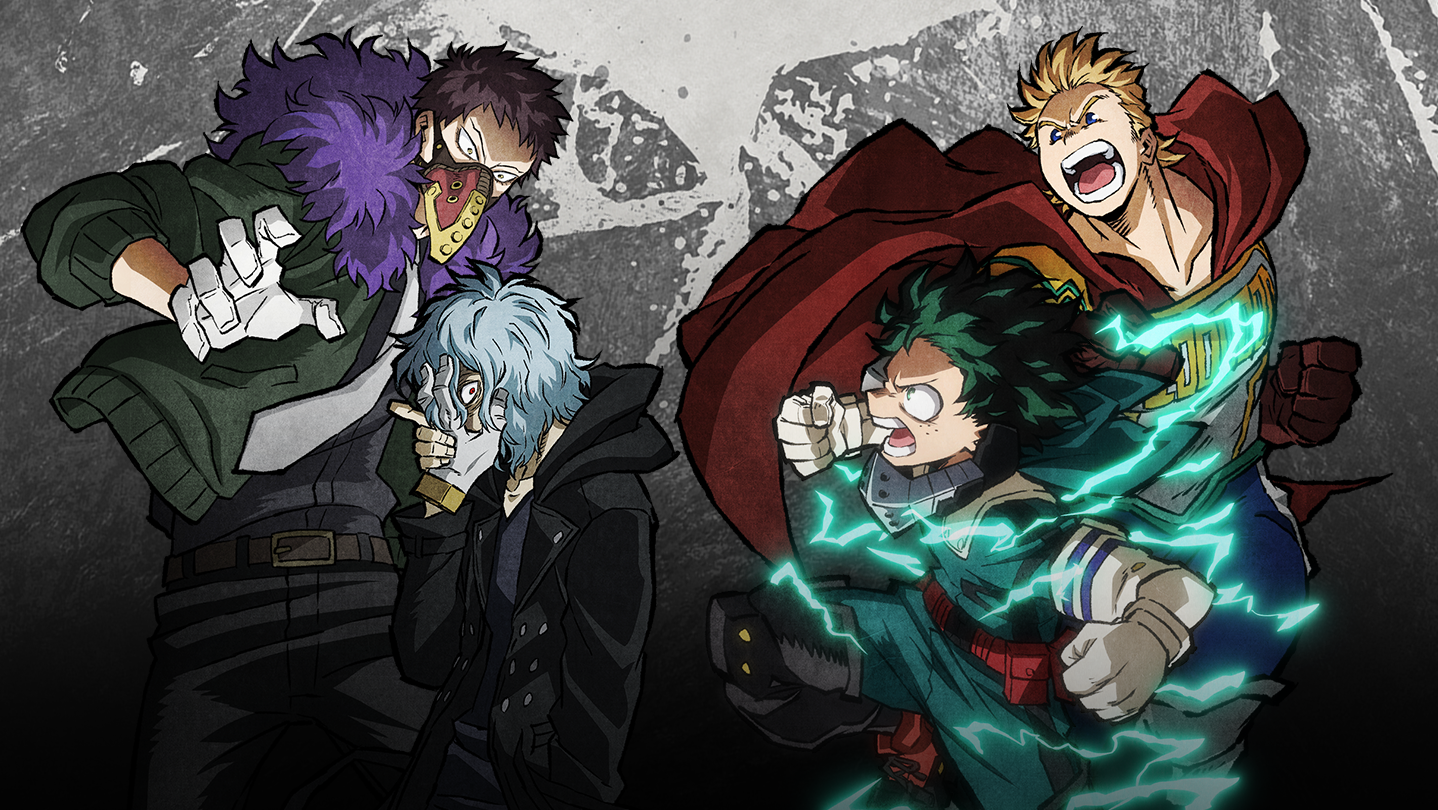
My Hero One’s Justice 2
If you love My Hero Academia, this 3D arena brawler delivers the spectacle you came for. If you want deep fighting game mechanics, it's going to frustrate you inside twenty minutes.
GamerScout Verdict
A fan-first arena brawler that nails the MHA spectacle but runs out of mechanical depth for anyone not invested in the IP.
Compare Prices(8 stores)
Every store in this table quotes us in euros, so the EUR figure is the price the seller actually set, not our arithmetic — which is why EUR is also the currency we rank in. We only list an offer here when the store gives us its price in euros, so nothing in this table is a number we invented.
Pick USD, PLN, GBP, CAD or AUD in the header and we convert from EUR at the European Central Bank reference rate — converted amounts are prefixed with ~. Your bank or the store may apply a different rate at checkout. We never hide offers based on where you are: everyone sees this whole table.
We may earn a commission when you buy games through links on this page — at no extra cost to you. It never affects our rankings or verdicts.
Price History
Screenshots & Media
About My Hero One’s Justice 2
I went in half-familiar with the source material, and that turns out to be roughly the ideal entry point for this one. Hardcore fans will get the most out of every Plus Ultra finisher and every piece of Arcade mode dialogue; genre-first fighting game players will hit the ceiling of its mechanical depth pretty fast and walk away disappointed. Know which camp you're in before you spend anything. The combat is a 3D arena brawler built around a rock-paper-scissors triangle: counterattacks beat normal strikes, special Quirk attacks beat unblockable moves, and unblockable moves beat counters. On top of that sits a guard gauge, super armor states, and the tiered Plus Ultra meter that builds across a fight and can be spent on character-specific finishers. At tier three, your two sidekicks crash in for a team finisher, and if you've picked certain canonical combinations, like Dabi, Toga, and Shigaraki, you get a unique animation as a reward for knowing your lore. That's the game at its best: visually extravagant, immediately readable, and loaded with little treats for people who've watched the show. Battles are fast and vertical, with wall-running and destructible arenas adding genuine spatial variety across the game's 25 stages. The problems are real, though. The camera is the main culprit: the over-the-shoulder 3D perspective makes tracking projectiles genuinely difficult, and during chaotic sequences it can feel like the game is actively working against you. Combat depth, while serviceable, is shallow enough that veterans of the Naruto Ultimate Ninja Storm series, which this resembles closely in structure, will notice the gap. The Story mode covers the Hero License Exam and Shie Hassaikai arcs from the anime, told through storyboards with voice-over, running roughly four hours before you flip perspectives and replay it from the villain side. That flip is a decent idea, but it only papers over how thin the campaign is on its own. Mission mode, where you run a Hero Office on a grid map, taking fights while managing one shared health bar across encounters, has enough light tactics to keep you busy for a while, but critics noted it can turn into repetitive grinding before long. Online Ranked and Unranked modes are present, though online stability has historically been inconsistent, especially in early patches. On the positive side, the roster grew with post-launch DLC from 40 characters at launch to 52 by the end of support in 2022, with balance patches rolling out alongside new additions. An English voice option was patched in post-launch as well, fixing one of the bigger complaints at release. The cel-shaded visuals are genuinely excellent and hold up well, and the Normal control scheme keeps the floor low enough that anyone can pick this up and start pulling off flashy combos within minutes. That accessibility is both its biggest strength and its clearest limitation: the button-mash path and the precision path eventually converge at the same shallow ceiling. Bottom line: this is comfort food for My Hero Academia fans who want to throw Deku against Overhaul in a well-presented arena. It does that one job with real conviction. As a fighting game for people who prioritize mechanical depth, it has less to offer than almost anything else in the genre right now.

Catch-all
Tags
System Requirements
Minimum
- Processor
- Intel Core i5-750 / AMD Phenom II X4 940
- Memory
- 4 GB RAM
- Graphics
- NVIDIA GeForce GTX 460 / AMD Radeon HD 6870 DirectX…
Recommended
- OS
- Windows 10, 64 bits
- Processor
- Intel Core i5-3470or AMD FX-6300
- Memory
- 4 GB RAM
- Graphics
- NVIDIA GeForce GTX 660or AMD Radeon HD 7870
- DirectX
- Vers…
DLC & Add-ons for My Hero One’s Justice 22
Expansions, DLC packs and add-on content for this game. Click any item to see store offers.

Keep exploring
Community Discussion
Be the first to comment on My Hero One’s Justice 2.
Reviews & Ratings
Game Info
- Developer
- BYKING
- Publisher
- BANDAI NAMCO Entertainment
- Release Date
- Mar 12, 2020