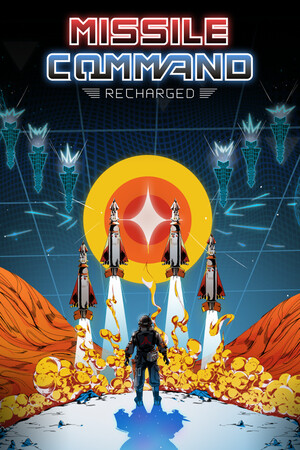
Missile Command: Recharged
Mouse-and-keyboard players get the best deal here: a tight, score-chasing arcade revamp where split-second cursor placement matters more than any mechanical keyboard.
GamerScout Verdict
Best for mouse-and-keyboard arcade fans who want a lean, high-score-driven loop with a couch co-op option and enough edge to punish sloppiness.
Compare Prices(4 stores)
Every store in this table quotes us in euros, so the EUR figure is the price the seller actually set, not our arithmetic — which is why EUR is also the currency we rank in. We only list an offer here when the store gives us its price in euros, so nothing in this table is a number we invented.
Pick USD, PLN, GBP, CAD or AUD in the header and we convert from EUR at the European Central Bank reference rate — converted amounts are prefixed with ~. Your bank or the store may apply a different rate at checkout. We never hide offers based on where you are: everyone sees this whole table.
We may earn a commission when you buy games through links on this page — at no extra cost to you. It never affects our rankings or verdicts.
Price History
Screenshots & Media
About Missile Command: Recharged
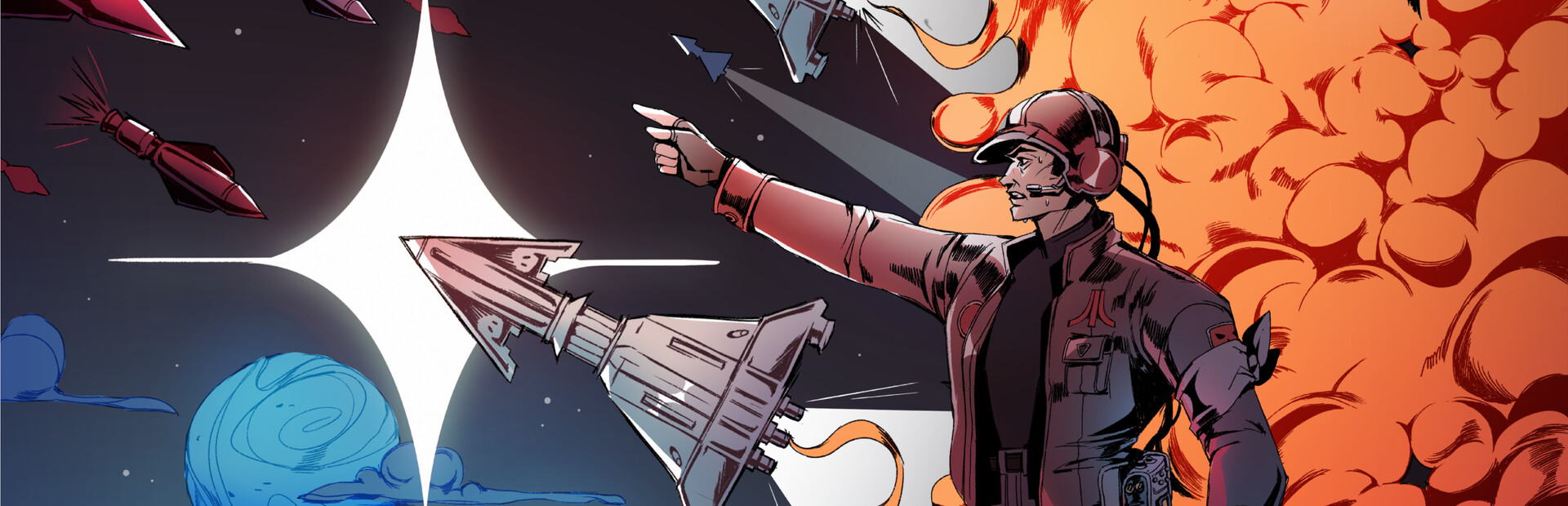
I'll put this plainly: on PC with a mouse, Missile Command: Recharged clicks into place in a way it simply does not on a gamepad or analog stick. The original 1980 concept was built around a trackball, and the cursor-based pointing on a mouse is the closest modern equivalent. If you're reading this on the Steam page with a controller in your hand, temper expectations accordingly. The rest of you, read on. The setup is classic and uncompromising. Three silos sit at the bottom of the screen, six cities behind them, and the sky fills up fast with incoming missiles, planes, tanks, and UFOs packing homing lasers. You fire counter-missiles by clicking where you want them to detonate, banking on the blast radius to intercept whatever is falling toward your cities. The trick, as it has always been, is shooting ahead of the trajectory rather than at the current position. Mess that up repeatedly and your cities go dark one by one. The 2022 version adds new enemy missile types with distinct behavior patterns, bigger and slower projectiles with wider blast radii, and aircraft that strafe across the screen and dump additional payloads. The threat variety is real and the difficulty curve escalates fast. The two main modes split the experience cleanly. Arcade is the endless survival loop where score accumulates and gets converted into upgrades across four attributes: explosion radius, shields, reload time, and counter-missile speed. Maxing those out takes a couple of hours at most, so the long-term hook lives in the online leaderboard rather than any progression system. Missions mode is the harder sell and the more interesting design. All 32 levels give you a fixed, limited ammo count and a scripted wave of threats. Surviving with at least one city standing is the pass condition. It plays closer to the original arcade game's resource management roots, and bomb-spamming strategies that work fine in Arcade will get you killed in Missions. The two modes demand different approaches and that's a good thing. There is also a boss fight waiting at the end of the mission campaign, which was a surprise worth mentioning. Local co-op works across both modes and it is genuinely worth trying. Two targeting reticles on screen, two players splitting defensive coverage, the chaos doubles and the game scales to meet it. The asymmetry of player one on mouse and player two on controller is a real disadvantage for the controller side though, and reviewers flagged this. Modifier options add some replay texture: a hyper modifier cranks intensity for a score bonus, a no-rebuild modifier cuts the safety net, and a calm modifier slows the pace at the cost of 50 percent of your final score. Those are thoughtful additions for a budget arcade title. The soundtrack by Megan McDuffee is bass-heavy and punchy, which is exactly what this kind of game wants. The ceiling is what it is. This is a micro-session game. It does not have the depth to carry a long evening and it was never designed to. The upgrade system plateaus quickly, the content is lean, and whether the leaderboard keeps pulling you back depends entirely on your tolerance for high-score chasing as a primary driver. For the audience that finds that loop satisfying, and who have a mouse in hand, this is a well-executed version of a genuinely good arcade concept.

Shooters
Tags
System Requirements
Minimum
- OS
- Windows 7
- Processor
- Dual Core +
Keep exploring
Community Discussion
Be the first to comment on Missile Command: Recharged.
Reviews & Ratings
No ratings available
Game Info
- Developer
- Adamvision Studios
- Publisher
- Atari
- Release Date
- Nov 1, 2022