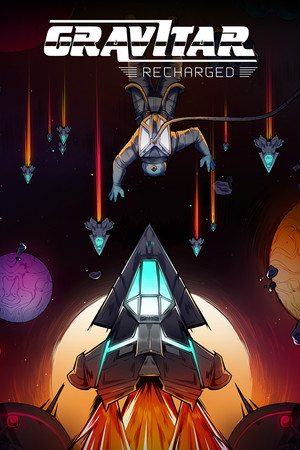
Gravitar: Recharged
If rotate-and-thrust physics make your palms sweat in a good way, this one's for you. A compact but punishing arcade shooter where gravity does more damage than the enemy guns will, and mastery genuinely feels earned.
GamerScout Verdict
Best for arcade purists who want a low-price, high-skill-ceiling shooter where gravity is the real enemy.
Compare Prices(3 stores)
Every store in this table quotes us in euros, so the EUR figure is the price the seller actually set, not our arithmetic — which is why EUR is also the currency we rank in. We only list an offer here when the store gives us its price in euros, so nothing in this table is a number we invented.
Pick USD, PLN, GBP, CAD or AUD in the header and we convert from EUR at the European Central Bank reference rate — converted amounts are prefixed with ~. Your bank or the store may apply a different rate at checkout. We never hide offers based on where you are: everyone sees this whole table.
We may earn a commission when you buy games through links on this page — at no extra cost to you. It never affects our rankings or verdicts.
Price History
Screenshots & Media
About Gravitar: Recharged
I came into this expecting a throwaway nostalgia cash-grab and walked away with blisters from white-knuckling the analog stick. Gravitar: Recharged is a rotate-and-thrust arcade shooter built on a simple but deeply unforgiving movement system: you point, you thrust, and the planet's gravity keeps working whether you're ready for it or not. This is not a game where twitch speed wins. It is a game where overconfidence kills you faster than any enemy turret. The two main modes are Arcade and a standalone Missions list with 24 hand-crafted challenges. Arcade drops your ship into a solar system and asks you to clear each orbiting body before the black hole opens to the next system. Objectives rotate between eliminating all hostiles, blowing up reactors, stealing intel documents, and activating beacons - so the loop stays varied even if the underlying physics challenge is constant. The 24 Mission mode challenges are where the real skill-building happens: they slot you into specific scenario types and let you grind them in isolation, which pays off hard when you return to Arcade and stop dying to the same gravity trap on loop. Power-ups picked up via tractor beam, including homing missiles and an EMP disruptor, are scarce enough to feel meaningful rather than spammy. A recharging shield absorbs one hit before it needs five seconds to reset, which is the one concession the game makes toward not being completely merciless. Every level's gravity intensity varies, and the visual color-coding of planet environments gives you a rough heads-up on how rough the ride will be. The visual direction is the biggest surprise. Where earlier Recharged titles recycled the same vector-neon aesthetic, this one shoots for minimalist painterly backgrounds in muted pastels against heavy black terrain and structures. Red means enemy, teal means yours to interact with. It is clean, readable under pressure, and genuinely distinct. Composer Megan McDuffee's ambient soundtrack leans so far toward calm that it almost feels sarcastic given how many times you will die, but it keeps your heart rate from spiking in ways that would cost you precision. On PC the performance is rock solid, no dropped frames, no stuttering - exactly what you want when a single input mistake sends you spinning into a surface. Co-op is available in both modes and connects both ships on a rubber-band tether, which sounds cute until your partner overcorrects on a tight approach and drags you both into a wall. Reviewers were split on whether co-op adds or subtracts from the experience, and honestly the tether mechanic is the kind of design decision that requires a similarly skilled partner or it becomes a liability. There is no online co-op, strictly local. On the difficulty-vs-depth argument, critics sitting around a 70-75 average on OpenCritic were mostly aligned: the game asks for patience and deliberate muscle memory that not everyone will want to develop. If you came for quick pick-up-and-play arcade satisfaction, the controls will feel broken to you before they feel good. If you came to grind a skill ceiling, there is one here and it actually scales. For shooter players specifically, this is an interesting edge case. It has nothing to do with netcode, ranked ladders, or time-to-kill balance. What it has is one of the purest input-feedback loops I have touched in a retro revival - one where your controller's analog sensitivity becomes a real variable, where small miscalibrations in stick pressure compound over a run. Play it on a controller with a clean short-throw stick rather than a loosey-goosey worn-out pad and you will have a meaningfully better time. The PC release runs clean and the price sits low enough that it is a reasonable impulse pull for anyone who clears their usual queue.

Shooters
Tags
System Requirements
Minimum
- OS
- Windows 7
- Memory
- 4 GB RAM
- Storage
- 400 MB available space
- Processor
- Dual Core +
Keep exploring
Community Discussion
Be the first to comment on Gravitar: Recharged.
Reviews & Ratings
No ratings available
Game Info
- Developer
- Adamvision Studios
- Publisher
- Atari
- Release Date
- Jun 2, 2022