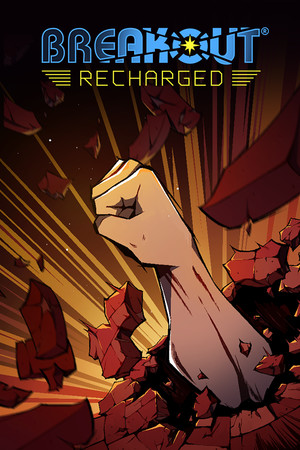
Breakout: Recharged
Arcade reflex training dressed up in neon, with a soundtrack that punches above its weight. Worth a look if you chase leaderboards; skip it if you need more than a paddle and 50 challenges to stay interested.
GamerScout Verdict
Best for Atari Recharged series fans and score-chasers who play in short bursts; a hard sell at full price for anyone else.
Compare Prices(4 stores)
Every store in this table quotes us in euros, so the EUR figure is the price the seller actually set, not our arithmetic — which is why EUR is also the currency we rank in. We only list an offer here when the store gives us its price in euros, so nothing in this table is a number we invented.
Pick USD, PLN, GBP, CAD or AUD in the header and we convert from EUR at the European Central Bank reference rate — converted amounts are prefixed with ~. Your bank or the store may apply a different rate at checkout. We never hide offers based on where you are: everyone sees this whole table.
We may earn a commission when you buy games through links on this page — at no extra cost to you. It never affects our rankings or verdicts.
Price History
Screenshots & Media
About Breakout: Recharged
My instinct when I loaded Breakout: Recharged was to mouse it, and that turned out to be the right call. Mouse input is the closest thing you get to the rotary dial the original was designed around, and the game never fully shakes the feeling that it was built for hardware most PC players no longer own. If you grab a gamepad hoping for snappy analog control, brace yourself: the response is adequate but not precise, and in a game where ball angle is determined by millimeter-level paddle position, "adequate" costs you lives. What Adamvision Studios and SneakyBox actually built here is a four-mode structure sitting on top of that classic one-screen formula. Recharged mode gives you one life and a steady stream of power-ups, Classic strips the power-ups and hands you three lives, Classic Recharged blends both, and the endless Arcade mode just runs until you make a mistake. On top of that sit 50 timed challenge levels, each with a specific objective like hitting a score threshold or clearing a particular brick configuration. The challenges are where the game earns its keep. The arcade loop by itself runs dry quickly, but some of those 50 scenarios, especially the turret-heavy ones where bricks fire back at your paddle, force you to actually think about angle management rather than just reacting. Power-ups across modes include rail guns, homing missiles, explosive balls, multi-ball splits, a trajectory preview line, and a time-slow that kicks in as the ball drops. Eleven in total, and a few of them are genuinely useful rather than just visual noise. The visual noise itself is a real issue. Chain-reaction explosions and multi-ball situations can bury the ball completely in screen shake and particle effects, which is a problem when tracking ball position is literally the whole game. A reviewer noted that controls could also be more responsive, and that tracks with my experience. The soundtrack is the unambiguous high point: composer Megan McDuffee delivers something genuinely upbeat and memorable, which is more than the previous Recharged entries managed. Turn down the volume on boot though, the default mixing is hot. The bigger structural problem is the absence of any online competitive mode. Local co-op works across all modes, with two players each controlling a paddle, but there is no online play. The only online component is a global score leaderboard. For a game that lives and dies on score-chasing, that is a real missed opportunity. A head-to-head brick battle mode with crossplay would have given this legs. Without it, once you have cleared the 50 challenges and found your ceiling in arcade mode, there is not much pulling you back. The OpenCritic aggregate sits at 64 across 15 critics, and that feels honest. Steam players rate it more generously, with roughly 81 percent positive across around 93 reviews, which probably reflects the low barrier to entry and the nostalgia factor doing some heavy lifting. If you are deep into the Atari Recharged series you already know what you are getting, and Breakout is arguably the one that translates least cleanly to modern inputs because the original's dial controller was core to the feel. For everyone else, this is a sub-ten-dollar arcade session that works fine in short bursts, sounds great, and fades from memory quickly. Pick it up during a sub-three-dollar sale if you want a leaderboard to chase for a weekend. At full price, Arkanoid clones with more content exist at the same tier.

Shooters
Tags
System Requirements
Minimum
- OS
- Windows 7
- Memory
- 4 GB RAM
- Storage
- 400 MB available space
- Processor
- Dual Core
Keep exploring
Community Discussion
Be the first to comment on Breakout: Recharged.
Reviews & Ratings
No ratings available
Game Info
- Developer
- Adamvision Studios
- Publisher
- Atari
- Release Date
- Feb 10, 2022