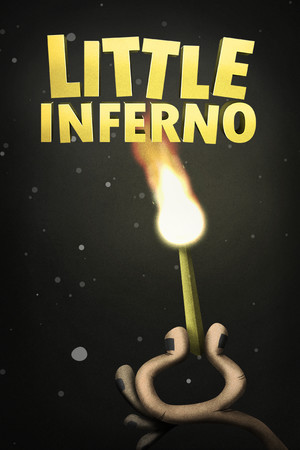
Little Inferno
Burn your toys, earn coins, buy more toys to burn. That loop sounds hollow until the ending quietly rearranges something inside you.
GamerScout Verdict
Best for players who want a handcrafted two-hour meditation on consumption that earns its quiet, melancholy gut-punch of an ending.
Compare Prices(5 stores)
Every store in this table quotes us in euros, so the EUR figure is the price the seller actually set, not our arithmetic — which is why EUR is also the currency we rank in. We only list an offer here when the store gives us its price in euros, so nothing in this table is a number we invented.
Pick USD, PLN, GBP, CAD or AUD in the header and we convert from EUR at the European Central Bank reference rate — converted amounts are prefixed with ~. Your bank or the store may apply a different rate at checkout. We never hide offers based on where you are: everyone sees this whole table.
We may earn a commission when you buy games through links on this page — at no extra cost to you. It never affects our rankings or verdicts.
Price History
Screenshots & Media
About Little Inferno
I sat with Little Inferno for one uninterrupted evening and came out of it unsure whether I had played a game or experienced a very short, very strange piece of theatre. That uncertainty is completely intentional, and it is the most honest thing I can say about what Tomorrow Corporation built here. The setup is almost aggressively minimal. You are a child in a frozen city called Burnington, seated in front of the Little Inferno Entertainment Fireplace, a product manufactured by the in-game version of the developer itself. You buy items from seven toy catalogs, drag them into the fire, collect the coins they leave behind, and use those coins to buy more things. Bombs detonate with satisfying physics. A toy school bus peels across the grate. Spider eggs hatch into crawling chaos. Corn pops. The fire responds to everything with tactile, hand-crafted charm that is genuinely fun to poke at. The real progression hook is the combo system: cryptically named challenges that hint at two or three specific items to burn together. The combo names never tell you directly what to torch, only gesture at an idea, so you end up flipping through the catalog like a puzzle box. Unlocking each new catalog feels like a small reward loop that keeps the session moving. The story arrives sideways, through letters. Your eccentric neighbor Sugar Plumps writes to you with increasing urgency. A postman drops enigmatic notes. The Weather Man reports endlessly bleak snowfall. None of it feels like a traditional narrative, and that is the point. The game is classified as a sandbox with no failure states, and it was designed explicitly as a satire of the kind of game where you grind meaningless tasks for hollow rewards. The sarcasm is structural: you are literally buying disposable goods to incinerate them so you can buy more. The composer Kyle Gabler wrote the score from scratch, drawing on orchestral references that lend the whole thing a lullaby-dark warmth, oppressively cheerful catalog music giving way to something genuinely haunting as the letters grow stranger. That soundtrack is one of the most quietly remarkable things about the experience. Where Little Inferno divides people is straightforward: the core loop is, by design, thin. Critics who came looking for a puzzle game found the combo system underdeveloped. Those who came looking for a narrative found it oblique to the point of frustration. Both complaints are fair on their own terms. The game runs two to three hours at an unhurried pace, and once you finish it, there is almost nothing to bring you back outside of a separate holiday expansion released in 2022. What saves it from feeling like a shallow experiment is the ending, which pivots the whole experience into something unexpectedly moving. The shift from fireplace to side-scrolling walkthrough of Burnington, meeting the postman and the CEO Miss Nancy, is abrupt and earned in a way that recontextualizes the monotony you just sat through. Some players found it choked them up. I understand why. This is a game for people who want something that feels handmade, brief, and quietly subversive rather than one that respects their time in the conventional sense. If you need mechanical depth, look at the other Tomorrow Corporation catalog. If you want a two-hour thing that lingers for days, Little Inferno knows exactly when to end.

Indie & narrative
Tags
System Requirements
Minimum
- OS
- Win 7, Vista and XP
- RAM
- 1GB
- Processor
- 1.5 Ghz
- Hard Drive
- 200 MB
- Video Card
- You will need a graphics card that supports Shader Model 2.0 or greater and DirectX 9.0c.
Keep exploring
Community Discussion
Be the first to comment on Little Inferno.
Reviews & Ratings
Game Info
- Developer
- Tomorrow Corporation
- Publisher
- Tomorrow Corporation
- Release Date
- Nov 19, 2012