7 Billion Humans
Program hundreds of office drones in parallel to solve logic puzzles. Think you're clever? The optimizer will humble you fast.
GamerScout Verdict
Solid logic puzzler for coders and curious newcomers alike, but the fixed puzzle pool means completionists will hit the wall fast.
Compare Prices(6 stores)
Every store in this table quotes us in euros, so the EUR figure is the price the seller actually set, not our arithmetic — which is why EUR is also the currency we rank in. We only list an offer here when the store gives us its price in euros, so nothing in this table is a number we invented.
Pick USD, PLN, GBP, CAD or AUD in the header and we convert from EUR at the European Central Bank reference rate — converted amounts are prefixed with ~. Your bank or the store may apply a different rate at checkout. We never hide offers based on where you are: everyone sees this whole table.
We may earn a commission when you buy games through links on this page — at no extra cost to you. It never affects our rankings or verdicts.
Price History
Screenshots & Media
About 7 Billion Humans
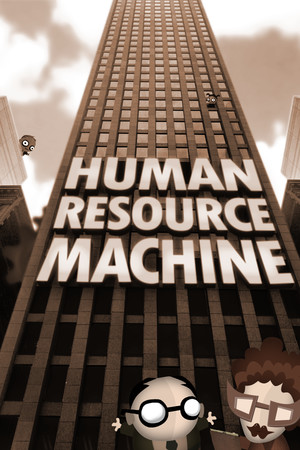
7 Billion Humans is a visual programming puzzle game where you write assembly-like instructions to control massive grids of worker clones simultaneously. Each puzzle hands you a floor full of office workers, a set of data pits, and a minimal instruction set, then asks you to automate them all into a solution. If that sounds dry, give it twenty minutes. The moment your parallel code clicks and every worker marches in perfect lockstep, there is a specific satisfaction that very few puzzle games deliver. The core mechanic is closer to actual low-level programming than it first appears. You are writing loops, conditional jumps, and register operations - just with cartoon workers instead of pointers. Tomorrow Corporation keeps the visual layer friendly enough that no prior coding experience is required, but the ceiling is genuinely high. Later puzzles introduce concepts like data stacks, nested loops, and multi-step conditionals that will make experienced programmers smirk and newcomers sweat. The tutorial paces this well. It does not assume you know what a register is, and it builds vocabulary incrementally rather than dumping a reference sheet on you at the start. What separates this from a basic tutorial game is the optimization layer. Finishing a puzzle is one target. Finishing it in the fewest steps, or with the shortest program, is a completely different challenge. Leaderboard histograms show how your solution compares to the wider player base, and that single bar chart has caused more restarts for me than any explicit grading system could. The optimization puzzles reward a build-order mindset: you plan the efficient path first, prototype a messy working version, then compress. It is a legitimate two-pass design loop inside a game that looks like a children's cartoon. The weaknesses are real. The game has a fixed puzzle count with no procedural generation, so once you have cleared and optimized everything, replay value essentially bottoms out. There is no mod ecosystem to speak of, which is a notable gap for anyone hoping for community-made puzzle packs. The story framing - a thin corporate satire about office drones - lands a few good jokes but runs out of ideas well before the puzzle difficulty peaks. You will skip the cutscenes by the midpoint. AI in the traditional sense is not a factor here since this is a single-player puzzle game, but the puzzle design itself functions as the opponent, and it is a well-calibrated one. For the right player, that fixed content ceiling is fine. The game runs roughly eight to twelve hours to clear, significantly longer if you chase every optimization target. Anyone drawn to efficiency puzzles, programming concepts, or the satisfying crunch of squeezing a ten-instruction solution down to six will find this genuinely rewarding. It is also a low-risk entry point if you have a non-gamer friend curious about how programming logic actually works - the visual model is honest and accurate without being intimidating.

Strategy & simulation
Tags
System Requirements
Minimum
- Processor
- 2.0Ghz CPU
- Memory
- 1 GB RAM
- Graphics
- graphics card that supports Shader Model 2.0 or greater
- DirectX
- Version 9.0c
- Storage
- 200 MB available space
Keep exploring
Community Discussion
Be the first to comment on 7 Billion Humans.
Reviews & Ratings
Game Info
- Developer
- Tomorrow Corporation
- Publisher
- Tomorrow Corporation
- Release Date
- Aug 23, 2018