Lakeburg Legacies
Pair up peasants, balance wheat and wood, and breed a royal bloodline through clever matchmaking, a cozy city-builder with a genuinely novel hook that runs out of steam before the crown is crowned.
GamerScout Verdict
Satisfying for cozy-sim fans in its first half, but unresolved late-game micromanagement grind and abandoned post-launch support make it a conditional buy.
Compare Prices(7 stores)
Every store in this table quotes us in euros, so the EUR figure is the price the seller actually set, not our arithmetic — which is why EUR is also the currency we rank in. We only list an offer here when the store gives us its price in euros, so nothing in this table is a number we invented.
Pick USD, PLN, GBP, CAD or AUD in the header and we convert from EUR at the European Central Bank reference rate — converted amounts are prefixed with ~. Your bank or the store may apply a different rate at checkout. We never hide offers based on where you are: everyone sees this whole table.
We may earn a commission when you buy games through links on this page — at no extra cost to you. It never affects our rankings or verdicts.
Price History
Screenshots & Media
About Lakeburg Legacies
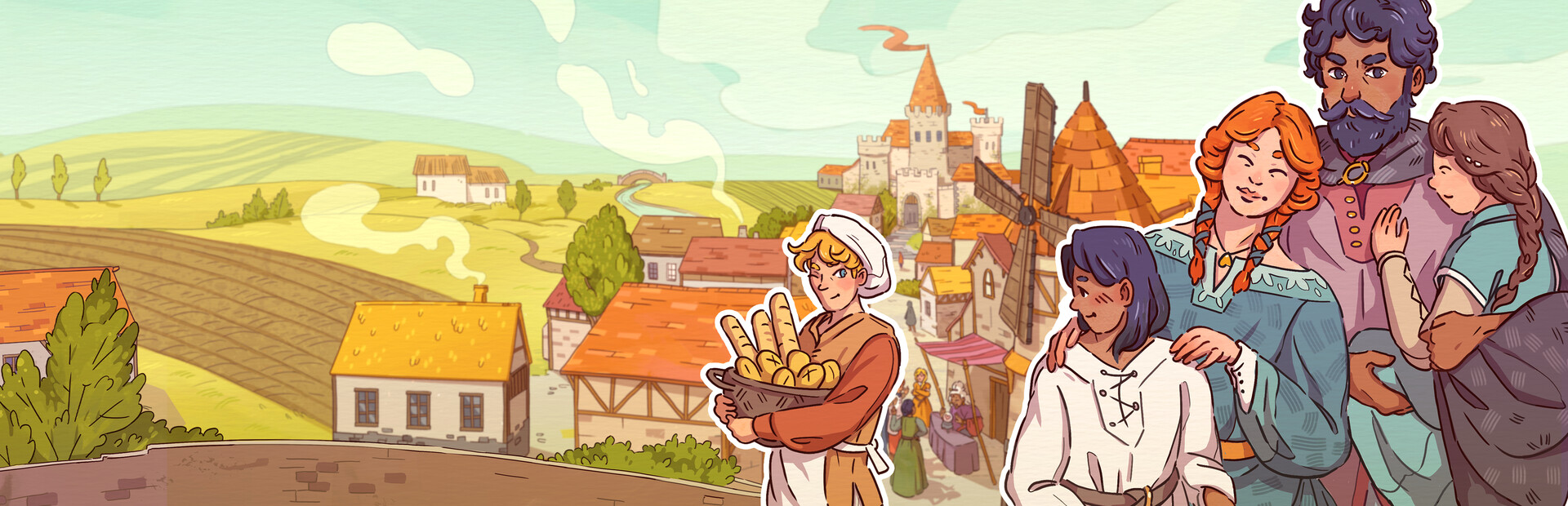
My spreadsheet instincts lit up the moment I understood what Lakeburg Legacies is actually asking: treat your villagers as a talent pipeline, cross-reference their stats, aspirations, and trait compatibility, then pair them to produce high-skill offspring who fill the jobs your economy needs next generation. That is a real strategic loop, and in the first thirty or forty in-game years it works. You start with a single lumberjack, call on the crystal-ball matchmaker Tindra to surface potential suitors from outside the settlement, weigh up a candidate who is a perfect romantic match but only skilled in acting and royalty against one who is a merely decent match with a rat-tamer aspiration you actually need, and you take the rat-tamer. That tension between heart and efficiency is where the game is most alive. The resource side of things slots in around the matchmaking. You need wood to raise homes, wheat and meat for food, hides for clothing, stone for later-tier buildings. Each villager slot at a lumber mill, farm, or hunting tent gets filled by whoever has the relevant aptitude or aspiration, because workers placed in their dream jobs produce more and stay happier. Morale, faith, health, and entertainment are separate meters that cross-pollinate: an ill-mannered villager might demand beer from the inn every 120 days, so if you have not built an inn yet, that is a problem you created three marriages ago. The interdependency is the interesting part, everything is connected, and a single broken link can cascade fast. Here is where the honest accounting gets harder. Building placement is fully predetermined. You cannot position your lumber quarter, you cannot reorder the building queue strategically, the game forces you down three rigid unlock tracks, meaning you may have a born baker on your hands but you cannot build the bakery until you first build a sewing workshop. For players conditioned by city-builders where spatial and construction decisions create replayability, that constraint removes a significant layer of depth. The procedurally generated villagers add variety to each run, but the early build order plays out almost identically every time. The bigger problem is the late game: once your population swells past several dozen households, the matchmaking that defined the early experience becomes relentless micromanagement. Newly adult villagers must be manually housed, widows immediately requeue for partners, and the interruptions come so frequently that years of in-game time can take longer to process than the first few decades combined. Critics and players both landed on the same word: tedious. The genetics system, which should reward careful generational planning, does not reliably pay off enough to justify the attention it demands. Post-launch, the developers confirmed on Discord that further feature development had stopped, leaving the endless mode and several quality-of-life improvements the community had flagged unfulfilled. And yet the game holds a mostly positive rating on Steam, and I understand why. The art, hand-drawn character portraits, warm medieval buildings, readable UI, is genuinely charming and consistent in its cozy tone. The randomised life events (affairs, divorces, dramatic first loves, the occasional cholera outbreak) add story texture that most village sims never bother with. The tutorial is thorough, arguably over-thorough on first contact, but the information is well-structured and there is a right-click shortcut to skip sections you have already absorbed. If you are new to the management-sim genre, Lakeburg Legacies is one of the softer entry points precisely because it keeps the city-building shallow and foregrounds the interpersonal drama. The audience is cozy-game players who want slightly more decision weight than a pure life-sim, and management-sim fans who are willing to accept a low ceiling in exchange for a fresher premise. Neither group will find the late game rewarding without patches that were never delivered.

Strategy & simulation
Tags
System Requirements
Minimum
- OS
- Microsoft® Windows® 10
- Memory
- 8 GB RAM
- DirectX
- Version 9.0
- Storage
- 10 GB available space
- Graphics
- NVIDIA GeForce GTX 1650, 4GB or AMD Radeon RX VEGA 56, 8GB
- Processor
- Ryzen 5 1400/i3 8100
Recommended
- OS
- Microsoft® Windows® 10
- Memory
- 16 GB RAM
- DirectX
- Version 9.0
- Graphics
- GeForce RTX 2070 SUPER, 8GB or AMD Radeon RX 580, 8GB
- Processor
- Ryzen 5 3600/ i5 10400F
Keep exploring
Community Discussion
Be the first to comment on Lakeburg Legacies.
Reviews & Ratings
No ratings available
Game Info
- Developer
- Ishtar Games
- Publisher
- Ishtar Games
- Release Date
- Jul 20, 2023