Konung 2
A deeply obscure Russian isometric RPG that critics dismissed but patient genre hunters kept alive for two decades. If you survived early Baldur's Gate by fleeing every fight, this might actually click.
GamerScout Verdict
Best for patient genre archaeologists who can tolerate old-school opacity and read a FAQ before they play.
Compare Prices(9 stores)
Every store in this table quotes us in euros, so the EUR figure is the price the seller actually set, not our arithmetic — which is why EUR is also the currency we rank in. We only list an offer here when the store gives us its price in euros, so nothing in this table is a number we invented.
Pick USD, PLN, GBP, CAD or AUD in the header and we convert from EUR at the European Central Bank reference rate — converted amounts are prefixed with ~. Your bank or the store may apply a different rate at checkout. We never hide offers based on where you are: everyone sees this whole table.
We may earn a commission when you buy games through links on this page — at no extra cost to you. It never affects our rankings or verdicts.
Price History
Screenshots & Media
About Konung 2
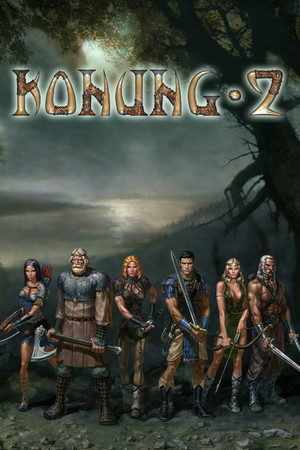
My first few hours with Konung 2 felt less like playing an RPG and more like failing a pop quiz written in a language I almost speak. The combat will punish you immediately and without apology: incoming hits interrupt your own attacks, meaning a single enemy can lock you into a stun loop before you've figured out which button does what. There is no combat pause. Potions burn fast if you lean on auto-use. The game's early difficulty isn't designed around skill expression so much as around a quiet expectation that you will run away, regroup, and come back better-equipped. That design philosophy is either charming or infuriating, and there is genuinely no middle ground. What makes Konung 2 harder to dismiss than its Metacritic score suggests is the hybrid structure underneath all that friction. You pick one of six playable characters, each a descendant of the Titans, and your choice meaningfully shapes which quests open up, what dialogue options appear, and how towns respond to you. The world is carved up between three cultures, Slavic hunters, Byzantine traders, and Viking warriors, and the sense that these factions exist independently of your choices gives the open map a lived-in texture that bigger-budget contemporaries sometimes fumble. Settlement management sits alongside the RPG systems: you can conquer villages, appoint a voevode to slowly level up your garrison, spend tribute on blacksmith upgrades, and arm your townsfolk. None of this is mandatory, which is the right call, but ignoring it entirely means cutting off a useful income stream and a genuine secondary loop that scratches the light-strategy itch. The combat system is real-time with no pause option, built around party management, Charisma-gated mercenary recruitment, and gear requirements tied to Vitality and Strength thresholds. Magic here is not fireball-and-staff fantasy. Spell effects come through item properties and alchemy rather than castable skills, which will disappoint anyone expecting arcane builds. Crossbows outperform bows on damage output at lower stat requirements, and weapon durability actually matters since axes and clubs degrade faster than swords despite the in-game manual claiming otherwise. The game rewards reading supplemental guides not because it is badly designed but because it was built for an audience comfortable with old-school information opacity. The production side is rough by any standard. Pre-rendered sprites, stilted voice acting, and translation bumps that occasionally flatten what might have been decent writing in the original Russian. The interface is clunky and slow, with no quick-scroll or teleport options, so extended leveling sessions can drag. Certain character campaigns carry crash bugs on modern Windows setups that require compatibility workarounds and toggling off Steam overlay. This is a game that asks for patience as a prerequisite, not a reward. I respect Konung 2 more than I enjoyed it unconditionally, which feels like an honest place to land. It is not a narrative RPG in the Disco Elysium sense, choices do not cascade into complex moral fallout, and the writing will not reward re-reads. What it offers instead is a slow-burn sandbox with real mechanical texture, an unusual Slavic-Norse-Byzantine mythology that Western RPGs rarely touch, and six starting characters that actually change the experience in meaningful ways. If you approach it expecting a rough gem from an era when Russian developers were making atmospheric mid-budget RPGs for an audience that read the manual, you will find something genuinely worth your time. Approach it cold expecting a polished isometric CRPG and you will bounce off the first zone inside thirty minutes.

RPGs
Tags
System Requirements
Minimum
- OS
- Windows XP/7/8
- Memory
- 64 MB RAM
- Storage
- 500 MB available space
- Processor
- Pentium II 400 MHz
Recommended
500 MB available space
Keep exploring
Community Discussion
Be the first to comment on Konung 2.
Reviews & Ratings
Game Info
- Developer
- Fulqrum Publishing
- Publisher
- Fulqrum Publishing
- Release Date
- Apr 23, 2014