KILL la KILL -IF
A 3D arena fighter that lives and dies by your affection for the anime. Gorgeous presentation, razor-thin depth, know that going in.
GamerScout Verdict
Ideal for Kill la Kill fans wanting eight hours of polished fanservice; competitive fighting game players will find the depth exhausted in an afternoon.
Compare Prices(7 stores)
Every store in this table quotes us in euros, so the EUR figure is the price the seller actually set, not our arithmetic — which is why EUR is also the currency we rank in. We only list an offer here when the store gives us its price in euros, so nothing in this table is a number we invented.
Pick USD, PLN, GBP, CAD or AUD in the header and we convert from EUR at the European Central Bank reference rate — converted amounts are prefixed with ~. Your bank or the store may apply a different rate at checkout. We never hide offers based on where you are: everyone sees this whole table.
We may earn a commission when you buy games through links on this page — at no extra cost to you. It never affects our rankings or verdicts.
Price History
Screenshots & Media
About KILL la KILL -IF
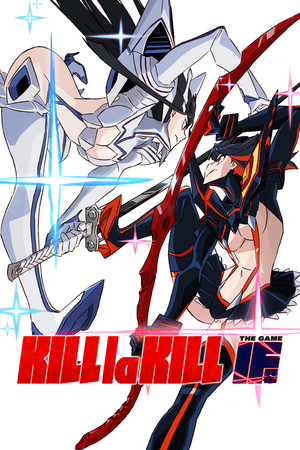
I came into KILL la KILL -IF with one honest question: does Arc System Works on the publishing credit actually mean anything for the quality of combat? The short answer is no, not really. The actual developer here is A+ Games, and the gap between what the ArcSys name implies and what you get at the mechanical level is the defining tension of the whole package. As a 3D arena fighter, the combat system runs on a rock-paper-scissors core: close-range attacks, long-range attacks, and a guard break, all cycling against each other plus a block and a homing air dash that snaps you directly at your opponent like Dragon Ball FighterZ's Dragon Rush. Inputs are deliberately simple, auto-combos trigger off repeated button presses, and the wall-splat mechanic is about as deep as the system gets. The most interesting wrinkle is Bloody Valor, a cinematic rock-paper-scissors exchange you trigger by spending half your SP meter. Win it and you climb toward Valor Level 3, which unlocks a character-specific power boost, a beefed-up break-attack super, and eventually the SEN-I-SOSHITSU instant kill that can end a match regardless of rounds remaining. It is genuinely cool on paper and in the hands of two human players reading each other it creates real tension. Against the AI, it mostly just happens and you move on. The problem is that once you peel back one layer past that mechanic, you are mashing attack strings into wall splats and the answer never really changes. There is no ranked infrastructure worth taking seriously, the online population at this point is sparse, and the competitive ceiling is low enough that anyone looking for a ladder grind is going to bounce off fast. The roster sits at ten fighters total, with eight in the base game and Nudist Beach D.T.R. plus Mako added as free post-launch updates. Roster size is the loudest complaint across the board, and it is fair. That said, the characters are genuinely distinct: Nonon zones with stationary projectile orbs, Nui spawns clones, Ragyo transitions range into close-range damage chains, and Gamagoori is a pure pressure tank. Alternate costumes shift certain attack properties but do not go far enough to read as separate fighters. The camera is the other recurring villain. It swings cinematically during combos, which looks great in replays and actively confuses positioning mid-fight, especially when story mode throws three-way battles, Elite Four brawls, or horde-clear segments at you. The lock-on in multi-enemy fights frequently refuses to swap targets, and getting hit by an off-screen laser during a Cover wave is not a skill expression issue, it is just bad design. The story mode is the honest center of gravity here. It runs the "IF" alternate scenario supervised by original scenario writer Kazuki Nakashima, with Satsuki Kiryuin as the lead for the first campaign and Ryuko Matoi unlocking after. Each route is roughly four hours, the cutscenes are built in the game's own 3D cel-shaded engine and look convincing enough that you occasionally forget you are not watching the show, and the full dual-audio cast with original voice actors from the anime is a legitimate value add. If you watched Kill la Kill and want to spend eight hours in that world again with fresh context for Satsuki's side of the board, that is a real thing this game delivers. The presentation, from Hiroyuki Sawano's soundtrack to the intro poses and cinematic special attack animations, is the most complete version of itself. Outside story mode: local versus, online versus, a Cover Challenge gauntlet, practice modes, a gallery diorama mode, and a sound test. That is the full inventory. It is thin. For a shooter guy like me who usually only picks up fighters to scrim with people, KILL la KILL -IF is an awkward recommendation in 2025. The online pool is small, the mechanical depth is not there for a grind, and the story content has a hard ceiling. What it is, clearly and without apology, is a fan product. If you loved the anime and want a polished, faithful, visually spectacular way to replay its greatest hits plus an original alt-history scenario, this delivers. If you have never seen Kill la Kill, close this tab and watch the show first because the game will not make sense and it will not win you over on combat alone.

Shooters
Tags
System Requirements
Minimum
- OS
- Windows 7 / 8.1 / 10 (32bit/64bit)
- Memory
- 4 GB RAM
- DirectX
- Version 11
- Network
- Broadband Internet connection
- Storage
- 16 GB available space
- Graphics
- GeForce GTX760 2GB
- Processor
- Intel Core i5-7500
Keep exploring
Community Discussion
Be the first to comment on KILL la KILL -IF.
Reviews & Ratings
No ratings available
Game Info
- Developer
- Arc System Works
- Publisher
- Arc System Works
- Release Date
- Jul 25, 2019