GUILTY GEAR Xrd -SIGN-
Possibly the most technically demanding 2D fighter to land on PC in the last decade, and one of the few that genuinely rewards every hour you grind in training mode.
GamerScout Verdict
Best for FGC players who want mechanical depth and can stomach delay-based netcode and a slim PC playerbase.
Compare Prices(8 stores)
Every store in this table quotes us in euros, so the EUR figure is the price the seller actually set, not our arithmetic — which is why EUR is also the currency we rank in. We only list an offer here when the store gives us its price in euros, so nothing in this table is a number we invented.
Pick USD, PLN, GBP, CAD or AUD in the header and we convert from EUR at the European Central Bank reference rate — converted amounts are prefixed with ~. Your bank or the store may apply a different rate at checkout. We never hide offers based on where you are: everyone sees this whole table.
We may earn a commission when you buy games through links on this page — at no extra cost to you. It never affects our rankings or verdicts.
Price History
Screenshots & Media
About GUILTY GEAR Xrd -SIGN-
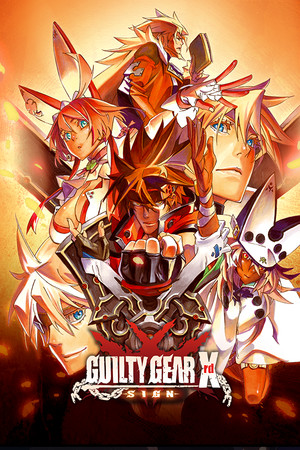
I came to Xrd -SIGN- as someone who respects a tight input window the way I respect a low-latency mouse: it has to be real, not just marketed that way. Arc System Works delivered the real thing. This is a six-button fighter built around relentless aggression, where turtling long enough actually drains your Tension gauge and forces you back into the fray. That single design choice sets the whole tempo, and it is the right call. The mechanical depth here is serious. Roman Cancels come in three color-coded flavors, each costing a slice of your Tension bar to exit attack animations at different stages. Yellow Roman Cancel is the biggest new addition, letting you freeze the screen mid-special and open up mix-up opportunities that did not exist in any prior entry. On top of that you have Dust Attacks launching opponents into aerial combo territory, Psych Bursts as both offensive escapes and defensive tools, Blitz Shields that reflect a single hit and stun the attacker, Instant Blocks, Dead Angle Attacks, and Instant Kill moves that sit behind a full tension spend. That list reads long, and it plays even longer to actually learn. The roster sits at around 16 characters at launch, and each one is genuinely different. Zato-1 plays like a puppet fighter where you manage an independent entity. Bedman fights from a mechanical bed with a comatose mechanic. Chipp zips around the screen so fast he taxes your reaction time just to watch. Nobody is a reskin of anyone else. The tutorial and challenge modes are the best argument for buying this game cold with no fighting game background. They are funny, patient, and genuinely walk you up to advanced character-specific strings rather than just leaving you to lab it solo. Mission mode then drops you into specific combat situations to test whether you absorbed the lessons. The rest of the single-player content is thinner: Arcade runs you through eight opponents for a character story snippet, M.O.M. (Medal of Millionaires) is a hex-board survival mode for gear grinding, and the Story mode is a kinetic novel with no fights, which is either a bonus or a dealbreaker depending on how much you care about the anime plot. Solo players should know the content loops fast. Netcode is the honest sticking point. This is delay-based, not rollback. Against regional opponents the frame delay stays manageable, typically three to five frames, and the game is transparent about it by displaying the exact delay count during matches. Go cross-continent and it gets rough, potentially hitting ten or twelve frame delays where precise Roman Cancel timing falls apart. The lobby system is a genuine highlight: each room functions like a mini-arcade with multiple concurrent cabinets, spectator seats, and automatic match recording for review. That infrastructure is thoughtful. The player count on PC is modest at this point, since -SIGN- has two successor versions in Revelator and Rev 2, so finding ranked matches at odd hours can be a grind. Lobbies are the more reliable path. A fight stick or at minimum a controller with a d-pad you trust is not optional if you want clean quarter-circle inputs at match speed. Visually the switch to Unreal Engine 3 with cel-shaded 3D models is still impressive. Characters animate like high-res 2D sprites and the illusion holds in motion. The metal soundtrack is exactly what the series is known for and it earns its reputation. Where -SIGN- genuinely shows its age relative to what came after is roster size and, for competitive players, the netcode gap versus the rollback standard that Strive later set. If you are coming from Guilty Gear Strive looking for older-school depth, this is the right direction. If you have never touched the series, -SIGN- is a valid entry point, but Rev 2 exists and has a larger active base.

Shooters
Tags
System Requirements
Minimum
- OS
- Windows 7 / 8 / 8.1
- Memory
- 2 GB RAM
- DirectX
- Version 9.0c
- Network
- Broadband Internet connection
- Storage
- 12 GB available space
- Graphics
- Nvidia GeForce GTX 560 / Radeon HD 7770
- Processor
- Intel Core i5, 2.0 GHz
Keep exploring
Community Discussion
Be the first to comment on GUILTY GEAR Xrd -SIGN-.
Reviews & Ratings
Game Info
- Developer
- Arc System Works
- Publisher
- Arc System Works
- Release Date
- Dec 9, 2015