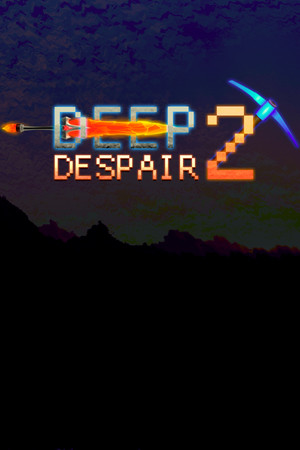
Compare Deep Despair 2 prices across 50+ stores and find the best deal. Developed by BekkerDev Studio. Published by BekkerDev Studio. Released on 10/8/2021. Available on PC. Genres: Adventure, Indie, RPG, Simulation.

Survival fans who bounced off Valheim's polish and want something rawer should look twice here. Deep Despair 2 packs a surprising amount of systems into a budget indie wrapper, with a brutal first night that will end you if you aren't paying attention.

I went in expecting a thin Minecraft clone and came out with calluses from managing crop moisture cycles and a grudging respect for what one solo developer pulled off at this price tier. Deep Despair 2 is a top-down 2D open-world survival sandbox with procedural generation, and it leans hard into simulation depth across farming, crafting, base-building, and combat. The first session will almost certainly end badly. That is not a complaint, it is a design signal worth understanding before you write it off. The resource loop is where most of the hours disappear. You start with nothing on a procedurally generated island and race the clock to build a shelter before nightfall. Miss that window and expect to die repeatedly in the dark, respawning with no bearings. Survive long enough to establish a workbench, a bed, and a crop row, and the game opens up considerably. Farming is legitimately involved: soil needs moisture, watering cans need refilling, and crop growth can be accelerated with fertilizer or bone meal. On top of that sits a livestock system, a cooking chain, and alcohol brewing that doubles as Molotov production. That is a lot of interlocking levers for an indie at this scale, and most of them work together in ways that feel intentional rather than random feature-stuffing. The combat sits on a slow, stamina-heavy system built around parrying and shield-blocking. One-on-one it holds together reasonably well, with stun and fatigue mechanics applying to both you and enemies, making timing matter. Against groups the stamina drain becomes a real problem, and ranged weapons tend to be the more reliable answer to large encounters. The dungeon progression runs through four depth layers, from mines down to lava lakes and underground bowels, with boss encounters gating the best loot. Obsidian armor and magma crystal gear sit at the top of the crafting ladder, giving you a meaningful late-game target to orient the survival grind around. The biome variety across the world map, covering forests, deserts, swamps, jungles, ocean, and a snow-capped North Pole, gives exploration a pull even if the landscape lacks discoverable landmarks or random events to break up the resource runs. The weak spots are real and worth knowing. There is no tutorial of any substance, which means early deaths come partly from the game not explaining how its own systems connect. Update cadence has been sparse post-launch, which is a legitimate concern for a game still missing some quality-of-life features that competitors in the genre handle as standard. The stamina drain outside of combat feels punishing in a way that reads more like an oversight than a design choice, and the lack of a crafting queue for batch production can make mid-game grind repetitive. Community reception sits at "Mostly Positive" on Steam across a small sample, which tracks: the people who click with its rhythm tend to stick, but the onboarding friction sends others away early. For strategy and sim players specifically, the appeal is in treating the first few hours as a systems-learning puzzle rather than expecting handholding. Work out the crop-to-cooking-to-stamina chain first, get your base electricity-protected against night raids, and the mid-game unlocks a surprisingly satisfying resource optimization loop. It will not replace a polished survival title in your rotation, but at its price it delivers a legitimate range of interconnected systems and a dungeon progression that actually has an endpoint. Diego, Scout Team

Deep Despair 2
AdventureIndieRPGSimulation

Deep Despair 2

Oct 8, 2021BekkerDev Studio
GamerScout Says

Survival fans who bounced off Valheim's polish and want something rawer should look twice here. Deep Despair 2 packs a surprising amount of systems into a budget indie wrapper, with a brutal first night that will end you if you aren't paying attention.

PC
Best Price Available
0.00
at N/A
Historical low: $0.49

Compare Prices(0 stores)

Loading prices...

We may earn a commission when you buy games through links on this page — at no extra cost to you. It never affects our rankings or verdicts.

Screenshots & Media

Screenshot

About Deep Despair 2

I went in expecting a thin Minecraft clone and came out with calluses from managing crop moisture cycles and a grudging respect for what one solo developer pulled off at this price tier. Deep Despair 2 is a top-down 2D open-world survival sandbox with procedural generation, and it leans hard into simulation depth across farming, crafting, base-building, and combat. The first session will almost certainly end badly. That is not a complaint, it is a design signal worth understanding before you write it off. The resource loop is where most of the hours disappear. You start with nothing on a procedurally generated island and race the clock to build a shelter before nightfall. Miss that window and expect to die repeatedly in the dark, respawning with no bearings. Survive long enough to establish a workbench, a bed, and a crop row, and the game opens up considerably. Farming is legitimately involved: soil needs moisture, watering cans need refilling, and crop growth can be accelerated with fertilizer or bone meal. On top of that sits a livestock system, a cooking chain, and alcohol brewing that doubles as Molotov production. That is a lot of interlocking levers for an indie at this scale, and most of them work together in ways that feel intentional rather than random feature-stuffing. The combat sits on a slow, stamina-heavy system built around parrying and shield-blocking. One-on-one it holds together reasonably well, with stun and fatigue mechanics applying to both you and enemies, making timing matter. Against groups the stamina drain becomes a real problem, and ranged weapons tend to be the more reliable answer to large encounters. The dungeon progression runs through four depth layers, from mines down to lava lakes and underground bowels, with boss encounters gating the best loot. Obsidian armor and magma crystal gear sit at the top of the crafting ladder, giving you a meaningful late-game target to orient the survival grind around. The biome variety across the world map, covering forests, deserts, swamps, jungles, ocean, and a snow-capped North Pole, gives exploration a pull even if the landscape lacks discoverable landmarks or random events to break up the resource runs. The weak spots are real and worth knowing. There is no tutorial of any substance, which means early deaths come partly from the game not explaining how its own systems connect. Update cadence has been sparse post-launch, which is a legitimate concern for a game still missing some quality-of-life features that competitors in the genre handle as standard. The stamina drain outside of combat feels punishing in a way that reads more like an oversight than a design choice, and the lack of a crafting queue for batch production can make mid-game grind repetitive. Community reception sits at "Mostly Positive" on Steam across a small sample, which tracks: the people who click with its rhythm tend to stick, but the onboarding friction sends others away early. For strategy and sim players specifically, the appeal is in treating the first few hours as a systems-learning puzzle rather than expecting handholding. Work out the crop-to-cooking-to-stamina chain first, get your base electricity-protected against night raids, and the mid-game unlocks a surprisingly satisfying resource optimization loop. It will not replace a polished survival title in your rotation, but at its price it delivers a legitimate range of interconnected systems and a dungeon progression that actually has an endpoint. Diego, Scout Team

Tags

singleplayertier:sub-5Stamina-Based CombatShield ParryDungeon ProgressionLivestock ManagementElectricity Base DefenseLayered CraftingTop-Down Survival

Steam Deck & Linux

Steam Deck Playable

Valve rates this game Steam Deck Playable.

System Requirements

Minimum

OS
Windows 7, 8, 10
Memory
2 GB RAM
DirectX
Version 9.0
Storage
400 MB available space
Graphics
Intel HD Graphics 3000
Processor
Intel Celeron/AMD Athlon 2.0+ GHz
Additional Notes
Keyboard, mouse and minimum 1280x720 display

Recommended

OS
Windows 7, 8, 10
Memory
4 GB RAM
DirectX
Version 9.0
Storage
500 MB available space
Graphics
NVIDIA GeForce GTX 1050/AMD Radeon RX 560
Processor
Intel Core i3/AMD Ryzen 3 3.0+ GHz
Additional Notes
Keyboard, mouse and 1920x1080 display

Community Discussion

Be the first to comment on Deep Despair 2.

Reviews & Ratings

No ratings available

Game Info

Developer
BekkerDev Studio
Publisher
BekkerDev Studio
Release Date
Oct 8, 2021

Price Alert

Get notified when the price drops below your target!

Create Alert

Price History

2026-06-100.49(lowest)

More from BekkerDev Studio

Buy smarter: helpful guides

Frequently asked questions about Deep Despair 2

How much does Deep Despair 2 cost?

Deep Despair 2 pricing changes often and varies by store, edition and region. The live price table on this page compares the cheapest in-stock key and store offers across 50+ verified shops, so you always see the current lowest price before you buy.

Where can I buy Deep Despair 2 cheapest?

Compare Deep Despair 2 prices across every verified store in the price table on this page. We list the cheapest in-stock key and store offers, updated regularly, so you always see the best current deal before you buy.

What platforms is Deep Despair 2 available on?

Deep Despair 2 is available on PC.

When was Deep Despair 2 released?

Deep Despair 2 was released on 8 October 2021.

Who developed Deep Despair 2?

Deep Despair 2 was developed by BekkerDev Studio.