Dark Messiah of Might & Magic
Kicking orcs off ledges into spike pits is genuinely one of the best feelings in PC gaming history. Arkane's 2006 cult classic still has teeth, but its thin story and dated rough edges demand some patience.
GamerScout Verdict
Best for action-RPG fans who want a physics-driven combat sandbox and can forgive a forgettable story and some legacy technical roughness.
Compare Prices(3 stores)
Every store in this table quotes us in euros, so the EUR figure is the price the seller actually set, not our arithmetic — which is why EUR is also the currency we rank in. We only list an offer here when the store gives us its price in euros, so nothing in this table is a number we invented.
Pick USD, PLN, GBP, CAD or AUD in the header and we convert from EUR at the European Central Bank reference rate — converted amounts are prefixed with ~. Your bank or the store may apply a different rate at checkout. We never hide offers based on where you are: everyone sees this whole table.
We may earn a commission when you buy games through links on this page — at no extra cost to you. It never affects our rankings or verdicts.
Price History
Screenshots & Media
About Dark Messiah of Might & Magic
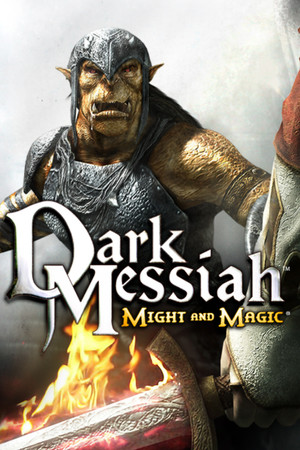
I've spent time with a lot of Arkane games, and the DNA running through Dishonored and Prey traces directly back here, to a scrappy, physics-obsessed first-person action-RPG from 2006 that the studio shipped too early and the world half-understood. Dark Messiah of Might and Magic is not a deep narrative experience. It is not going to scratch the itch Disco Elysium leaves behind. What it will do is make you feel like the most creative brawler in a medieval dungeon, and that counts for something real. The combat is the whole point, and Arkane built something genuinely ahead of its time. The Source Engine's physics aren't just window dressing here; they are the weapon. Enemies react to ice-slicked floors and tumble off clifftops with convincing weight. You can freeze the ground beneath a group of orcs, shove a warrior backward into a wall of spikes with a well-timed boot, or cut a rope to drop a suspended crate onto a cluster of ghouls below. The kick mechanic in particular has achieved a kind of legendary status in the PC gaming community, and it earns every bit of that reputation. Sword combat rewards timing and aggression, daggers pay off against unsuspecting enemies via a backstab system, the staff staggers crowds, and magic opens up telekinesis tricks and freeze spells that feed back into the environmental chaos. Three skill trees - Combat, Magic, and Miscellaneous (which covers Stealth) - push you toward a chosen archetype without locking the door entirely, though the point economy means you can't spread thin without consequences. A stealth build plays meaningfully differently from a brute warrior, and a second playthrough with a magic focus is worth considering. Where the game struggles is everywhere outside that combat sandbox. You play as Sareth, apprentice to a mage named Phenrig, sent on an errand to recover the Skull of Shadows from the city of Stonehelm. A demonic spirit named Xana rides along in your head, offering guidance and commentary that veers between genuinely interesting and exhaustingly flirtatious. The story eventually arrives at a choice between Xana and a more straightforward companion named Leanna, feeding into four different endings shaped by that and a late-game decision about the Skull itself. The moral stakes are real enough on paper, but the writing doesn't earn the weight it reaches for. Characters are stock fantasy archetypes, the plot telegraphs its twists within the first hour of play, and the villain Arantir, while visually striking, gets surprisingly little screen time to build genuine menace. For an RPG specialist, this is the part that stings. The bones of something richer are visible throughout, and they are mostly wasted. There are also practical concerns for anyone picking this up today. The game runs on modern systems without catastrophic failure, but it has a longstanding memory management issue that can produce crashes, particularly during level transitions. A Large Address Aware patch fixes most of it, and PCGamingWiki has the specifics. Multiplayer, which featured a Crusade mode pitting humans against undead across five connected maps along with a Colosseum dueling mode, is effectively a ghost town at this point. The single-player campaign runs around ten to fifteen hours, and the level design, while atmospheric in places, does lean heavily on the same environmental tricks across its runtime. Cutting ropes, kicking enemies into hazards, and backstabbing patrols starts to feel formulaic by the final act. The item system is also shallow, with fixed loot placements and a small pool of gear gated behind skill requirements. All that said, Dark Messiah remains a fascinating artifact and a genuinely fun playthrough for anyone interested in the history of immersive sim design. Seeing the ideas that would become Dishonored's chaos system and Prey's environmental improvisation in their rough early form is worth the price of entry alone. Approach it as a combat toybox with a mediocre screenplay attached, patch the memory issues before you start, and keep expectations calibrated to a game that Arkane shipped before it was finished. The dragon fight near the end is still excellent, for what it's worth.

RPGs
Tags
System Requirements
Minimum
AMD Athlon™, Pentium® 2.4 GHz, 512MB RAM, 128MB video card, 7GB HDD Space, Windows XP, Mouse, Keyboard, Internet Connection
Recommended
AMD Athlon™, Pentium® 3.0 GHz, 256mb dx9 video card, 7GB HDD Spac…
Keep exploring
Community Discussion
Be the first to comment on Dark Messiah of Might & Magic.
Reviews & Ratings
Game Info
- Developer
- Arkane Studios
- Publisher
- Ubisoft
- Release Date
- Oct 25, 2006