Commander Keen
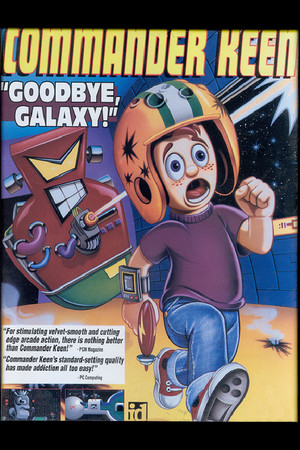
Before Doom, before Wolfenstein, id Software made a kid in a football helmet jump across Mars with a pogo stick. That origin story is still genuinely fun to play through.
GamerScout Verdict
7/10Worth it for retro-curious players and PC gaming history buffs; too short and rough-edged for anyone expecting a modern platformer experience.
Compare Prices(1 stores)
Every store in this table quotes us in euros, so the EUR figure is the price the seller actually set, not our arithmetic — which is why EUR is also the currency we rank in. We only list an offer here when the store gives us its price in euros, so nothing in this table is a number we invented.
Pick USD, PLN, GBP, CAD or AUD in the header and we convert from EUR at the European Central Bank reference rate — converted amounts are prefixed with ~. Your bank or the store may apply a different rate at checkout. We never hide offers based on where you are: everyone sees this whole table.
We may earn a commission when you buy games through links on this page — at no extra cost to you. It never affects our rankings or verdicts.
Price History
Screenshots & Media
About Commander Keen
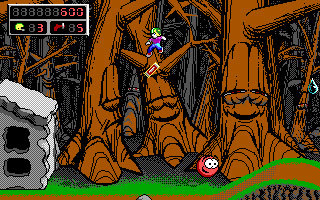
I grew up during the era when shareware floppies circulated like contraband, and Commander Keen: Invasion of the Vorticons was the game people kept copying for each other. Revisiting it now, the thing that still holds up is how purposeful the design feels for something built in roughly two months. John Carmack's adaptive tile refresh gave PCs smooth horizontal and vertical scrolling at a time when consoles had dedicated hardware for exactly that trick. The result was a side-scrolling platformer that felt like it belonged on a Nintendo, not a beige tower running MS-DOS. The three episodes, Marooned on Mars, The Earth Explodes, and Keen Must Die, each push the formula slightly further. Episode one drops you on Mars to retrieve spaceship parts scattered across Vorticon-occupied cities. Billy Blaze starts with just a jump and eventually picks up a raygun for blasting enemies and a pogo stick for reaching higher platforms. One-hit kills mean there is no margin for sloppiness, and the game saves only from the overworld map, which forces a level-by-level rhythm. Optional levels exist for score hunters; treasures scattered through stages earn extra lives at every 20,000-point threshold. The structure rewards exploration without demanding it. Episode two raises the difficulty noticeably. Vorticon Elites and Guard Robots are more aggressive, and the map-only save system starts to bite. Episode three, Keen Must Die, was developed under obvious time pressure. The level design is rougher, some areas are still reportedly inaccessible even after patches, and the ending is abrupt. The trilogy as a whole is honest about its seams: controls are serviceable rather than precise, the pogo stick takes a few levels to feel natural, and the audio is minimal PC speaker fare. Nobody is buying this for its soundtrack. What makes it worth playing in 2025 is context mixed with actual playability. The whole trilogy runs one to two hours if you hit every level, or under an hour if you rush. That brevity is either a feature or a deal-breaker depending on what you want. Nostalgia-driven players will find the experience holds up better than expected. Curious players who want to understand the lineage from Carmack's scrolling engine to Wolfenstein to Doom will find this the clearest possible illustration. Young or family-friendly audiences get a completely inoffensive science-fiction platformer with a likable protagonist. Players expecting modern platformer precision will find the controls frustrating, and anyone coming in without historical appreciation will likely bounce off the sparse visuals and thin enemy variety. The Steam version sitting at Very Positive reviews from over a thousand users is the clearest signal: this is a game people return to for real reasons, not just obligation to a museum piece. It has genuine charm, a handful of smart design moments, and the weight of being the game that accidentally launched one of the most important studios in PC gaming history. Play it for what it is, not for what came after it.

Catch-all
Tags
System Requirements
Minimum
A 100% Windows XP/Vista-compatible computer system
Keep exploring
Community Discussion
Be the first to comment on Commander Keen.
Reviews & Ratings
Game Info
- Developer
- id Software
- Publisher
- id Software
- Release Date
- Aug 3, 2007