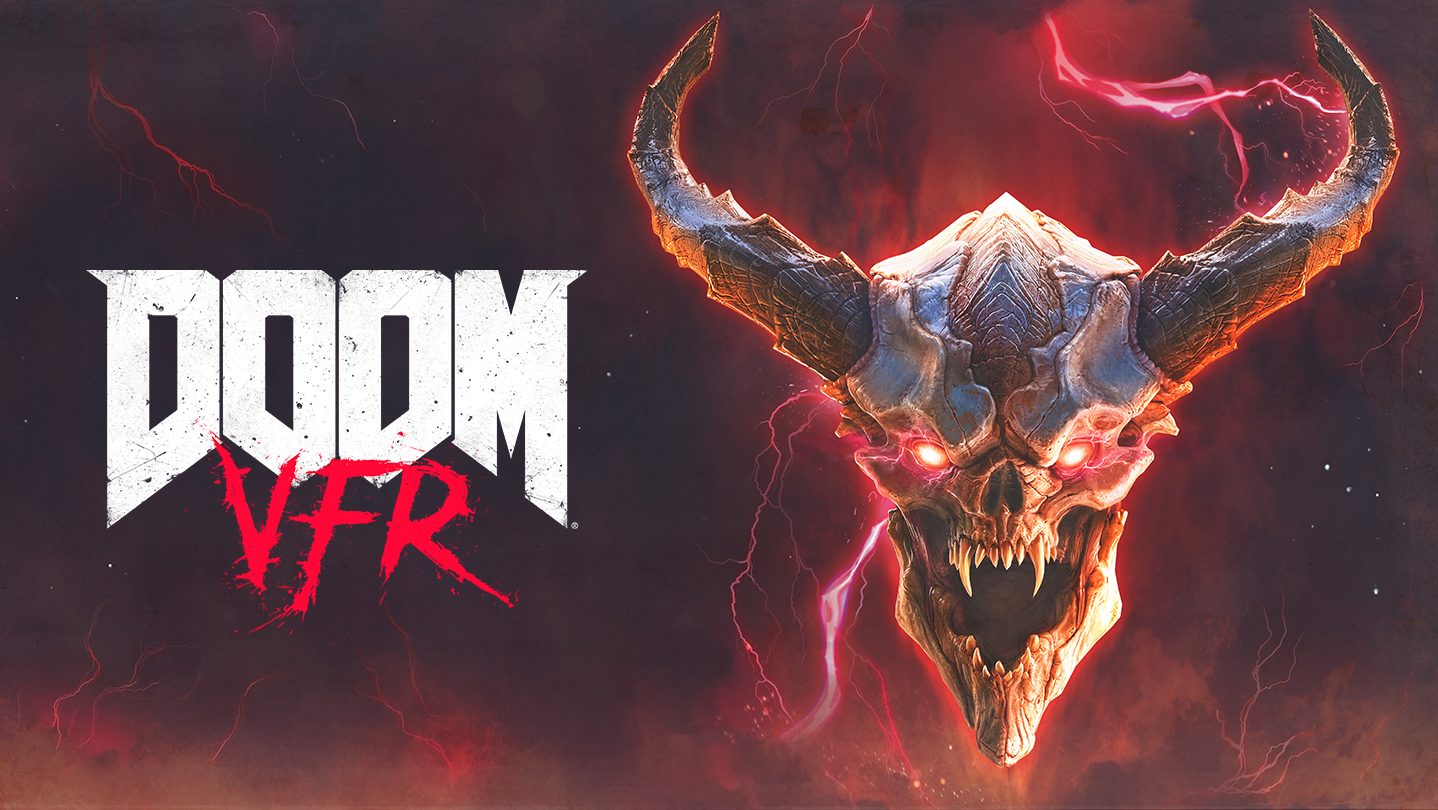
DOOM VFR [VR]
Standing inside a UAC corridor while an Imp charges at you lands differently than you'd expect - but polished execution is where DOOM VFR starts to wobble.
GamerScout Verdict
Best for DOOM fans with room-scale VR who want atmospheric immersion and can forgive a short, locomotion-hampered campaign.
Compare Prices(4 stores)
Every store in this table quotes us in euros, so the EUR figure is the price the seller actually set, not our arithmetic — which is why EUR is also the currency we rank in. We only list an offer here when the store gives us its price in euros, so nothing in this table is a number we invented.
Pick USD, PLN, GBP, CAD or AUD in the header and we convert from EUR at the European Central Bank reference rate — converted amounts are prefixed with ~. Your bank or the store may apply a different rate at checkout. We never hide offers based on where you are: everyone sees this whole table.
We may earn a commission when you buy games through links on this page — at no extra cost to you. It never affects our rankings or verdicts.
Price History
Screenshots & Media
About DOOM VFR [VR]
My first honest reaction to DOOM VFR was pure, dumb glee - the moment a Cacodemon floated into my face and I unloaded a Super Shotgun at point-blank range, I understood exactly what this game was trying to do. The problem is that feeling of raw, physical presence sits inside a four-to-five-hour package that compromises Doom's defining qualities in almost every direction to fit it into a headset. The setup is a side story running parallel to the 2016 reboot. You play as a UAC scientist who gets killed by a Pinky demon before the opening tutorial is done, and your consciousness gets uploaded into a combat chassis to stop the hellgate. It is, appropriately, just enough narrative scaffolding to justify the carnage. The arsenal is familiar - Super Shotgun, Plasma Rifle, Rocket Launcher, all with moddable secondary fires - and the demon roster brings back Imps, Hell Knights, Revenants, and Cacodemons in locked arena encounters that bookend each level. Telefragging, where you stagger a demon and teleport directly into it to explode it for health, replaces glory kills as the core resource loop. It works, but it is a lighter, less satisfying substitute for the brutal finishing moves Doom fans came to love from the reboot. Movement is where DOOM VFR earns its mixed reputation. The game offers teleportation and a directional dash system for locomotion, plus free smooth movement for those with VR legs. Teleporting works, but it constantly breaks the momentum that made 2016's Doom so relentless. The controls themselves vary wildly depending on setup - on PC with a Vive or Rift and free locomotion enabled, the experience is meaningfully better. Without it, the inconsistent teleport targeting, clipping issues during close-quarters fights, and an awkward weapon wheel make the moment-to-moment play feel clumsy compared to contemporaries like Superhot VR or Robo Recall. Visually, VR rendering demands have taken a real toll: textures are noticeably muddier than the base game, lighting effects are stripped back, and the visual downgrade is impossible to ignore if you played the 2016 original first. What DOOM VFR does exceptionally well, even now, is atmosphere. Being physically inside the UAC facility on Mars - peering down corridors, watching a Hell Knight stomp toward you - creates a presence that no flat-screen version can replicate. Mick Gordon's soundtrack still hits hard through a headset, and the arena fights, while brief, are genuinely intense when the locomotion cooperates. There are also small fan-service touches: Marine Guy collectible figures scattered through levels, and a hidden match-three minigame on one of the facility computers featuring classic demons. None of that fixes the short runtime or the lack of glory kills, but it shows that id cared about the details even when the broader execution fell short. The bottom line: this is a game that works best as a proof-of-concept demo that ran a little too long. Doom fans with room-scale VR setups who want to spend a few hours physically inside the franchise universe will find enough here to satisfy a curiosity. Anyone expecting the full aggressive rhythm of the 2016 reboot, or coming from stronger VR shooters, is likely to feel shortchanged. Go in with calibrated expectations and a good headset setup, and there are moments that genuinely land. Go in expecting Doom-in-VR, and the teleport stumbles will frustrate fast.

Catch-all
Tags
System Requirements
Minimum
- Processor
- CPU: Intel Core i5-4590 or AMD FX 8350 or better
- Memory
- 8 GB RAM
- Graphics
- Nvidia GeForce GTX 1070 / AMD Radeon RX 480 or better
- Storage
- 17 GB available…
Recommended
- Processor
- CPU: Intel Core i7-6700K or AMD Ryzen 5 1600X
- Memory
- 16 GB RAM
- Graphics
- Nvidia GeForce GTX 1080 / AMD RX Vega 64
- Storage
- 17 GB available…
Keep exploring
Community Discussion
Be the first to comment on DOOM VFR [VR].
Reviews & Ratings
Game Info
- Developer
- id Software
- Publisher
- Bethesda Softworks
- Release Date
- Nov 30, 2017