Beyond: Two Souls
Quantic Dream's cinematic thriller earns its 88% Steam rating from players who came for the story and stayed for Elliot Page's performance - but treat the QTEs as a formality, not a challenge.
GamerScout Verdict
Worth it for players who treat games like films - skip it if you need meaningful interactivity or consequence-driven choices.
Compare Prices(10 stores)
Every store in this table quotes us in euros, so the EUR figure is the price the seller actually set, not our arithmetic — which is why EUR is also the currency we rank in. We only list an offer here when the store gives us its price in euros, so nothing in this table is a number we invented.
Pick USD, PLN, GBP, CAD or AUD in the header and we convert from EUR at the European Central Bank reference rate — converted amounts are prefixed with ~. Your bank or the store may apply a different rate at checkout. We never hide offers based on where you are: everyone sees this whole table.
We may earn a commission when you buy games through links on this page — at no extra cost to you. It never affects our rankings or verdicts.
Price History
Screenshots & Media
About Beyond: Two Souls
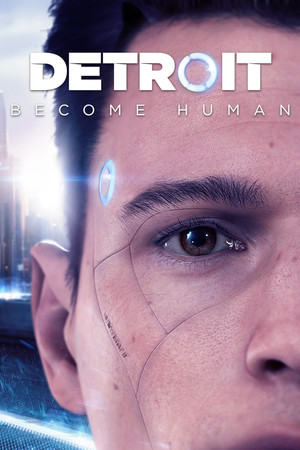
My first hour with Beyond: Two Souls made one thing clear: Quantic Dream was not making a game here, they were making an interactive film and daring you to call them on it. You play as Jodie Holmes, a young woman born with a psychic tether to a supernatural entity named Aiden, and the story spans roughly fifteen years of her life - jumping back and forth across time in a non-linear chapter structure that gradually reveals how she ended up working black ops missions for the CIA, surviving on the streets, and squaring off against whatever lurks on the other side of what the game calls the Infraworld. The performances from Elliot Page and Willem Dafoe are genuinely strong, and Quantic Dream's motion capture makes their faces do a lot of heavy lifting in scenes where the writing is not pulling its weight. The PC version is the most complete way to experience this. You can play scenes in the original non-linear order, which is how the game was designed and where the mystery lands best, or switch to a chronological remix mode that reorders everything from Jodie's childhood through to adulthood. Both modes are included, as is the Advanced Experiments DLC - a short standalone chapter that plays like a brief puzzle detour. Local co-op is also available, letting a second player take sole control of Aiden while you handle Jodie. On the technical side, the port supports 4K at 60fps and ultrawide resolutions, and the visuals still look sharp for a game originally built at the tail end of the PlayStation 3 era. Here is where honest reporting gets uncomfortable. Gameplay in Beyond is almost entirely quick-time events, and they carry very little consequence. Combat sequences, stealth infiltrations, and quiet domestic scenes all resolve through roughly the same QTE mechanics, which levels the emotional stakes in a way that works against the drama. Switching to Aiden - the ghost companion who can phase through walls, possess NPCs, or interact with objects in the environment - offers the most freedom the game has mechanically, and those sections feel genuinely different. But the critical split on this title is real: players who show up for a well-acted, cinematically staged story will have a good time; players expecting meaningful choice-and-consequence on the scale of Heavy Rain will find the branching decisions feel shallower than advertised, with most endings accessible regardless of earlier choices. One more practical note: the keyboard and mouse controls are awkward enough that a controller is not optional here, it is effectively required. Beyond sits in a specific lane and mostly stays in it. The score, the performances, the visual fidelity of the character models - these all punch well above the game's age. The script has melodramatic patches and some narrative threads feel like filler chapters stapled to a tighter story that could have existed without them. If your tolerance for Quantic Dream games tracks with how much you value cinema over interactivity, you already know your answer. If this is your first Quantic Dream title and you want to understand what the studio does, Detroit: Become Human is the tighter entry point - but Beyond is worth the time for anyone who just wants to settle in and watch something unfold with a controller in hand.

Catch-all
Tags
System Requirements
Minimum
Windows 7 or later CPU: i5-4430 @ 3.0 GHz or equivalent GPU: Nvidia GeForce GTX 660 with 2GB or AMD Radeon HD 7870 with 2GB RAM: 4GB DirectX: 11
Recommended
- Processor
- Intel Core i5-6600K @ 3.5GHz or AMD Ryzen 3 1300X @ 3.4GHz
- Memory
- 8 GB RAM
- Graphics
- Nvidia GeForce GTX 970…
Keep exploring
Community Discussion
Be the first to comment on Beyond: Two Souls.
Reviews & Ratings
Game Info
- Developer
- Quantic Dream
- Publisher
- Quantic Dream
- Release Date
- Jun 18, 2020