
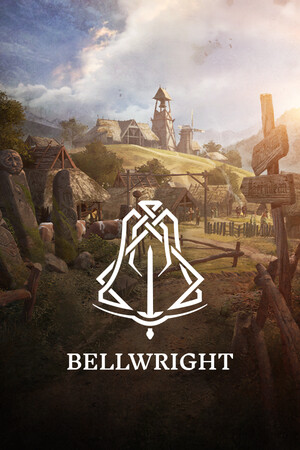
Bellwright
Survive, build, recruit, and eventually field a medieval army - Bellwright is the genre-blender that rewards patience and punishes anyone expecting a polished 1.0 experience.
GamerScout Verdict
Best for patience-heavy strategy fans who want a medieval management sandbox that's still growing into its own ambition.
Compare Prices(0 stores)
Loading prices...
We may earn a commission when you buy games through links on this page — at no extra cost to you. It never affects our rankings or verdicts.
Screenshots & Media
About Bellwright
I've tracked a lot of Early Access survival-builders, and most of them sell you a fantasy on the store page and deliver a content-starved shell on launch day. Bellwright is a different animal. The core loop - scratch out a camp, chain together production buildings like sawmills and farms, earn renown with nearby villages to recruit settlers, then slowly arm and march those settlers toward military liberation of the map - was functional on day one, even if the edges were rough enough to draw blood. Two years of consistent updates later, the Steam rating has climbed from a rocky 52% at launch to a solid 80% positive across more than 20,000 reviews. That trajectory tells you something real about Donkey Crew's development discipline. The settlement system is where Bellwright earns its hours. You place construction zones, haul materials, then eventually automate those logistics by assigning villagers to specialist worker roles - gatherer, builder, farmer, blacksmith. The renown mechanic that gates your recruitment is clever: you complete quests for an existing village, bank that social capital, then spend it to convince an NPC to relocate to your settlement, after which the meter resets and you grind it up again. It is slow, and it is deliberately so. The tech tree is deep enough to cause real decision paralysis early on, but the tutorial does a reasonable job walking newcomers through the priority queue. If you have played RimWorld or Manor Lords, the mental model clicks quickly. If you haven't, budget the first four or five hours as a pure learning curve investment. The late game is where the strategy layer snaps into focus, and it is genuinely the best argument for sticking through the slow opening. What starts as bandit-camp skirmishes escalates into organized military engagements: you position squads, issue formation orders, and adapt to shifting battlefield conditions. The payoff of watching soldiers equipped and trained by your own production chain march on an enemy stronghold is substantial. Every system feeds the next - exploration unlocks resources, resources feed the settlement, the settlement sustains an army, and the army expands your territory. For a strategy-sim player, that interlocking feedback is the whole reason to be here. Co-op up to four players adds a natural division of labor that makes the workload feel less oppressive: one player runs resource logistics, another handles quests, another manages construction. Solo, you simply rotate between roles yourself. Now for the honest accounting of what still frustrates. Villager pathfinding and AI behavior remain inconsistent - NPCs have a well-documented tendency to get stuck or ignore assigned tasks in ways that feel like regression bugs rather than rough edges. The menu system is cumbersome, particularly for players coming from games with cleaner UI conventions. Combat feels stiff and somewhat unsatisfying to control directly, though the design intention is that you will eventually be commanding rather than swinging, which mitigates this somewhat. Early access criticism also flagged AI-generated NPC voice acting, and while the developer publicly committed to replacing those recordings with proper voice actors once the script is final, it remains unresolved as a potential immersion breaker. The UE5 visuals look good at distance, but close-up animations and pop-in still show their seams. Performance scales with settlement size, so late-game frame rates depend heavily on your hardware. For a strategy-and-sim minded player, Bellwright is worth serious consideration right now, not because it is finished, but because the foundation is genuinely interesting and the developer has demonstrated the kind of patch cadence that warrants trust. If your tolerance for Early Access friction is low, the current build will irritate you. If you can accept an unruly sandbox that keeps getting better and you enjoy juggling production chains, renown diplomacy, and eventual battlefield command, this is one of the more distinctive medieval management titles available. Approach it like you would a Paradox grand-strategy on patch day one: eyes open, patience loaded.

Strategy & simulation
Tags
System Requirements
Minimum
- OS
- Windows 10 / Windows 11
- Memory
- 16 GB RAM
- DirectX
- Version 12
- Storage
- 24 GB available space
- Graphics
- NVIDIA GeForce GTX 1070 8GB / AMD Radeon RX 580 8GB / Intel ARC A580 8GB
- Processor
- Intel Core i5-8600 / AMD Ryzen 5 3600
Recommended
- OS
- Windows 10 / Windows 11
- Memory
- 16 GB RAM
- DirectX
- Version 12
- Storage
- 24 GB available space
- Graphics
- NVIDIA GeForce RTX 3060 12GB / AMD Radeon RX 6600 8GB / Intel ARC A770 16GB
- Processor
- Intel Core i5 13600 / AMD Ryzen 5 5600
Keep exploring
Community Discussion
Be the first to comment on Bellwright.
Reviews & Ratings
Game Info
- Developer
- Donkey Crew
- Publisher
- Donkey Crew
- Release Date
- Apr 23, 2024

![[ Swe/Eng ] LETS PLAY BELLWRIGHT !](https://static-cdn.jtvnw.net/previews-ttv/live_user_engwald-440x248.jpg)
