Agarest: Generations of War 2
Eighty-plus hours of multi-generational JRPG with a combat system that takes real commitment to crack - rewarding if you do, punishing if you don't read the manual.
GamerScout Verdict
Worth the grind for committed niche JRPG players who will push past Generation 1 - everyone else will stall out and quit.
Compare Prices(2 stores)
Every store in this table quotes us in euros, so the EUR figure is the price the seller actually set, not our arithmetic — which is why EUR is also the currency we rank in. We only list an offer here when the store gives us its price in euros, so nothing in this table is a number we invented.
Pick USD, PLN, GBP, CAD or AUD in the header and we convert from EUR at the European Central Bank reference rate — converted amounts are prefixed with ~. Your bank or the store may apply a different rate at checkout. We never hide offers based on where you are: everyone sees this whole table.
We may earn a commission when you buy games through links on this page — at no extra cost to you. It never affects our rankings or verdicts.
Price History
Screenshots & Media
About Agarest: Generations of War 2
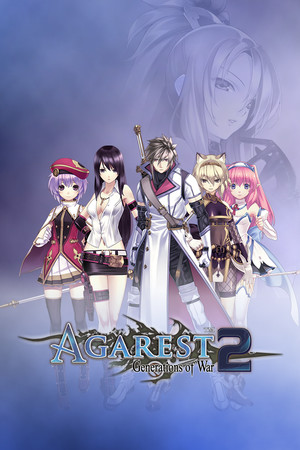
My instinct with any niche JRPG is to check whether the combat actually has decision-making underneath all the menus, or whether it is just theatrical busywork dressed up in anime art. Agarest: Generations of War 2 sits somewhere uncomfortable between those two poles, and that tension is exactly what makes it worth talking about. The game ditches the grid-based positioning of its predecessors and replaces it with a formation-and-combo system built around three separate resource pools: AP (Action Points, the fuel for every attack string), SP (Skill Points, which unlock EX Skills and smooth out combo penalties), and UP (Ultimate Points, reserved for the high-damage Ultimate Skills that cap big turns). Each character carries four attack types - high, power, ground, and paralyze - and the core loop rewards stringing them in sequence to break an enemy's separate guard bar before chipping down the actual HP. Chain hits add compounding damage bonuses, and overkilling enemies past double their HP threshold drops better loot. On paper that sounds like a strategy game; in practice, the first generation of the story is largely spent figuring out that the system even works this way, because the in-game tutorial barely scratches the surface. Community discussions are full of players dozens of hours in still asking why their combos will not chain. The game opens up meaningfully in Generation 2 and beyond, once party points have been invested correctly and skill books have raised combat art ranks - but that early friction is a genuine barrier, not a romantic learning curve. Party-point allocation is where the long-term build thinking lives. The PC version ships with some DLC point packs bundled in, which softens the early stat ceiling, but the core decision of front-loading VIT into your fighters versus spreading points across STR and DEX still compounds across every level-up for the rest of the run. Invest wrong and late-game physical fighters will miss constantly, because DEX governs hit rate in a way the game does not loudly advertise. The three main protagonists - Weiss, Schwarz, and Grey - cycle across the multi-generational story, and permanent party members Eva and Fiona are strong combo anchors throughout. Character-party synergy feeds into formation bonuses and joint Ultimate Skills that only fire with specific roster combinations, so roster planning ahead of generation transitions does matter. Outside combat the structure blends visual-novel story delivery - mostly dialogue portraits with choice prompts - with an overworld map and dungeon exploration. The story follows Weiss, a man who killed a god, got cursed with amnesia for the trouble, and now must atone across multiple generations of descendants. It is melodramatic in the expected Compile Heart way, but the political drama that develops past the slow opening actually has some weight to it. The soul-breeding system, where dialogue affinity choices determine which heroine Weiss marries at generational breaks and thus who the next protagonist descends from, adds replay hooks if you care about alternate family trees and ending variations. The presentation is a mixed bag: gorgeously rendered backgrounds, crisp character art, a solid soundtrack, but sprite-form heroes fighting against polygon enemies that look considerably better than they do. Steam user sentiment sits at a mixed rating - around 57 percent positive from a small sample - which tracks with the divided critical reception. Fans of the earlier Agarest titles are split on whether the combat overhaul is an upgrade or a regression. Newcomers who bounce off the opaque first generation miss what the second and third generations actually deliver. The port itself is solid: faster load times than the PS3 original, full mouse and keyboard plus gamepad support, and the previously console-exclusive DLC baked in at no additional cost. This is firmly a game for people who read the FAQ before complaining on the forums, who enjoy theorycrafting stat growth across multiple playthroughs, and who find anime presentation a feature rather than an obstacle. If you want something with a cleaner tutorial and faster payoff, the genre has better entry points. If you are already committed to the niche and willing to treat Generation 1 as an extended tutorial that eventually clicks, there is a genuinely rewarding combo-and-build system waiting on the other side.

Strategy & simulation
Tags
System Requirements
Minimum
- OS
- Windows XP
- Memory
- 1 GB RAM
- DirectX
- Version 9.0c
- Storage
- 7 GB available space
- Graphics
- DirectX 9.0c compatible graphics card with 64Mb RAM and support for v3 shaders
- Processor
- 2.13GHz Intel Core2 Duo or equivalent
- Sound Card
- DirectX 9.0c compatible sound card
Recommended
- OS
- Windows 7 or later
- Memory
- 4 GB RAM
- Graphics
- DirectX 9.0c compatible graphics card with 128Mb RAM and support for v3 shaders
- Processor
- 3GHz Intel i3 or equivalent
- Sound Card
- DirectX 9.0c compatible sound card
Keep exploring
Community Discussion
Be the first to comment on Agarest: Generations of War 2.
Reviews & Ratings
No ratings available
Game Info
- Developer
- Idea Factory
- Publisher
- Ghostlight LTD
- Release Date
- Feb 19, 2015