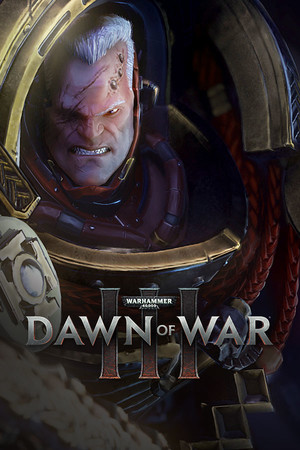
Compara los precios de Warhammer 40,000: Dawn of War - Soulstorm en tiendas de claves de confianza y encuentra la mejor oferta. Desarrollado por Relic Entertainment. Publicado por THQ Nordic. Lanzado el 5/3/2013. Disponible en PC. Géneros: Single Player, Multiplayer, Bird View, Strategy. Puntuación Metacritic: 73/100.

Nine factions, four planets, three moons, one aging engine. The final Dawn of War expansion packs in more races than any entry before it, but coasts hard on Dark Crusade's blueprint.

Warhammer 40,000: Dawn of War - Soulstorm is a standalone real-time strategy expansion that closes the book on the original Dawn of War era. You do not need any prior game in the series to play it. Out of the box you get nine playable factions across single-player skirmish and the campaign, which covers 32 territories spread across four planets and three moons in the Kaurava System. That is a genuinely enormous sandbox by the standards of 2008-era RTS design, and if you are picking this up for the first time today, that scope still impresses on paper. The two headline additions are the Sisters of Battle and the Dark Eldar. The Sisters run on a Faith resource, built by fielding holy units like the Canoness and Seraphim squads, and spent on Acts of Faith that function as a secondary ability tier. Their frontline troops trade raw durability for morale-pressure tactics: flamer rushes, morale-breaking Battle Sisters, and Confessor abilities that can wipe demoralized squads. The Dark Eldar lean into fragility and speed, with units like the swift Raider transport that lets embarked troops fire from inside the vehicle, and a soul-essence resource powering combat abilities. Both factions reward active micromanagement and punish passive play more than the heavier, more forgiving Space Marines or Orks. From a late-game balance perspective, both new races sit toward the bottom of community-measured win-rate data in high-level multiplayer, though the Dark Eldar's early aggression can snowball a match before opponents stabilize. Every existing faction also received a new air unit, a Voidraven for the Dark Eldar, a Lightning fighter for the Sisters, a Hell Talon for Chaos, a Nightwing for the Eldar, and so on. In practice, the air layer lands as a mixed bag: some units justify their resource cost in aggressive play, others rarely see the field. The campaign meta-game iterates on Dark Crusade's Risk-style structure but with one important and frustrating change: there are no persistent bases between battles. Structures you build during a fight are gone once you move on, unless you spent resources reinforcing that province between turns. The Sisters of Battle have a unique passive ability to establish a forward base during the meta-campaign phase, which gives them a meaningful strategic wrinkle other factions lack. Each faction also starts with a unique passive, and you can steal another faction's ability by eliminating them and taking their stronghold. On paper this creates branching strategic decisions about conquest order. In practice, the AI difficulty swings wildly, from trivially easy on the lowest setting to a sharp spike on normal, which creates an awkward on-ramp for newcomers. Crash bugs at certain stronghold mission transitions are a documented issue on modern systems, and lowering graphics settings before those segments is a widely shared workaround. Community-made unofficial patches and mods like the Unification Mod (which adds Tyranids among other content) and graphics overhaul mods have extended the game's life considerably past official support. For someone new to the series, Soulstorm is defensible as an entry point precisely because it contains all nine factions in skirmish and campaign without needing prior purchases. The take-and-hold resource loop, where you secure strategic points to generate Requisition and Power while expanding unit tiers, is straightforward to learn but layered enough to hold attention across dozens of skirmish hours. The multiplayer is where depth actually lives: nine factions means nine distinct matchup trees, and the minimap-reading and build-order guesswork that defines high-level Dawn of War PvP is fully present here. Note that unlocking all nine factions in online multiplayer requires owning the corresponding earlier entries in the series, which is a real structural limitation worth knowing before purchase. The engine is visibly aged, but the unit art and grimdark aesthetic still carry weight. Ultimately, Soulstorm earns its place as a content-rich closer to a beloved RTS era. It does not improve on Dark Crusade in any meaningful design sense, and anyone who already owns that expansion will feel every gram of the recycling. But for the WH40K newcomer, nine factions plus a substantial skirmish suite plus a modding scene that is still active is a reasonable proposition. Manage your expectations on the campaign and budget five minutes before any major stronghold mission to drop your graphics settings, and you will get a lot of hours out of this. Diego, Scout Team

Warhammer 40,000: Dawn of War - Soulstorm
Single PlayerMultiplayerBird ViewStrategy

Warhammer 40,000: Dawn of War - Soulstorm

5 mar 2013Relic EntertainmentTHQ Nordic
GamerScout opina

Nine factions, four planets, three moons, one aging engine. The final Dawn of War expansion packs in more races than any entry before it, but coasts hard on Dark Crusade's blueprint.

PC
Mejor precio disponible
€0.00
en N/A
Mínimo histórico: €8.61

Comparar precios(0 tiendas)

Cargando precios...

We may earn a commission when you buy games through links on this page — at no extra cost to you. It never affects our rankings or verdicts.

Historial de precios

Historical low
€8.615 Jun 2026
Keyshops
€7.92€8.38€8.84€9.305 Jun11 Jun17 Jun22 Jun28 Jun
Tracking prices since 5 Jun 2026
Create alert

Capturas y multimedia

Captura

Acerca de Warhammer 40,000: Dawn of War - Soulstorm

Warhammer 40,000: Dawn of War - Soulstorm is a standalone real-time strategy expansion that closes the book on the original Dawn of War era. You do not need any prior game in the series to play it. Out of the box you get nine playable factions across single-player skirmish and the campaign, which covers 32 territories spread across four planets and three moons in the Kaurava System. That is a genuinely enormous sandbox by the standards of 2008-era RTS design, and if you are picking this up for the first time today, that scope still impresses on paper. The two headline additions are the Sisters of Battle and the Dark Eldar. The Sisters run on a Faith resource, built by fielding holy units like the Canoness and Seraphim squads, and spent on Acts of Faith that function as a secondary ability tier. Their frontline troops trade raw durability for morale-pressure tactics: flamer rushes, morale-breaking Battle Sisters, and Confessor abilities that can wipe demoralized squads. The Dark Eldar lean into fragility and speed, with units like the swift Raider transport that lets embarked troops fire from inside the vehicle, and a soul-essence resource powering combat abilities. Both factions reward active micromanagement and punish passive play more than the heavier, more forgiving Space Marines or Orks. From a late-game balance perspective, both new races sit toward the bottom of community-measured win-rate data in high-level multiplayer, though the Dark Eldar's early aggression can snowball a match before opponents stabilize. Every existing faction also received a new air unit, a Voidraven for the Dark Eldar, a Lightning fighter for the Sisters, a Hell Talon for Chaos, a Nightwing for the Eldar, and so on. In practice, the air layer lands as a mixed bag: some units justify their resource cost in aggressive play, others rarely see the field. The campaign meta-game iterates on Dark Crusade's Risk-style structure but with one important and frustrating change: there are no persistent bases between battles. Structures you build during a fight are gone once you move on, unless you spent resources reinforcing that province between turns. The Sisters of Battle have a unique passive ability to establish a forward base during the meta-campaign phase, which gives them a meaningful strategic wrinkle other factions lack. Each faction also starts with a unique passive, and you can steal another faction's ability by eliminating them and taking their stronghold. On paper this creates branching strategic decisions about conquest order. In practice, the AI difficulty swings wildly, from trivially easy on the lowest setting to a sharp spike on normal, which creates an awkward on-ramp for newcomers. Crash bugs at certain stronghold mission transitions are a documented issue on modern systems, and lowering graphics settings before those segments is a widely shared workaround. Community-made unofficial patches and mods like the Unification Mod (which adds Tyranids among other content) and graphics overhaul mods have extended the game's life considerably past official support. For someone new to the series, Soulstorm is defensible as an entry point precisely because it contains all nine factions in skirmish and campaign without needing prior purchases. The take-and-hold resource loop, where you secure strategic points to generate Requisition and Power while expanding unit tiers, is straightforward to learn but layered enough to hold attention across dozens of skirmish hours. The multiplayer is where depth actually lives: nine factions means nine distinct matchup trees, and the minimap-reading and build-order guesswork that defines high-level Dawn of War PvP is fully present here. Note that unlocking all nine factions in online multiplayer requires owning the corresponding earlier entries in the series, which is a real structural limitation worth knowing before purchase. The engine is visibly aged, but the unit art and grimdark aesthetic still carry weight. Ultimately, Soulstorm earns its place as a content-rich closer to a beloved RTS era. It does not improve on Dark Crusade in any meaningful design sense, and anyone who already owns that expansion will feel every gram of the recycling. But for the WH40K newcomer, nine factions plus a substantial skirmish suite plus a modding scene that is still active is a reasonable proposition. Manage your expectations on the campaign and budget five minutes before any major stronghold mission to drop your graphics settings, and you will get a lot of hours out of this.

Diego
Diego · Scout Team

Strategy & simulation

Etiquetas

steamTake-and-HoldNine FactionsMeta-CampaignMorale MechanicsFaith ResourceAir UnitsCommunity PatchesSkirmish-FirstStandalone Expansion

Requisitos del sistema

Mínimos

Memory
512 MB RAM
Storage
3.5 GB
Graphics
64 MB
Processor
2.0 Ghz
System requirements
Windows XP / 2000

Recomendados

Memory
512 MB RAM
Storage
3.5 GB
Graphics
64 MB
Processor
2.4 GHz
System requirements
Windows XP / 2000

Sigue explorando

Community Discussion

Be the first to comment on Warhammer 40,000: Dawn of War - Soulstorm.

Reseñas y valoraciones

Metacritic
73

Información del juego

Desarrolladora
Relic Entertainment
Distribuidora
THQ Nordic
Fecha de lanzamiento
5 mar 2013

Alerta de precio

¡Recibe un aviso cuando el precio baje de tu objetivo!

Crear alerta

Más de Relic Entertainment

Compra mejor: guías útiles

Preguntas frecuentes sobre Warhammer 40,000: Dawn of War - Soulstorm

¿Cuánto cuesta Warhammer 40,000: Dawn of War - Soulstorm?

El precio de Warhammer 40,000: Dawn of War - Soulstorm cambia a menudo y varía según la tienda, la edición y la región. La tabla de precios en vivo de esta página compara las ofertas más baratas en stock de tiendas de claves de confianza como Eneba y Kinguin, para que siempre veas el precio más bajo actual antes de comprar.

¿Dónde puedo comprar Warhammer 40,000: Dawn of War - Soulstorm más barato?

Compara los precios de Warhammer 40,000: Dawn of War - Soulstorm en todas las tiendas verificadas en la tabla de precios de esta página. Listamos las ofertas de claves y tiendas más baratas en stock, actualizadas con frecuencia, para que siempre veas la mejor oferta actual antes de comprar.

¿En qué plataformas está disponible Warhammer 40,000: Dawn of War - Soulstorm?

Warhammer 40,000: Dawn of War - Soulstorm está disponible en PC.

¿Cuándo se lanzó Warhammer 40,000: Dawn of War - Soulstorm?

Warhammer 40,000: Dawn of War - Soulstorm se lanzó el 5 de marzo de 2013.

¿Quién desarrolló Warhammer 40,000: Dawn of War - Soulstorm?

Warhammer 40,000: Dawn of War - Soulstorm fue desarrollado por Relic Entertainment y publicado por THQ Nordic.

¿Merece la pena comprar Warhammer 40,000: Dawn of War - Soulstorm?

Warhammer 40,000: Dawn of War - Soulstorm tiene una puntuación Metacritic de 73/100, lo que lo convierte en uno de los títulos destacados de Single Player. Mira las reseñas completas, las valoraciones y los tiempos de duración en esta página para decidir.