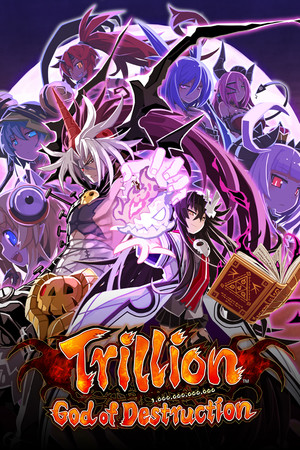
Trillion: God of Destruction
Train demon girls modeled on the Seven Deadly Sins, watch them die, pass their stats to the next, and grind toward a boss with 1,000,000,000,000 HP. Niche, punishing, oddly emotional.
Veredicto de GamerScout
Best for grind-tolerant players who want emotional stakes attached to their stat optimization and can accept combat as a side dish.
Comparar precios(7 tiendas)
Todas las tiendas de esta tabla nos dan el precio en euros, así que la cifra en EUR es el precio que fijó el vendedor, no un cálculo nuestro, y por eso EUR es también la moneda en la que calculamos el ranking. Solo incluimos aquí una oferta cuando la tienda nos da su precio en euros, de modo que ninguna cifra de esta tabla es inventada por nosotros.
Elige USD, PLN, GBP, CAD o AUD en la cabecera y convertimos desde EUR con el tipo de cambio de referencia del Banco Central Europeo — los importes convertidos llevan el prefijo ~. Tu banco o la tienda pueden aplicar un tipo distinto al pagar. Nunca ocultamos ofertas según dónde estés: todo el mundo ve esta tabla completa.
We may earn a commission when you buy games through links on this page — at no extra cost to you. It never affects our rankings or verdicts.
Historial de precios
Capturas y multimedia
Acerca de Trillion: God of Destruction
I pulled up a blank spreadsheet before my first real attempt at Trillion and that instinct turned out to be exactly right. The core loop here is resource management dressed in anime clothing: you get a fixed number of seven-day cycles while the eponymous god sleeps, and every single day you spend is a decision with downstream consequences. Train Attack? That costs Fatigue. Too much Fatigue without rest means injury, and an injury can erase a full week of progress. The time pressure is constant and real, and anyone who has min-maxed a Paradox title will feel the familiar itch of optimizing within tight constraints. The system has two distinct halves that pull in different directions. The training and preparation side is almost entirely menu-driven: selecting regimens tied to stats like Attack, Defense, Speed, and Charm, spending earned points to unlock active and passive skills, visiting the Blacksmith to socket weapon relics, or dropping training medals to enter the Valley of Swords, a procedurally generated dungeon that yields items and bonus experience. The combat side is a grid-based, turn-simultaneous affair closer to Mystery Dungeon than to Fire Emblem. Trillion telegraphs its attacks with color-coded grid tiles that shift hue as the countdown ticks, which gives fights a puzzle quality: read the pattern, stay out of the danger zones, position for rear criticals, spend MP on special skills at the right moment. The problem reviewers almost universally flag is proportionality: actual combat represents roughly ten to fifteen percent of your total playtime, and the menu work can feel like administering a spreadsheet rather than playing a game. That criticism is fair, but it is also the exact tradeoff the design is built around. What rescues the whole structure from pure tedium is the emotional toll baked into the mechanics. Each of the six Overlords represents one of the Seven Deadly Sins, and you build a genuine relationship with whichever one you select through visual-novel conversation sequences and gift-giving that raises Affection points, which function as a third defensive resource in battle alongside HP and MP. When she dies and her accumulated stats partially transfer to the next candidate, the loss lands differently than a typical permadeath. The Disgaea DNA is visible in the underworld setting and the escalating numbers, but the tone here is consistently darker and more earnest than Nippon Ichi's comedy-first approach. There are close to a dozen different endings, and the New Game Plus system carries stat progress forward so that subsequent runs become about story completion rather than pure survival. For the right player this is a deeply satisfying loop. If you enjoy watching numbers compound, planning a training sequence several cycles ahead, and being emotionally manipulated into caring about characters you know are going to be devoured, the game delivers on every one of those fronts. The PC version is the sharpest looking release and controller support works well, though scattered reports of soft locks on loading screens suggest the port is not entirely clean. The repetition is genuine and the combat is shallower than the raising sim framing deserves, but the central question the game keeps asking, namely how much damage can you scrape off a trillion HP before this Overlord falls, turns out to have a compelling answer across fifteen to thirty hours of play.

Strategy & simulation
Etiquetas
Requisitos del sistema
Mínimos
- OS
- Windows 7 (64-bit)
- Memory
- 4 GB RAM
- DirectX
- Version 10
- Storage
- 10 GB available space
- Graphics
- 3 GHz Intel i3 or equivalent
- Processor
- 3 GHz Intel i3 or equivalent
- Sound Card
- DirectX 9.0c compatible sound card
Recomendados
- OS
- Windows 10 Home (64-bit)
- Memory
- 8 GB RAM
- DirectX
- Version 10
- Storage
- 10 GB available space
- Graphics
- NVIDIA GeForce GTX 960
- Processor
- Intel(R) Core(TM) i5-4460 CPU @ 3.20GHz
- Sound Card
- DirectX 9.0c compatible sound card
DLC y complementos de Trillion: God of Destruction1
Expansiones, packs de DLC y contenido adicional de este juego. Haz clic en cualquier elemento para ver las ofertas de las tiendas.
Sigue explorando
Community Discussion
Be the first to comment on Trillion: God of Destruction.
Reseñas y valoraciones
No hay valoraciones disponibles
Información del juego
- Desarrolladora
- IDEA FACTORY
- Distribuidora
- Idea Factory International
- Fecha de lanzamiento
- 7 nov 2016