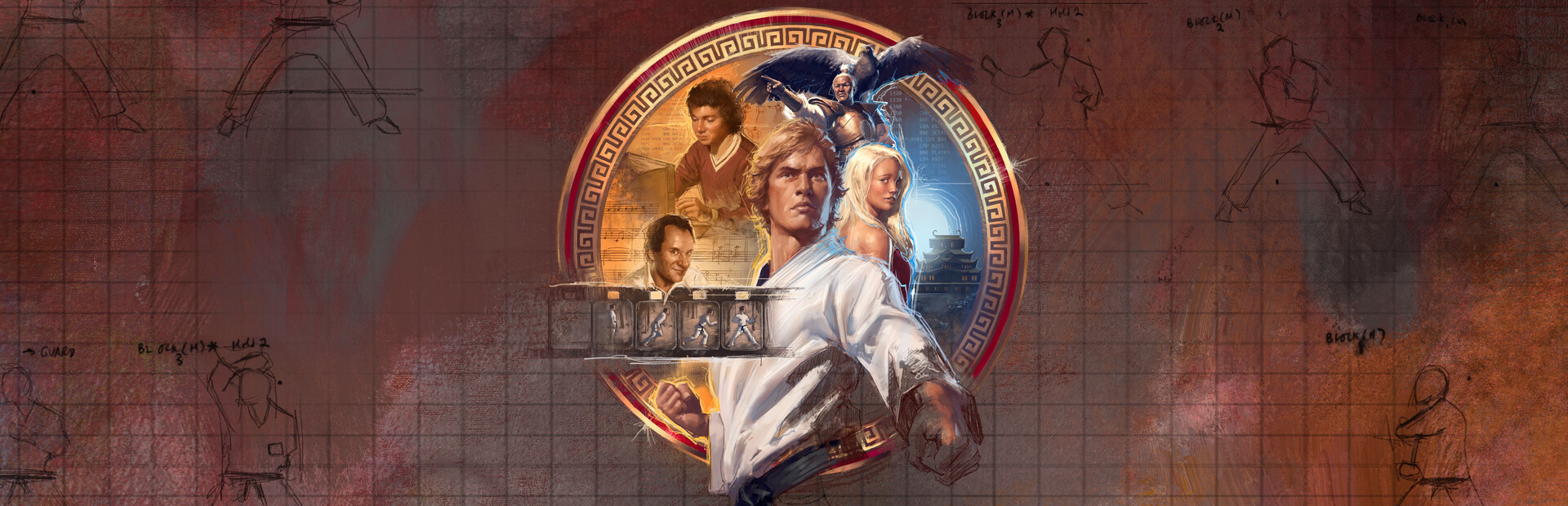
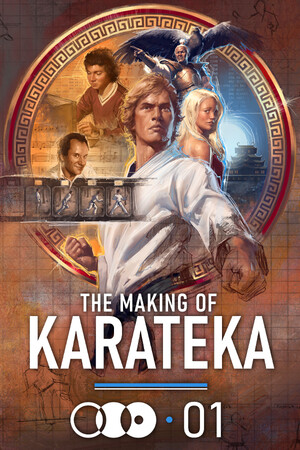
Compara los precios de The Making of Karateka en tiendas de claves de confianza y encuentra la mejor oferta. Desarrollado por Digital Eclipse. Publicado por Digital Eclipse. Lanzado el 29/8/2023. Disponible en PC, Xbox. Géneros: Action. Puntuación Metacritic: 90/100.

Part museum exhibit, part playable archive, Digital Eclipse's Gold Master Series opener makes a strong case that the story behind a 1984 Apple II game is worth your full evening.

I went into The Making of Karateka half-expecting a glorified ROM dump dressed up with some scanned concept art. What I got instead felt closer to cracking open a Criterion Collection box set where the bonus features are actually better than the movie. Digital Eclipse has built something genuinely new here: a structured, timeline-driven interactive documentary where design documents, journal entries, handwritten letters to publisher Broderbund, Super-8 footage, and video interviews all sit alongside playable software as equal citizens, not afterthoughts. If you have ever wondered how a Yale freshman who was skipping class to hang out at the film society ended up creating one of the most cinematic games of 1984, this answers that question in obsessive, affectionate detail. The content is organised across several distinct timelines, and Digital Eclipse's smart move is making you sit with the context before you reach the main attraction. You work through the Deathbounce story first, watching a teenage Mechner pitch an Asteroids clone to Broderbund, get rejected, iterate, and ultimately fail to get it published. Luminaries like id Software co-founder Tom Hall and Mortal Kombat co-creator John Tobias show up to explain what Karateka meant to them, and there is something quietly moving about learning that a teenage John Romero mailed Mechner a fan letter in 1985. The archival pull here is exceptional. Mechner apparently kept everything, so the timelines are stuffed with family photos, publisher correspondence, and passages from his journal. One noted criticism is that his handwriting is genuinely hard to parse, and optional caption overlays would have helped. On the playable side, you get the Apple II, Commodore 64, and Atari 8-bit versions of Karateka, several development prototypes, and two new productions. Karateka Remastered is the cleanest version of the original game that exists, with modernised graphics and smoothed animation that stays true to the source aesthetic rather than pasting new art over old sprites. Save anywhere, Rewind, Watch Mode, chapter select, and a commentary track from both Jordan and his father Francis are all baked in. The original game is slow and punishing by modern standards, so these quality-of-life tools matter. Then there is Deathbounce: Rebounded, Digital Eclipse's fully realised take on the game that never made it out of the 80s. It is a twin-stick arcade score-chaser set on a train full of bird enemies, and it is far more addictive than it has any right to be. Multipliers for immediate-impact hits at the start of each room give it real mechanical depth for a game that looks this retro. The main caveat is audience fit. If you have no nostalgia for early personal computing, no interest in game development history, and just want something to play, the package will feel thin. The original Karateka is genuinely short, and the remastered version is not a dramatic reinvention. This is first and foremost a preservation and storytelling product. Players who loved Atari 50's documentary structure will feel at home immediately, and anyone who is curious about how cinematic design, rotoscoping, and Hollywood-style narrative first crept into video games will find the whole thing fascinating. Metacritic sits at 90, and that score reflects a critics' consensus that Digital Eclipse has built something thoughtful and important here, not just competent. Alex, Scout Team

The Making of Karateka

The Making of Karateka

29 ago 2023Digital Eclipse
GamerScout opina

Part museum exhibit, part playable archive, Digital Eclipse's Gold Master Series opener makes a strong case that the story behind a 1984 Apple II game is worth your full evening.

PCXbox
Steam Deck PlayableProtonDB Gold
Mejor precio disponible
4,62 €-76%
en YuPlay
Mínimo registrado: 4,62 €
Sigue este precio

Veredicto de GamerScout

Essential for game-history enthusiasts and Atari 50 fans; too niche to recommend to players who only want something fresh to play.

Comparar precios(6 tiendas)

YuPlayMejor precio
StandardGlobalSteam KeyClave
4,62 €-76%
La tienda fija el precio en EUR
Comprar
StandardEuropa (UE)Steam KeyClave
4,77 €
La tienda fija el precio en EUR
Comprar
StandardGlobalSteam KeyClave
4,77 €-76%
La tienda fija el precio en EUR
Comprar
StandardGlobalSteam KeyClave
4,77 €
La tienda fija el precio en EUR
Comprar
StandardGlobalSteam KeyClave
5,65 €-18%
La tienda fija el precio en EUR
Comprar
StandardGlobalSteam KeyClave
18,33 €-6%
La tienda fija el precio en EUR
Comprar
StandardGlobalSteam KeyClave
19,50 €
La tienda fija el precio en EUR
Comprar

Todas las tiendas de esta tabla nos dan el precio en euros, así que la cifra en EUR es el precio que fijó el vendedor, no un cálculo nuestro, y por eso EUR es también la moneda en la que calculamos el ranking. Solo incluimos aquí una oferta cuando la tienda nos da su precio en euros, de modo que ninguna cifra de esta tabla es inventada por nosotros.

Elige USD, PLN, GBP, CAD o AUD en la cabecera y convertimos desde EUR con el tipo de cambio de referencia del Banco Central Europeo — los importes convertidos llevan el prefijo ~. Tu banco o la tienda pueden aplicar un tipo distinto al pagar. Nunca ocultamos ofertas según dónde estés: todo el mundo ve esta tabla completa.

We may earn a commission when you buy games through links on this page — at no extra cost to you. It never affects our rankings or verdicts.

Historial de precios

Mínimo registrado
4,62 €25 jul 2026
Mejor precio actual
4,62 €
El más bajo desde que lo seguimos
Tiendas de claves
4,26 €4,51 €4,75 €5,00 €6 Jul16 Jul26 Jul5 Aug15 Aug
6 jul — 15 ago
Crear alerta

Capturas y multimedia

Acerca de The Making of Karateka

I went into The Making of Karateka half-expecting a glorified ROM dump dressed up with some scanned concept art. What I got instead felt closer to cracking open a Criterion Collection box set where the bonus features are actually better than the movie. Digital Eclipse has built something genuinely new here: a structured, timeline-driven interactive documentary where design documents, journal entries, handwritten letters to publisher Broderbund, Super-8 footage, and video interviews all sit alongside playable software as equal citizens, not afterthoughts. If you have ever wondered how a Yale freshman who was skipping class to hang out at the film society ended up creating one of the most cinematic games of 1984, this answers that question in obsessive, affectionate detail. The content is organised across several distinct timelines, and Digital Eclipse's smart move is making you sit with the context before you reach the main attraction. You work through the Deathbounce story first, watching a teenage Mechner pitch an Asteroids clone to Broderbund, get rejected, iterate, and ultimately fail to get it published. Luminaries like id Software co-founder Tom Hall and Mortal Kombat co-creator John Tobias show up to explain what Karateka meant to them, and there is something quietly moving about learning that a teenage John Romero mailed Mechner a fan letter in 1985. The archival pull here is exceptional. Mechner apparently kept everything, so the timelines are stuffed with family photos, publisher correspondence, and passages from his journal. One noted criticism is that his handwriting is genuinely hard to parse, and optional caption overlays would have helped. On the playable side, you get the Apple II, Commodore 64, and Atari 8-bit versions of Karateka, several development prototypes, and two new productions. Karateka Remastered is the cleanest version of the original game that exists, with modernised graphics and smoothed animation that stays true to the source aesthetic rather than pasting new art over old sprites. Save anywhere, Rewind, Watch Mode, chapter select, and a commentary track from both Jordan and his father Francis are all baked in. The original game is slow and punishing by modern standards, so these quality-of-life tools matter. Then there is Deathbounce: Rebounded, Digital Eclipse's fully realised take on the game that never made it out of the 80s. It is a twin-stick arcade score-chaser set on a train full of bird enemies, and it is far more addictive than it has any right to be. Multipliers for immediate-impact hits at the start of each room give it real mechanical depth for a game that looks this retro. The main caveat is audience fit. If you have no nostalgia for early personal computing, no interest in game development history, and just want something to play, the package will feel thin. The original Karateka is genuinely short, and the remastered version is not a dramatic reinvention. This is first and foremost a preservation and storytelling product. Players who loved Atari 50's documentary structure will feel at home immediately, and anyone who is curious about how cinematic design, rotoscoping, and Hollywood-style narrative first crept into video games will find the whole thing fascinating. Metacritic sits at 90, and that score reflects a critics' consensus that Digital Eclipse has built something thoughtful and important here, not just competent.

Alex
Alex · Scout Team

Catch-all

Etiquetas

singleplayerachievementscontroller-supportcloud-savestier:aaaInteractive DocumentaryGame PreservationRetro ArchiveScore ChaserTwin-Stick ShooterDirector CommentaryWatch ModeGame Development HistoryRotoscoping

Requisitos del sistema

Mínimos

OS
Windows 10
Memory
8 GB RAM
Graphics
ATI Radeon HD 4800 Series, Nvidia GeForce 8800GT or greater
Processor
Intel i3 @ 3.0GHz or AMD equivalent.

Recomendados

Requires a 64-bit processor and operating system

Sigue explorando

Community Discussion

Be the first to comment on The Making of Karateka.

Reseñas y valoraciones

Metacritic
90

Información del juego

Desarrolladora
Digital Eclipse
Distribuidora
Digital Eclipse
Fecha de lanzamiento
29 ago 2023

Alerta de precio

¡Recibe un aviso cuando el precio baje de tu objetivo!

Crear alerta
Mejor precio4,62 €
Ver oferta

En los 21.266 juegos que seguimos, una clave verificada fue más barata que la tienda oficial el 92% de las veces. Consulta el método y las cifras completas en nuestro informe de precios de juegos.

¿Sin tarjeta? Paga de otra forma

Recarga tu saldo de Steam o compra crypto con cualquier tarjeta — entrega instantánea, sin cuenta bancaria.

Más de Digital Eclipse

Compra mejor: guías útiles

¿Buscas más? Mira juegos como The Making of Karateka →

Preguntas frecuentes sobre The Making of Karateka

¿Cuánto cuesta The Making of Karateka?

A 15 de agosto de 2026, la oferta más barata disponible de The Making of Karateka es €4.62 en YuPlay, de entre 7 ofertas activas que seguimos en tiendas de claves verificadas. Los precios cambian a diario — la tabla de esta página se actualiza continuamente.

¿Dónde puedo comprar The Making of Karateka más barato?

El precio más bajo disponible que seguimos para The Making of Karateka es €4.62 en YuPlay (15 de agosto de 2026). Comparamos 7 ofertas activas de tiendas de claves verificadas — la tabla completa con cada tienda y su puntuación de confianza está en esta página.

¿En qué plataformas está disponible The Making of Karateka?

The Making of Karateka está disponible en PC, Xbox.

¿Cuándo se lanzó The Making of Karateka?

The Making of Karateka se lanzó el 29 de agosto de 2023.

¿Quién desarrolló The Making of Karateka?

The Making of Karateka fue desarrollado por Digital Eclipse.

¿Merece la pena comprar The Making of Karateka?

The Making of Karateka tiene una puntuación Metacritic de 90/100, lo que lo convierte en uno de los títulos destacados de Action. Mira las reseñas completas, las valoraciones y los tiempos de duración en esta página para decidir.