
The Legend of Bum-Bo
If Puzzle Quest and The Binding of Isaac had a grotesque cardboard baby, this is it. A focused roguelike puzzler that rewards board-reading over button-mashing.
Veredicto de GamerScout
Solid pick for Isaac fans who want a puzzle-brained spin-off; too shallow and run-gated to fully satisfy pure deckbuilding enthusiasts.
Comparar precios(3 tiendas)
Todas las tiendas de esta tabla nos dan el precio en euros, así que la cifra en EUR es el precio que fijó el vendedor, no un cálculo nuestro, y por eso EUR es también la moneda en la que calculamos el ranking. Solo incluimos aquí una oferta cuando la tienda nos da su precio en euros, de modo que ninguna cifra de esta tabla es inventada por nosotros.
Elige USD, PLN, GBP, CAD o AUD en la cabecera y convertimos desde EUR con el tipo de cambio de referencia del Banco Central Europeo — los importes convertidos llevan el prefijo ~. Tu banco o la tienda pueden aplicar un tipo distinto al pagar. Nunca ocultamos ofertas según dónde estés: todo el mundo ve esta tabla completa.
We may earn a commission when you buy games through links on this page — at no extra cost to you. It never affects our rankings or verdicts.
Historial de precios
Capturas y multimedia
Acerca de The Legend of Bum-Bo
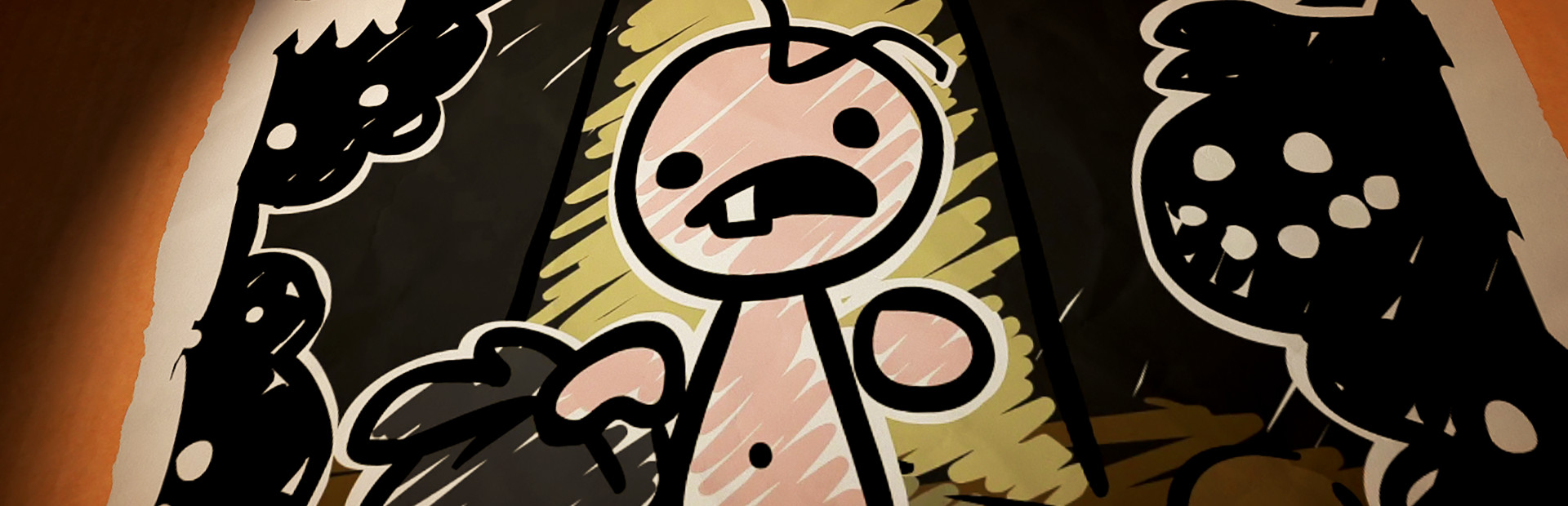
My first instinct when I saw the genre pitch was skepticism: match-four tiles as the combat backbone of a roguelike? That sounds like a mobile game dressed up with Isaac's art assets. Forty-odd runs later, I can report it is genuinely more interesting than that, though the ceiling is lower than the marketing optimism suggests. The core loop has you sliding rows and columns on a tile board to generate mana, each tile type doing a different job. Bones and skulls deal column damage to enemies, poop tiles build a shield that absorbs incoming hits, boogers stun opponents and delay their turn, and pee charges spell-based abilities. You have a capped number of moves per turn before enemies act, which forces real prioritization: do you shore up your defense or go for the kill? That tension is where the game actually earns its strategy label. The item and trinket catalogue is substantial. Over 100 items that modify, upgrade, and combo with each other, plus more than 80 passive trinkets that bend spell behaviors or alter character stats. For build-crafters, that pool has real variety, even if the deckbuilding side is shallower than something like Slay the Spire. Most of your mental energy goes into reading the board state rather than constructing a synergy chain, which is a meaningful distinction. The game rewards forward-thinking players who can plan two or three moves ahead, but it does not consistently reward planning beyond the current room because leftover spell resources do not carry forward between rooms. That design choice is the most defensible criticism lobbed at the game, and it is a fair one. You are incentivized to think like a chess player within a room, then reset mentally for the next. The four playable characters (unlocked progressively by completing runs) each start with different stat spreads and ability sets. Bum-bo the Brave leans offensive and teaches the fundamentals. Later characters shift toward luck manipulation, defense stacking, or speed-based move economies, and mastering one before moving to the next gives the progression a genuine arc. The unlock gating has drawn criticism though: you must complete runs with each character in order, and the dungeon depth available to you expands only as you unlock further characters. If you hit a satisfying rhythm on a mid-game run, the game can simply wall you off from continuing further. It is a structural oddity that interrupts momentum in a genre built on momentum. Visually, everything sits inside a handcrafted cardboard-box aesthetic. Characters move like paper puppets on sticks, attacks arrive as oversized props slamming in from off-screen, and enemies are color-coded with spinning lights that quietly signal their attack priority. It is scrappier than Isaac proper, with fewer standout enemy designs, but the Ridiculon soundtrack (remixes of Isaac themes alongside originals) is consistently excellent and does a lot of atmospheric lifting. The launch period was rough: softlocks and crashes cost players runs through no fault of their own, and post-launch support stalled due to developer circumstances before McMillen brought in new programmers to stabilize things. As it stands now, the game is in a much cleaner state than it shipped. For a strategy-adjacent audience, Bum-Bo is a compact, fairly short roguelike. Individual runs clock in under an hour once you understand the systems, and the real depth comes from character mastery and item knowledge accumulated over many attempts. It is not the grand complexity engine that Isaac is, but it was never trying to be. If you can meet it on its own terms, as a tight, turn-based board puzzle wrapped in McMillen's signature scatological universe, it holds up as a genuinely clever piece of design with a few rough edges that post-launch patches have mostly sanded down.

Strategy & simulation
Etiquetas
Requisitos del sistema
Mínimos
- OS
- Windows 7 or later (64 bit required)
- Memory
- 4 GB RAM
- DirectX
- Version 9.0
- Storage
- 4 GB available space
- Graphics
- Discreet video card, Shader Model 3+
- Processor
- Core 2 Duo
- Sound Card
- one that works
Recomendados
- OS
- Windows 10 (64 bit required)
- Memory
- 4 GB RAM
- DirectX
- Version 11
- Storage
- 4 GB available space
- Graphics
- Desktop Card from 2010 or later
- Processor
- Core i3 or above
- Sound Card
- a better one than "one that works"
Sigue explorando
Community Discussion
Be the first to comment on The Legend of Bum-Bo.
Reseñas y valoraciones
Información del juego
- Desarrolladora
- Edmund McMillen
- Distribuidora
- Edmund McMillen
- Fecha de lanzamiento
- 12 nov 2019

