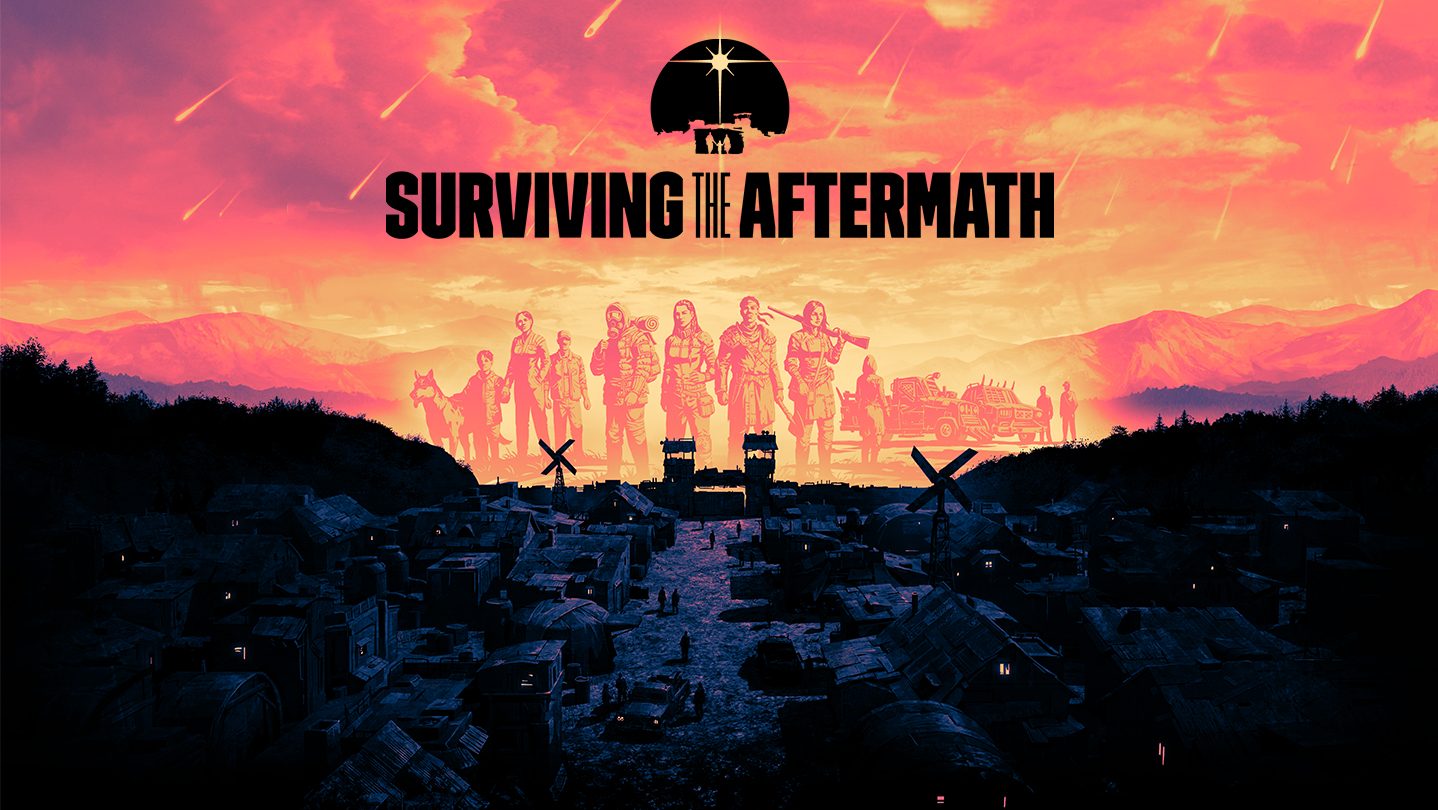
Compara los precios de Surviving the Aftermath en tiendas de claves de confianza y encuentra la mejor oferta. Desarrollado por Iceflake Studios. Publicado por Paradox Interactive. Lanzado el 16/11/2021. Disponible en PC, Xbox. Géneros: Simulation, Strategy.

Solid post-apocalyptic colony management with an addictive build loop, undercut by RNG cruelty, a weak tutorial, and late-game resource bottlenecks that punish patience more than poor planning.

My spreadsheet instincts fired up the moment I hit the world map layer in Surviving the Aftermath and realised the game was running two completely separate decision spaces at once: a colony-building layer where you queue up over 130 structures, manage food chains, water tables, and housing density, and an overworld layer where named specialists scout tiles, skirmish with bandit factions, and haul back resources your colony desperately needs. That dual-layer structure is the game's strongest idea. The loop between them feels purposeful early on, and the tech tree drip-feeds unlocks at a rhythm that kept me pushing past bedtime more than once. For newcomers to the genre, the approachability is genuine but comes with a caveat. The learning curve on core systems is shallow enough that a Frostpunk or Anno tourist can orient themselves without a wiki, but the tutorial itself is thin to the point of negligence. Instructions around the mid-game Doomsday Bunker questline, which requires converting specialists into engineers and establishing outposts, are especially vague, and the game never clearly communicates how much research of each type is required to move forward. That gap between "accessible mechanics" and "helpful guidance" is a real friction point. The good news is that the difficulty customisation at the start, where you configure the nature of the apocalypse itself, gives new players meaningful agency over how hard the early hours bite. Where the game loses points with me is in the late-game RNG taxation. Procedurally generated maps can place rare metal deposits in deeply inconvenient spots, and because advanced extraction tech sits behind a long research chain, a bad seed can stall your colony before you have the tools to fix it. Resource bottlenecks in the back half feel less like earned difficulty and more like map-roll luck. On top of that, the event system, which periodically fires off binary choices, almost never carries real consequence. Bandits raid, pandemics decimate a third of your population, firestorms knock down buildings, but the moral weight Frostpunk wrings out of similar systems is absent here. The post-apocalyptic setting is window dressing rather than a design lever. The specialist system deserves more credit than it gets in the discourse. Recruiting scouts, fighters, and scavengers with distinct skill profiles and sending them out on world-map missions is genuinely enjoyable, and vehicles extend their action-point range in ways that open up the mid-game map nicely. The main campaign questline that anchors these deployments is thin storytelling, told through still screens and text, but it does give progression a directional pull. There are several DLC packs released post-launch, though community reception to those has been tepid, and the base game is complete enough to stand on its own without them. Visuals are functional at best, muddy in the early tiers when grey tents blur into grey ground, and the UI clarity degrades as your colony scales. Bottom line for strategy players: this sits comfortably in the second tier of the genre. It will not replace Frostpunk or even Endzone: A World Apart as your primary colony sim, but at the right price it delivers a repeatable, numbers-satisfying loop with just enough specialist micro to keep a management brain occupied. Go in with your eyes open about the tutorial gaps and the RNG ceiling, and you will probably get genuine mileage out of it. Diego, Scout Team

Surviving the Aftermath

Surviving the Aftermath

16 nov 2021Iceflake StudiosParadox Interactive
GamerScout opina

Solid post-apocalyptic colony management with an addictive build loop, undercut by RNG cruelty, a weak tutorial, and late-game resource bottlenecks that punish patience more than poor planning.

PCXbox
Steam Deck PlayableProtonDB Gold
Mejor precio disponible
2,66 €
en Kinguin
Mínimo registrado: 2,66 €
Sigue este precio

Veredicto de GamerScout

Worth picking up on sale for colony-sim fans who can tolerate RNG variance and a tutorial that teaches by attrition.

Comparar precios(6 tiendas)

KinguinMejor precio
StandardGlobalSteam KeyClave
2,66 €
La tienda fija el precio en EUR
Comprar
StandardGlobalSteam KeyClave
2,99 €-90%
La tienda fija el precio en EUR
Comprar
StandardGlobalSteam KeyClave
3,25 €
La tienda fija el precio en EUR
Comprar
StandardEuropa (UE)Steam KeyClave
3,28 €
La tienda fija el precio en EUR
Comprar
StandardEuropa (UE)Steam KeyClave
3,96 €-87%
La tienda fija el precio en EUR
Comprar
StandardEuropa (UE)Steam KeyClave
4,01 €
La tienda fija el precio en EUR
Comprar

Todas las tiendas de esta tabla nos dan el precio en euros, así que la cifra en EUR es el precio que fijó el vendedor, no un cálculo nuestro, y por eso EUR es también la moneda en la que calculamos el ranking. Solo incluimos aquí una oferta cuando la tienda nos da su precio en euros, de modo que ninguna cifra de esta tabla es inventada por nosotros.

Elige USD, PLN, GBP, CAD o AUD en la cabecera y convertimos desde EUR con el tipo de cambio de referencia del Banco Central Europeo — los importes convertidos llevan el prefijo ~. Tu banco o la tienda pueden aplicar un tipo distinto al pagar. Nunca ocultamos ofertas según dónde estés: todo el mundo ve esta tabla completa.

We may earn a commission when you buy games through links on this page — at no extra cost to you. It never affects our rankings or verdicts.

Historial de precios

Mínimo registrado
2,66 €27 jul 2026
Mejor precio actual
2,66 €
El más bajo desde que lo seguimos
Tiendas de claves
2,62 €2,76 €2,89 €3,03 €5 Jun23 Jun11 Jul28 Jul15 Aug
5 jun — 15 ago
Crear alerta

Capturas y multimedia

Acerca de Surviving the Aftermath

My spreadsheet instincts fired up the moment I hit the world map layer in Surviving the Aftermath and realised the game was running two completely separate decision spaces at once: a colony-building layer where you queue up over 130 structures, manage food chains, water tables, and housing density, and an overworld layer where named specialists scout tiles, skirmish with bandit factions, and haul back resources your colony desperately needs. That dual-layer structure is the game's strongest idea. The loop between them feels purposeful early on, and the tech tree drip-feeds unlocks at a rhythm that kept me pushing past bedtime more than once. For newcomers to the genre, the approachability is genuine but comes with a caveat. The learning curve on core systems is shallow enough that a Frostpunk or Anno tourist can orient themselves without a wiki, but the tutorial itself is thin to the point of negligence. Instructions around the mid-game Doomsday Bunker questline, which requires converting specialists into engineers and establishing outposts, are especially vague, and the game never clearly communicates how much research of each type is required to move forward. That gap between "accessible mechanics" and "helpful guidance" is a real friction point. The good news is that the difficulty customisation at the start, where you configure the nature of the apocalypse itself, gives new players meaningful agency over how hard the early hours bite. Where the game loses points with me is in the late-game RNG taxation. Procedurally generated maps can place rare metal deposits in deeply inconvenient spots, and because advanced extraction tech sits behind a long research chain, a bad seed can stall your colony before you have the tools to fix it. Resource bottlenecks in the back half feel less like earned difficulty and more like map-roll luck. On top of that, the event system, which periodically fires off binary choices, almost never carries real consequence. Bandits raid, pandemics decimate a third of your population, firestorms knock down buildings, but the moral weight Frostpunk wrings out of similar systems is absent here. The post-apocalyptic setting is window dressing rather than a design lever. The specialist system deserves more credit than it gets in the discourse. Recruiting scouts, fighters, and scavengers with distinct skill profiles and sending them out on world-map missions is genuinely enjoyable, and vehicles extend their action-point range in ways that open up the mid-game map nicely. The main campaign questline that anchors these deployments is thin storytelling, told through still screens and text, but it does give progression a directional pull. There are several DLC packs released post-launch, though community reception to those has been tepid, and the base game is complete enough to stand on its own without them. Visuals are functional at best, muddy in the early tiers when grey tents blur into grey ground, and the UI clarity degrades as your colony scales. Bottom line for strategy players: this sits comfortably in the second tier of the genre. It will not replace Frostpunk or even Endzone: A World Apart as your primary colony sim, but at the right price it delivers a repeatable, numbers-satisfying loop with just enough specialist micro to keep a management brain occupied. Go in with your eyes open about the tutorial gaps and the RNG ceiling, and you will probably get genuine mileage out of it.

Diego
Diego · Scout Team

Strategy & simulation

Etiquetas

steamColony BuilderPost-ApocalypticResource ManagementSpecialist ExplorationWorld Map LayerBandit FactionsTech TreeBeginner FriendlySingle-Player StrategyDual-Layer ManagementSpecialist RolesProcedural MapsMid-Game PivotDisaster ResponseRNG DifficultyWorld Map ExplorationLate-Game Bottleneck

Requisitos del sistema

Mínimos

Processor
Intel® iCore™ i5-2500K or AMD® Phenom™ II X6 1090T
Memory
4 GB RAM
Graphics
Nvidia® GeForce™ GTX 580 or AMD® Radeon™ HD 7870
DirectX
Version 11
Storage
4 GB available sp…

Recomendados

OS
Windows® 10 Home 64 bit
Processor
Intel® iCore™ i5-3570K or AMD® Ryzen™ 3 2200G
Memory
8 GB RAM
Graphics
Nvidia® GeForce™ GTX770 or AMD® Radeon™ R…

DLC y complementos de Surviving the Aftermath6

Expansiones, packs de DLC y contenido adicional de este juego. Haz clic en cualquier elemento para ver las ofertas de las tiendas.

Sigue explorando

Community Discussion

Be the first to comment on Surviving the Aftermath.

Reseñas y valoraciones

Steam
71%(4,528)

Información del juego

Desarrolladora
Iceflake Studios
Distribuidora
Paradox Interactive
Fecha de lanzamiento
16 nov 2021

Alerta de precio

¡Recibe un aviso cuando el precio baje de tu objetivo!

Crear alerta
Mejor precio2,66 €
Ver oferta

En los 21.266 juegos que seguimos, una clave verificada fue más barata que la tienda oficial el 92% de las veces. Consulta el método y las cifras completas en nuestro informe de precios de juegos.

¿Sin tarjeta? Paga de otra forma

Recarga tu saldo de Steam o compra crypto con cualquier tarjeta — entrega instantánea, sin cuenta bancaria.

Más de Iceflake Studios

Compra mejor: guías útiles

¿Buscas más? Mira juegos como Surviving the Aftermath →

Preguntas frecuentes sobre Surviving the Aftermath

¿Cuánto cuesta Surviving the Aftermath?

A 15 de agosto de 2026, la oferta más barata disponible de Surviving the Aftermath es €2.66 en Kinguin, de entre 19 ofertas activas que seguimos en tiendas de claves verificadas. Los precios cambian a diario — la tabla de esta página se actualiza continuamente.

¿Dónde puedo comprar Surviving the Aftermath más barato?

El precio más bajo disponible que seguimos para Surviving the Aftermath es €2.66 en Kinguin (15 de agosto de 2026). Comparamos 19 ofertas activas de tiendas de claves verificadas — la tabla completa con cada tienda y su puntuación de confianza está en esta página.

¿En qué plataformas está disponible Surviving the Aftermath?

Surviving the Aftermath está disponible en PC, Xbox.

¿Cuándo se lanzó Surviving the Aftermath?

Surviving the Aftermath se lanzó el 16 de noviembre de 2021.

¿Quién desarrolló Surviving the Aftermath?

Surviving the Aftermath fue desarrollado por Iceflake Studios y publicado por Paradox Interactive.