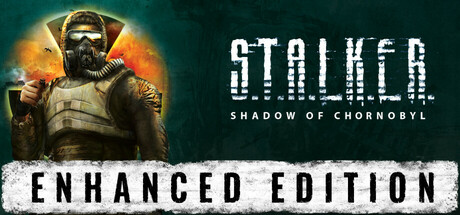
S.T.A.L.K.E.R: Call of Pripyat
The Zone's finest hour. Call of Pripyat is a survival FPS-RPG hybrid set inside Chernobyl's irradiated wasteland, and it's the trilogy's most polished, open entry.
Veredicto de GamerScout
The strongest entry in the original STALKER trilogy for players who want a punishing, deeply atmospheric open-world survival RPG with real exploration payoff.
Comparar precios(4 tiendas)
Todas las tiendas de esta tabla nos dan el precio en euros, así que la cifra en EUR es el precio que fijó el vendedor, no un cálculo nuestro, y por eso EUR es también la moneda en la que calculamos el ranking. Solo incluimos aquí una oferta cuando la tienda nos da su precio en euros, de modo que ninguna cifra de esta tabla es inventada por nosotros.
Elige USD, PLN, GBP, CAD o AUD en la cabecera y convertimos desde EUR con el tipo de cambio de referencia del Banco Central Europeo — los importes convertidos llevan el prefijo ~. Tu banco o la tienda pueden aplicar un tipo distinto al pagar. Nunca ocultamos ofertas según dónde estés: todo el mundo ve esta tabla completa.
We may earn a commission when you buy games through links on this page — at no extra cost to you. It never affects our rankings or verdicts.
Historial de precios
Capturas y multimedia
Acerca de S.T.A.L.K.E.R: Call of Pripyat
Call of Pripyat is the third and final chapter of GSC Game World's original trilogy, and the one that quietly fixed almost everything that made the earlier games a tough sell. You step into the boots of Major Degtyarev, a government agent posing as an ordinary stalker to investigate why a string of military helicopters went down over the Zone. That premise is functional rather than gripping - the writing never reaches the moral complexity I'd want from a game this atmospheric, and Degtyarev himself is about as memorable as a Soviet filing cabinet. But here's the thing: the Zone itself is the real protagonist, and it is extraordinary. Three large, genuinely open maps replace the bottlenecked corridors of its predecessors. You move between them by hiring a Guide - another stalker who charges a modest fee to escort you safely - which works as a light fast-travel system that actually feels like part of the world rather than a menu option. Your PDA marks anomalous zones and stalker activity points as you discover them, so exploration remains a genuine choice rather than a treasure-hunt checklist. The open landscape also means organic encounters: bandits fighting mutants around a campfire, a trader who owes a debt to someone deeper in the swamp, a half-buried train car with an electrical anomaly crawling up its hull and a hidden hatch on top. These moments just happen. No quest marker required. The survival loop is tight and satisfying. Carry weight limits mean every trip out of the hub areas - the warm, Russian-guitar-soundtrack safety of Yanov station or the barge settlement of Skadovsk - is a logistical puzzle. You need food, anti-radiation medicine, medkits, bandages, and ammo, while leaving room for looted weapons and the valuable artifacts found inside anomaly fields. Artifacts grant passive bonuses (accelerated healing, radiation resistance, extra carrying capacity) but often emit radiation themselves, which forces trade-offs rather than simple upgrades. Weapon and armor maintenance requires finding specific tool kits hidden across the world and giving them to mechanics who can then apply higher-tier upgrades, which ties neatly into the scavenging loop without feeling like artificial padding. Combat is tense and lethal on higher difficulties - enemies and the player both go down fast, and the sound design (distant gunfire, pseudodog howls, the geiger counter tick climbing as you wander too close to a hot spot) does more atmospheric heavy lifting than any cutscene. New enemy types push the game past what the first two installments offered. Burers are mutant dwarfs that can telekinetically hurl debris at you and physically rip your weapon out of your hands mid-fight - a genuinely startling mechanic the first time it happens. The underground lab sections, which appear a few times across the campaign, ditch the open-world structure entirely for claustrophobic corridors full of paranormal anomalies and harder mutant variants. They are some of the tensest sequences in any FPS I can think of from this era. The main story earns its momentum only in the final act, and the side quests are a mixed bag: some are inventive survival scenarios, a few are bland fetch runs. Vanilla Call of Pripyat still ships with a handful of bugs and occasional AI weirdness, though it is notably more stable than Shadow of Chernobyl or Clear Sky were at launch. The modding community remains active, with overhaul mods available if you want a harder or more detailed experience. Also worth flagging: the recently released Enhanced Edition launched to sharply negative reception on Steam, so verify which version you are buying and read current user feedback before committing to that specific release. For survival-RPG players who want a world that punishes inattention and rewards genuine curiosity, Call of Pripyat delivers a loop that is hard to put down past the first few hours. The story will not haunt you the way Disco Elysium does, and Degtyarev is no Geralt. But the Zone itself - the cracked earth, the rusted Soviet iconography, the radioactive emissions that send every stalker scrambling for cover - is one of the most convincing and oppressive game worlds ever built.

RPGs
Etiquetas
Requisitos del sistema
Mínimos
- Memory
- 1 GB
- Storage
- 6 GB
- Graphics
- GeForce FX 5900XT / Radeon 9600 Series
- Processor
- 2.4 GHz Pentium 4 / Athlon XP 2200+
- System requirements
- Windows XP
Recomendados
- Memory
- 2 GB
- Storage
- 6 GB
- Graphics
- GeForce 7900 GTX / Radeon X1950 Series
- Processor
- 2.13GHz Core 2 Duo E6400 / Athlon 64 X2 Dual Core 4200+
Sigue explorando
Community Discussion
Be the first to comment on S.T.A.L.K.E.R: Call of Pripyat.
Reseñas y valoraciones
No hay valoraciones disponibles
Información del juego
- Desarrolladora
- GSC Game World
- Distribuidora
- BANDAI NAMCO Entertainment
- Fecha de lanzamiento
- 3 oct 2013