Runaway: A Road Adventure
Gorgeous hand-painted backgrounds and a road-movie setup that charmed Europe into loving point-and-click again, but the pixel-hunting and logic-defying puzzles will test your patience more than your brain.
Veredicto de GamerScout
Worth it for point-and-click diehards and Pendulo completionists; frustrating busywork makes it a tough sell for everyone else.
Comparar precios(3 tiendas)
Todas las tiendas de esta tabla nos dan el precio en euros, así que la cifra en EUR es el precio que fijó el vendedor, no un cálculo nuestro, y por eso EUR es también la moneda en la que calculamos el ranking. Solo incluimos aquí una oferta cuando la tienda nos da su precio en euros, de modo que ninguna cifra de esta tabla es inventada por nosotros.
Elige USD, PLN, GBP, CAD o AUD en la cabecera y convertimos desde EUR con el tipo de cambio de referencia del Banco Central Europeo — los importes convertidos llevan el prefijo ~. Tu banco o la tienda pueden aplicar un tipo distinto al pagar. Nunca ocultamos ofertas según dónde estés: todo el mundo ve esta tabla completa.
We may earn a commission when you buy games through links on this page — at no extra cost to you. It never affects our rankings or verdicts.
Historial de precios
Capturas y multimedia
Acerca de Runaway: A Road Adventure
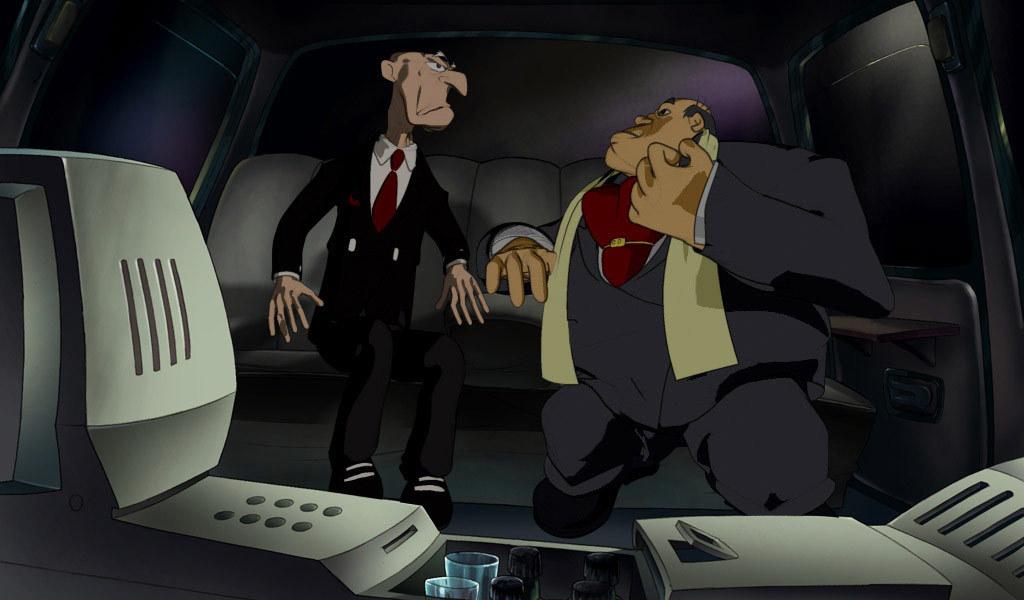
My first instinct with a point-and-click from the early 2000s is to ask whether its puzzle design has aged as gracefully as its art, and with Runaway the answer is a firm no on the puzzles and a warm yes on almost everything visual. Pendulo Studios built this thing on lush, hand-painted backgrounds that stretch across New York hospital wards, desert ghost towns, and archaeology museums packed with detail. The cel-shaded character models blend surprisingly well into those backdrops, and even two-plus decades on, the screens genuinely have personality. The setup is a road-movie chase: college student Brian Basco accidentally becomes the protector of Gina, a witness targeted by mafia hitmen. The two-person dynamic borrows clearly from films the developers admired, and the tone zigzags between grounded thriller and broad comedy in a way that either clicks or grates depending on your appetite for oddball side characters. Drag queens, eccentric scientists, and assorted weirdos populate the six chapters, and when the humour lands it has a scrappy charm. When it does not, the script leans on stereotypes that feel creaky even by the standards of the era. The pure gameplay is where Runaway earns its mixed reputation. Controls are context-sensitive point-and-click: left-click to walk, right-click to cycle through examine, operate, or take. Inventory combinations drive almost every puzzle, and dialogue trees provide hints. So far, textbook. The problems are structural. Progression is strictly linear, and Brian operates on an internal logic where he will simply refuse to pick up an item until the plot has told him why he needs it, which means revisiting the same hotspots repeatedly, sometimes without any signal that anything has changed. Pixel hunting is genuinely punishing in several chapters; hotspots can be a few pixels wide and occasionally overlap with much larger, decoy-style objects. One notorious sequence requires filling a container in tiny increments across six round-trips spanning eight screens. These are not difficulty spikes so much as design habits that the genre has spent the last twenty years learning to abandon. Keep a walkthrough within reach and you will not regret it. Historically, Runaway mattered: it helped revive commercial interest in graphic adventures across Europe at a time when the genre had gone quiet, and it launched a trilogy that found a genuine audience. Playing it today, that context is useful background noise. Without it, you have a visually handsome, tonally inconsistent, puzzle-design-challenged adventure that sits comfortably in the mid-tier of its genre. Dedicated point-and-click fans who want to understand where Pendulo Studios came from, or who enjoy the particular masochism of old-school item hunts, will find enough here. Anyone coming in without prior affection for the genre should probably start elsewhere in the catalog.

Catch-all
Etiquetas
Requisitos del sistema
Mínimos
Windows 95/98/ME/2000/XP, Pentium™ 200 MMX, 64 MB RAM, 630 MB hard disk drive, Monitor and graphics card (DirectX™ compatible) with support for 1024x768 and 16-bit color, DirectX™ compatible sound card, Mouse a…
Sigue explorando
Community Discussion
Be the first to comment on Runaway: A Road Adventure.
Reseñas y valoraciones
Información del juego
- Desarrolladora
- Pendulo Studios
- Distribuidora
- Focus Home Interactive
- Fecha de lanzamiento
- 14 mar 2007