Portal
A three-hour puzzle game that rewired how an entire generation thinks about first-person movement, and it's still doing it to new players right now.
Veredicto de GamerScout
9/10Best for anyone who wants a tight, brilliantly designed puzzle experience and doesn't mind a short runtime for the price.
Comparar precios(3 tiendas)
Todas las tiendas de esta tabla nos dan el precio en euros, así que la cifra en EUR es el precio que fijó el vendedor, no un cálculo nuestro, y por eso EUR es también la moneda en la que calculamos el ranking. Solo incluimos aquí una oferta cuando la tienda nos da su precio en euros, de modo que ninguna cifra de esta tabla es inventada por nosotros.
Elige USD, PLN, GBP, CAD o AUD en la cabecera y convertimos desde EUR con el tipo de cambio de referencia del Banco Central Europeo — los importes convertidos llevan el prefijo ~. Tu banco o la tienda pueden aplicar un tipo distinto al pagar. Nunca ocultamos ofertas según dónde estés: todo el mundo ve esta tabla completa.
We may earn a commission when you buy games through links on this page — at no extra cost to you. It never affects our rankings or verdicts.
Historial de precios
Capturas y multimedia
Acerca de Portal
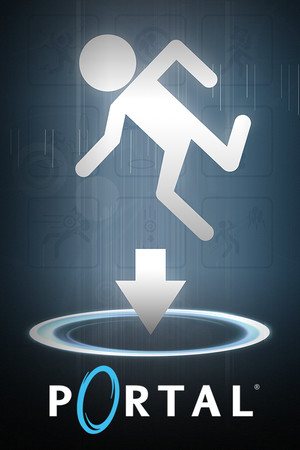
I've replayed Portal more times than I can honestly justify, and every single run the portal gun still feels like a trick my brain shouldn't be able to pull off. That's the core achievement here: Valve built a first-person puzzle game around a single tool, the Aperture Science Handheld Portal Device, and engineered nineteen test chambers that teach you to weaponize momentum, redirect laser-like energy balls, stack weighted cubes, dodge sentry turrets, and fold space in ways that feel genuinely clever rather than arbitrary. The puzzle escalation is pitch-perfect. You start moving a box from point A to point B through a single portal. A few chambers later you're calculating fall velocity to fling yourself across a room using two portals and conservation of momentum as the actual mechanic. The game never explains this in a physics lecture; it just builds the logic until you feel it in your hands. The one thing that elevated Portal from a smart tech demo into a genuine classic is GLaDOS, voiced by Ellen McLain. Early playtests showed that without some kind of antagonist and narrative threat, players finished the chambers and asked when the real game would start. GLaDOS was the answer to that problem, and she solved it so well that she became one of the most recognized characters in game history. Her passive-aggressive guidance starts warm and clinical, then grows increasingly hostile as you push deeper into the Enrichment Center. The dark humor is dry and consistent, never overselling the joke, and it makes the sterile white corridors feel genuinely unsettling rather than boring. The Weighted Companion Cube, the wall graffiti hinting at secrets, the glimpses of the world behind the test chamber panels: Portal hides a real atmosphere underneath the clean surfaces, and finding it is half the fun. The honest criticism is the one everyone already knows: the game is short. Skilled players can finish it in under two hours; a first-timer who stops to think will get three to four hours out of it. There is no co-op mode, no procedurally generated content, and the challenge modes accessible after the credits are better suited to speedrunners and completionists than casual players hungry for more story. The Source engine visuals are dated by modern standards, and some players report mild motion discomfort from the first-person perspective during the more acrobatic portal sequences. None of that changes the fundamental reality that within its short runtime Portal does one thing so well that it influenced years of puzzle design after it. If you have never played it, this is the rare case where the critical consensus is not hype. The Metacritic score of 90 understates the cultural footprint. If you played it years ago, a replay still holds up: the puzzle logic is timeless even if the textures are not. The only players who should approach with caution are those who genuinely have no patience for physics-based thinking and prefer action over problem-solving, because Portal will not meet you halfway on that. For everyone else, start here before Portal 2, not because you have to, but because the original's stripped-down tension and dread hit differently than the sequel's broader comedy.

Catch-all
Etiquetas
Requisitos del sistema
Mínimos
1.7 GHz Processor, 512MB RAM, DirectX® 8.1 level Graphics Card (Requires support for SSE), Windows® 7 (32/64-bit)/Vista/XP, Mouse, Keyboard, Internet Connection
Sigue explorando
Community Discussion
Be the first to comment on Portal.
Reseñas y valoraciones
Información del juego
- Desarrolladora
- Valve
- Distribuidora
- Valve
- Fecha de lanzamiento
- 10 oct 2007