Poly Towns
A floaty, low-stakes town builder that works best as background noise, but hits a hard ceiling fast for anyone who wants real strategic depth.
Veredicto de GamerScout
Best for casual players who want a low-pressure builder for short sessions, not for anyone chasing real strategic depth.
Comparar precios(4 tiendas)
Todas las tiendas de esta tabla nos dan el precio en euros, así que la cifra en EUR es el precio que fijó el vendedor, no un cálculo nuestro, y por eso EUR es también la moneda en la que calculamos el ranking. Solo incluimos aquí una oferta cuando la tienda nos da su precio en euros, de modo que ninguna cifra de esta tabla es inventada por nosotros.
Elige USD, PLN, GBP, CAD o AUD en la cabecera y convertimos desde EUR con el tipo de cambio de referencia del Banco Central Europeo — los importes convertidos llevan el prefijo ~. Tu banco o la tienda pueden aplicar un tipo distinto al pagar. Nunca ocultamos ofertas según dónde estés: todo el mundo ve esta tabla completa.
We may earn a commission when you buy games through links on this page — at no extra cost to you. It never affects our rankings or verdicts.
Historial de precios
Capturas y multimedia
Acerca de Poly Towns
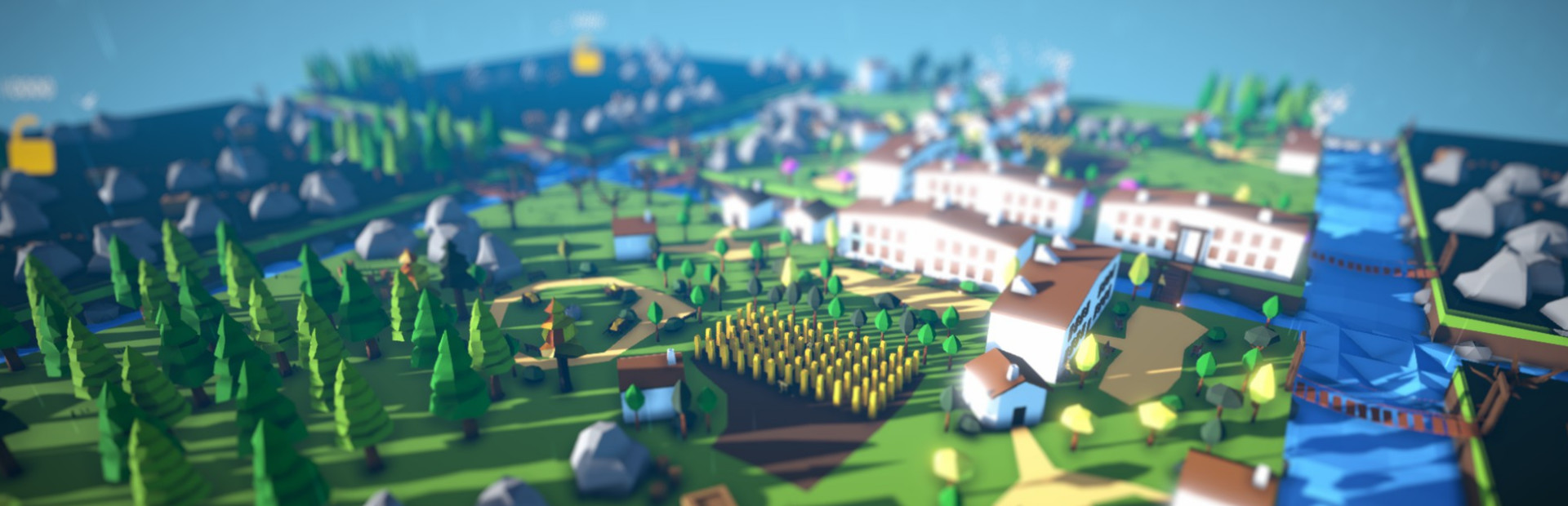
My first honest reaction to Poly Towns was: this is a game for a Tuesday afternoon when your brain is full. You start on a single floating island zone, assign a handful of villagers to jobs like farming and woodcutting, watch your tax income tick up every ten seconds, then gradually unlock new zones to expand into. That loop is genuinely pleasant for about an hour. The low-poly art style is clean and cheerful, the camera lets you zoom and rotate freely, and the whole package is light enough to run on almost anything. From a resource management standpoint, the mechanics are surface-level but not toothless. You are balancing tax income, building upkeep, and food consumption on a short timer, and the two game-over conditions, dropping villager happiness to zero or running a negative balance with nothing left to buy, add a mild edge. The zone-based map structure means expansion feels deliberate rather than sprawling, and upgrading houses and resource buildings does change your income and output math in meaningful, if simple, ways. Players asking whether upgraded farms increase worker capacity or just output are asking exactly the right question, and the game does not always answer clearly enough. That opacity is the core complaint. There is no proper tutorial that walks you through the numbers, and the UI is not forthcoming about worker slots, happiness modifiers, or what exactly triggers a recovery from a negative cash balance. For a strategy-and-sim player like me, the lack of data readouts is frustrating. The game leans into the idler side of things once a town stabilises, and there are genuinely no random negative events or resource depletion curves to keep you honest after that point. A thriving town just stays thriving. That makes for a relaxing sandbox but removes the late-game tension that would reward careful play. The Steam review split, sitting at roughly fifty-fifty, tells the story accurately. Players who came in expecting a pocket-sized zen experience found something serviceable. Players who wanted genuine town-building strategy found the depth missing. There is no mod ecosystem, no campaign structure, and no multiplayer. It is a small, solo, one-developer project that has seen no significant content updates in years. For a specialist in build-order decisions and long-game resource chains, this is the shallow end of the pool, and you will reach the far wall quickly.

Strategy & simulation
Etiquetas
Requisitos del sistema
Mínimos
- OS
- Windows 64-bit
- Memory
- 2 GB RAM
- DirectX
- Version 9.0
- Storage
- 65 MB available space
- Graphics
- AMD Radeon 6000 Series or equivalent
- Processor
- Intel, AMD
Recomendados
- OS
- Windows 64-bit
- Memory
- 4 GB RAM
- DirectX
- Version 12
- Storage
- 65 MB available space
- Graphics
- AMD Radeon R9 Series or equivalent
- Processor
- Intel, AMD
Sigue explorando
Community Discussion
Be the first to comment on Poly Towns.
Reseñas y valoraciones
No hay valoraciones disponibles
Información del juego
- Desarrolladora
- Red Phoenix Studios
- Distribuidora
- Red Phoenix Studios
- Fecha de lanzamiento
- 22 abr 2016
